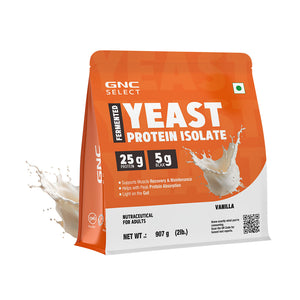












Quick Answer: Start with your daily protein target, not the tub. ICMR-NIN sets the protein RDA for healthy Indian adults at 0.83 g per kg of body weight per day, which is 54 g for its 65 kg reference man. One shake covers 15 g to 25 g of that, depending on the blend, which is where pack size follows.
Most people buy whey backwards. They pick a tub, then work out how much to drink. Flip it around and the decision gets simple.
Once you know your daily target in grams, it becomes clear what food already covers and what a shake needs to bridge.
Choosing pack size is the last stage, not the first. Working in this order also stops you buying a large tub of a flavour you have never tried.
How much protein do you actually need in a day?
Based on ICMR-NIN 2020 expert group, the average requirements are 0.66 g per kilogram of body weight each day and the recommended daily allowance (RDA) is calculated at 0.83 g per kilogram of body weight for a healthy Indian adult.
The updated value was lowered from 1 g per kg per day, as stated in the 2010 recommendation. ICMR-NIN bases its figures on reference weights of 65 kg for men and 55 kg for women. Therefore, it's calculated as 54 g a day for the reference male and 45.7 g for the reference female.
ICMR-NIN states that people who are consuming a cereal-based diet, which is lower in protein quality, should take 1 g of protein per kg of body weight a day.
On that basis, a 65 kg adult eating mainly rice, roti, dal and vegetables needs about 65 g of protein a day.
Where the training range fits
The NIH Office of Dietary Supplements indicates that there are no safety concerns for athletes taking up to around 2.0 g of protein per kg of body weight a day.
For a 65 kg adult that is around 130 g a day. It is the point up to which no safety concern has been recorded, not a target to aim for.
It's the same food-first argument in the Harvard Chan School protein guide, with dal, eggs, milk, curd, paneer, chicken, and fish making up the majority of it.
How much of that should come from a shake?
Usually just the gap, not the whole target. A serving of whey runs 15 g to 25 g depending on the blend, so check your own label. Use between meals to fill the daily protein gap, and after workouts to aid recovery and muscle repair.
How does a daily need translate into a month?
Multiply the gap, not the target. If a shake covers 20 g and you take one a day, that's about 30 servings a month. Two a day is roughly 60. Whey scoops usually run 25 g to 35 g of powder, so 30 servings sits near 0.75 kg to 1 kg.
One number carries the whole decision. The table below starts with your daily target, turns it into shakes, and ends at a pack size. Check the scoop size printed on your own pack before you use it.
Daily target to pack size, in one table
Locate your row, read across, and check the last column for the pack size. The figures below use the ICMR-NIN reference weight of 65 kg for men. Substitute your own weight to get your number.
| Goal | Daily Protein Target | Shakes a Day | Pack Size That Matches |
|---|---|---|---|
| General health, mixed diet | 54 g at 65 kg (ICMR-NIN RDA) | 0 to 1 | 35g sachet, or a 2lb tub |
| Mostly cereal-based diet | 65 g at 65 kg (1 g per kg) | 1 | Whey Lite 2lb |
| Gym four to five days a week | About 98 g at 65 kg (1.5 g per kg) | 1 | 100% Whey 1lb |
| Two training sessions a day | About 130 g at 65 kg (2.0 g per kg) | 2 | 100% Whey 2lb or 4lb |
Which GNC whey pack matches which routine?
Choose the pack that matches how often you'll actually use it. We quote every pack size exactly as it appears on the product page.
The sizes are not a ranking. Pick the one your routine will finish, then reorder when it runs out. Our full whey protein range sits on one page for comparison.
Starting out and staying consistent
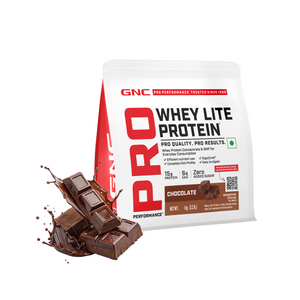
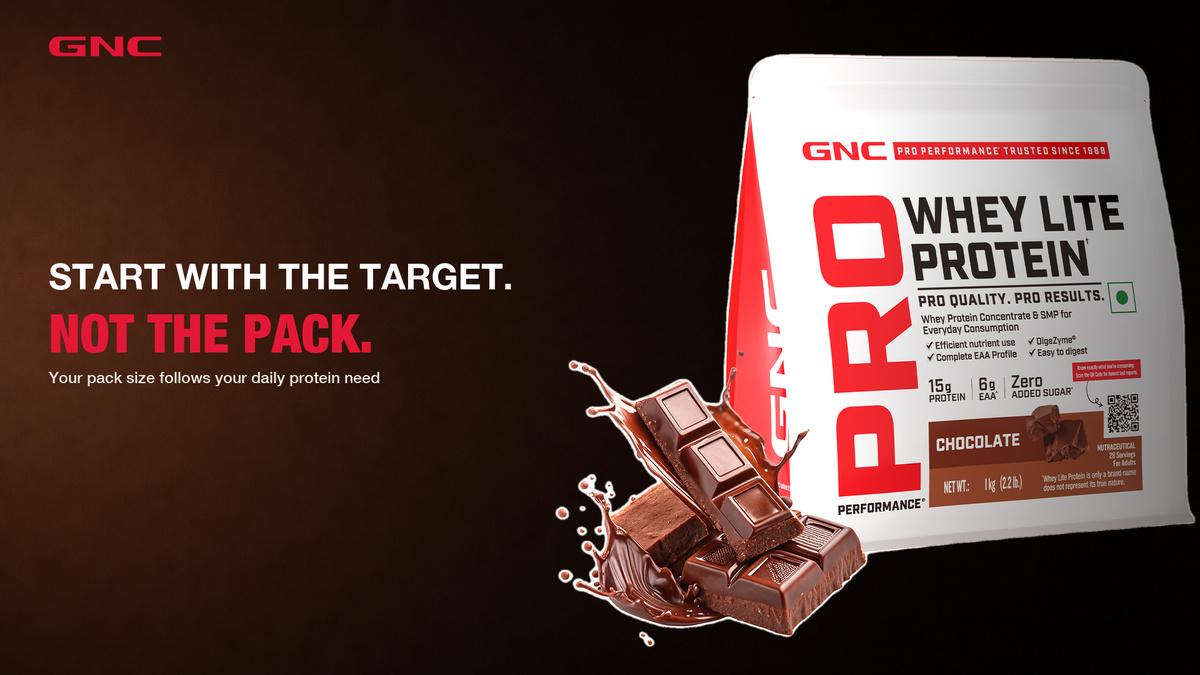
The 35g sachet lets you taste a flavour before you commit to a tub. Once a daily shake is a settled habit, GNC Pro Performance Whey Lite 2lb is built for everyday consistency rather than intensity.
Whey Lite declares 15 g of protein per serving, so use 15 g when you work out the month.
We list one scoop in 200 ml to 250 ml.
A first full tub, or a settled daily routine
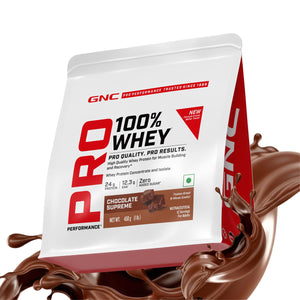
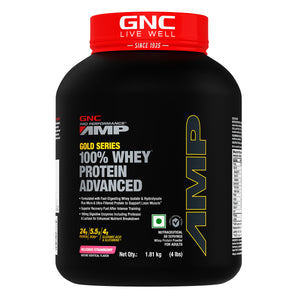
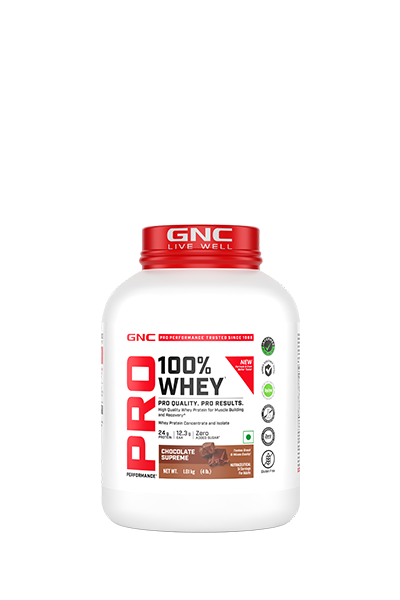
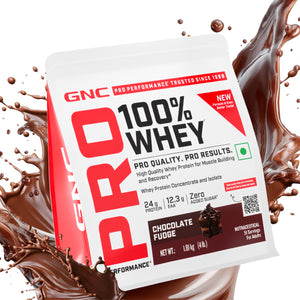
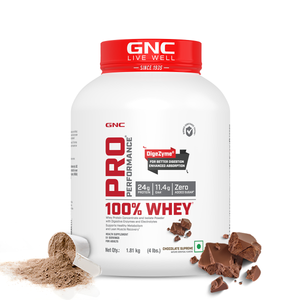
Once a shake is part of your daily routine, our 100% Whey line comes in 1lb, 2lb, and 4lb. A 1lb pack suits one shake a day, and the larger sizes suit two.
Read the net weight rather than the tub, because a 1kg pack and a 1lb tub hold very different amounts of powder. The net weight is printed on the front of every pack.
How to compare two tubs honestly
Compare four things on the label. Start with protein per serving.
Second, the serving size that figure is based on. Third, where the protein source sits in the ingredient list. Fourth, whether any digestive enzymes are declared.
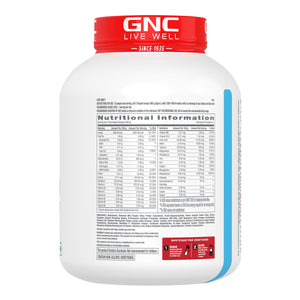
The amount of protein present in a serving is meaningful only if it’s stated on the scoop from which it has been taken. For instance, 24 g stated on a 30 g scoop is different from 24 g on a 40 g scoop, so you should always read these numbers together.
Ingredient order and added enzymes
Ingredients are listed in order of mass, so the protein source should sit first or second on that list. Added enzymes are the fourth check, and a good label names them rather than hiding them inside a blend.
Which GNC whey suits your routine maps each variant to what it is built for, and how to choose a protein powder sets out the order to read a label in.
What to check before you start
Whey is a convenience, not a necessity. Supplements support a balanced diet rather than replace it, and none of them makes up for meals you missed. If you have a known medical condition, are pregnant or breastfeeding, or take regular medication, consult with your physician prior to trying any supplement.
A protein target is a guide, not a prescription. Body weight, diet and training all move it.
Frequently Asked Questions
How many scoops of whey should you take a day?
One scoop a day suits most people who eat a mixed diet and train a few times a week. Two scoops fit twice-daily training, or a day when meals ran short. Work backwards from your ICMR-NIN daily target, subtract what food gave you, and let the shake cover what's left.
Is a 1kg tub of whey enough for a month?
For one shake a day, usually yes. Thirty servings at 25 g to 35 g each works out to 0.75 kg to 1 kg of powder, and our Whey Lite 2lb pack holds exactly 1 kg. With two shakes a day, 100% Whey in 2lb or 4lb lasts longer.
How much protein does one whey scoop give you?
Most whey servings land between 20 g and 25 g of protein, but the exact figure is printed on your pack. Check it against the scoop size, since a bigger scoop can carry the same protein. Read the nutrition panel rather than the front of the tub.
Do vegetarians in India need more protein?
ICMR-NIN sets the intake at 1 g per kg of body weight a day for people eating a mainly cereal-based diet, where protein quality is lower.
At 65 kg that is about 65 g a day rather than the 54 g RDA. Dal, milk, curd and paneer cover much of the requirement, and a shake can make up for the remaining intake.
Can you take too much whey protein?
The NIH Office of Dietary Supplements reports no safety concerns at daily recommended intakes for athletes of up to about 2.0 g of protein per kg of body weight. Going past your target adds calories without adding benefit. If you have a medical condition, ask a doctor before raising your intake.