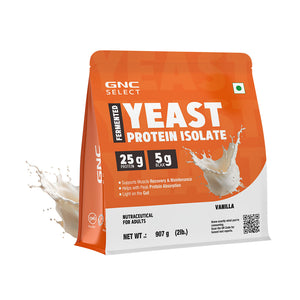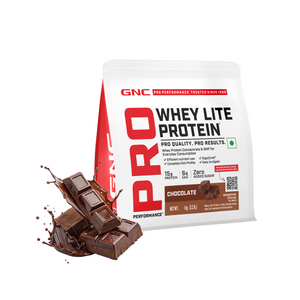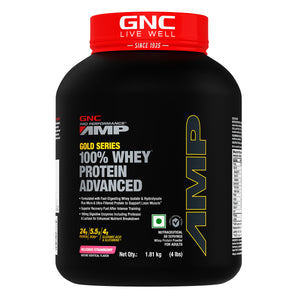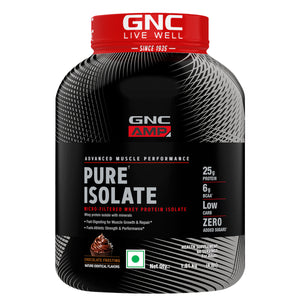












Quick Answer: You tell good quality creatine from the rest on the pack itself, in six printed checks. Look for creatine monohydrate declared per serving, a short ingredient list, an FSSAI licence number, a named manufacturer with a full address, an intact scratch label and a readable best-before date.
You are probably in a position where there are six containers, and all the six containers have the same label: creatine monohydrate. The content of the containers has not been defined, but we know that it is always the same molecule.
The package is there. You consider who produced it, where it was produced, for what licence, and whether or not the container is linked back to that company. Each of those assessments takes just moments of time and they are all done before the seal is broken.
What makes one creatine monohydrate different from another?
Four things: purity grade, particle size, what else goes into the blend, and how the pack is finished. The creatine monohydrate molecule is identical wherever you buy it, which is the reason why the vessel tells the entire tale.
Purity grade is the share of the powder that's actually creatine monohydrate. A pack declaring 3 g of creatine monohydrate in a 3 g scoop is describing an unblended powder. Once a serving carries flavouring, sweetener or added electrolytes, the declared creatine per scoop drops.
The drop isn't a mistake. It’s just a formulation decision, with a good label explaining it clearly instead of making you do the maths. A tub with flavour and a tub without flavour are different products and they have different numbers.
The second factor is micronisation.
Does the form on the label matter?
Indeed, monohydrate is what you should look for on the label. According to NIH Office of Dietary Supplements, creatine monohydrate is the one with a strong clinical evidence base.
The guiding dose is 20 g a day for a total of up to 7 days, after which the person has to take 3 to 5 g a day for a period of no more than 12 weeks.
NIH ODS discusses some safety issues but makes it clear about the recommended limits. The fact sheet also states that creatine is “of no value for endurance sports”.
Any information provided beyond monohydrate on the front is a formulation choice, which can’t be verified by anybody from the shelf.
GNC's own guide to everything you need to know about creatine covers where it fits across a training week.
What should you check on a creatine pack?
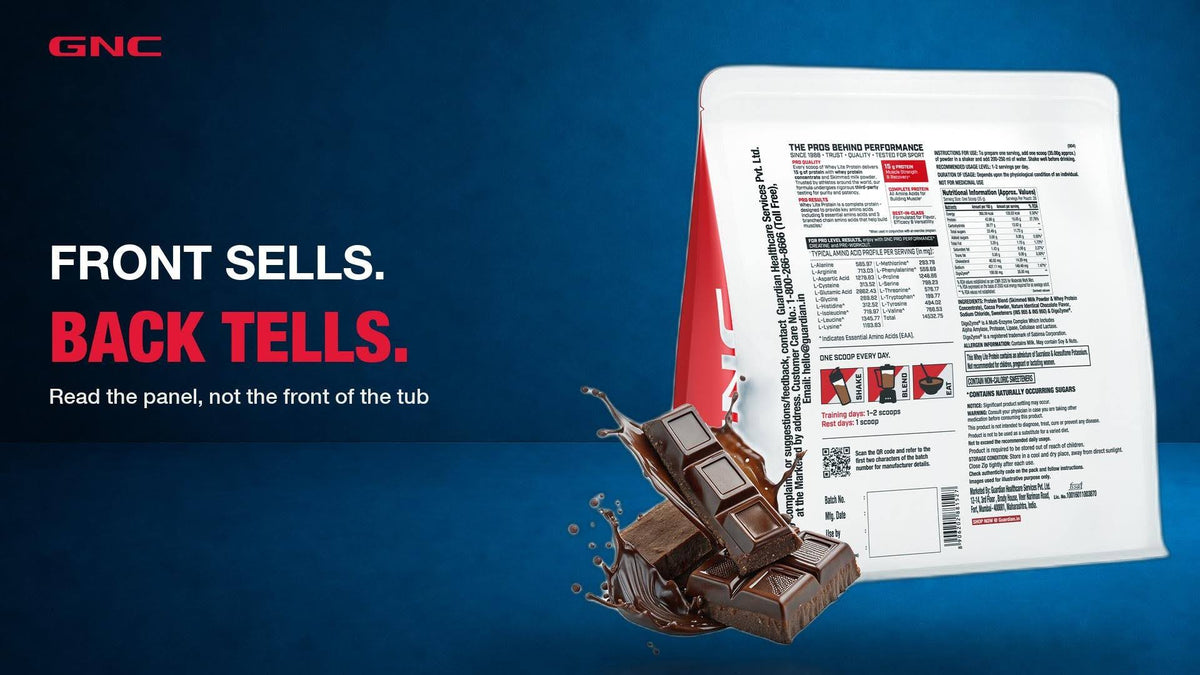
Four printed details do most of the work, and all four are on the tub before it reaches you. Work through them in order, front panel first, then the back at the back.
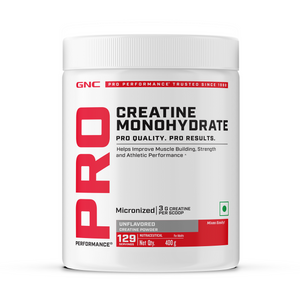
- Declared creatine per serving. Compare the grams of creatine monohydrate against the stated scoop size. If the two sit close together, you're holding an unblended powder.
- Ingredient list length. A short list naming creatine monohydrate first is exactly what you want on an unflavoured tub.
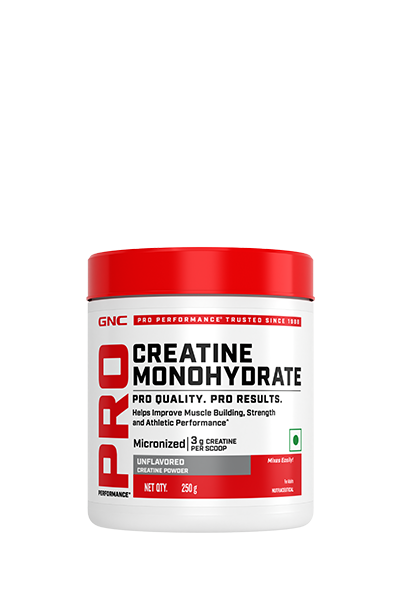
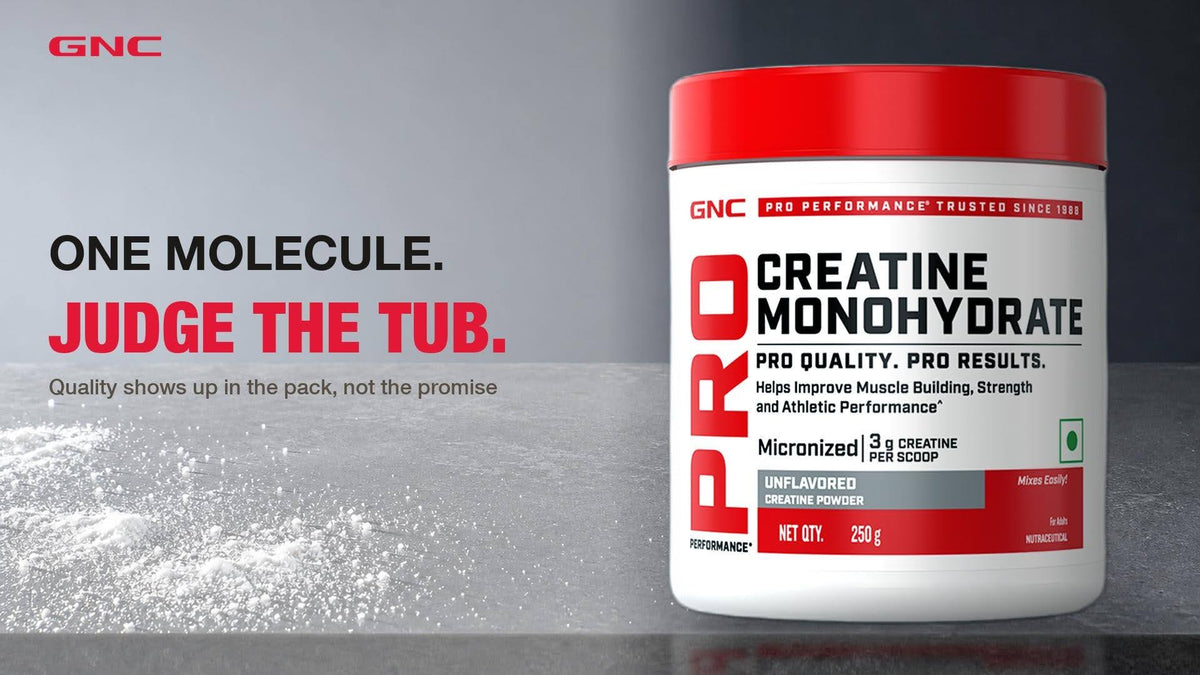
- Net weight against scoop count. GNC declares a 3 g serving on its own creatine, at 83 servings for the 250g tub, so a 250g pack declaring a 5 g scoop would work out to fifty instead, and the pack should say so.
- Best-before date and batch number. Both must be legible, printed onto the pack rather than stuck on afterwards, and paired with a sealed lid.
None of this needs a lab. It needs a minute with the tub under decent light, before the seal comes off.
What do the licence number and manufacturer address tell you?
Along with naming an appropriate party that is accountable for the contents of the tub. Every food establishment operating in India has a licence in terms of the Licensing and Registration of Food Businesses Regulation, 2011, which must be printed on the product.
The regulations which dictate what must appear on the label are defined by the Labelling and Display Regulations, 2020. Both are contained in the Labelling and Display Regulations, 2020, which is worth looking at once in the book in order to understand the rule which governs the regulation.
When you see a package that has a licence number, the name of the manufacturer and an entire address, you know where to run to with your query. But if you see a package with a brand name alone, you do not have the same assurance about finding your way ahead. This difference can be determined in just ten seconds.
Where is GNC's creatine made?
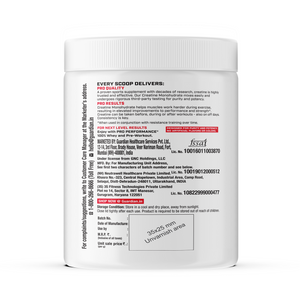
In Dehradun. GNC Pro Performance Creatine Monohydrate is manufactured by Neutrawell Healthcare Pvt. Ltd. in the Central Hopetown Industrial Area, Selaqui, Dehradun 248011, Uttarakhand.
The pack is marketed by Guardian Healthcare Services Pvt. Ltd., Mumbai, under FSSAI licence 10016011003870, while Neutrawell holds 10019012000512 for the manufacturing site. Country of origin is India, and the allergen advice reads: may contain milk, soy and nuts.
This is a fully traceable provenance chain, and you can verify it against the label step by step. Manufacturer, location, licence, origin, allergens. Nothing there is based on a marketing statement, since everything has been recorded.
Pack size is the other detail worth confirming before you buy. The ladder sits on GNC's creatine range, and the table below sets out what each size is for. Match the size to how long you'll realistically keep taking it.
The sizes, and what each one is for
| Pack size | What it suits |
|---|---|
| 50g | A short trial before you commit to a size |
| 100g | About a month at 3 g a day |
| 200g (2 × 100g) | Two 100g tubs, roughly 40 days at 5 g a day |
| 250g | About 12 weeks at 3 g a day |
| 400g | A loading week plus roughly 52 days at 5 g a day |
How do you verify the unit is genuine?
To check the authenticity of your pack, scratch the label and find the unique authentication code. Once you have the code, go online to GNC's product authentication page and enter the code, plus an email address and mobile number.
The check verifies the individual tub that you possess instead of indicating an entire run of products, which signifies an important difference. A batch record covers thousands of items. The scratch code represents one tub.
Do the verification the day when the parcel arrives, i.e., before the first use. In case the scratch-off panel is already scratched off at the time of opening the parcel or the code doesn’t yield any results, make sure to contact GNC using the contact information given on the page.
Make use of it while the package is intact and the receipt is available.
Where does creatine sit alongside food and training?
Rather than replacing a healthy diet, supplements improve it and creatine is combined with workouts, as explained in GNC’s post about what creatine does inside your muscles. Make sure to see your doctor if you have any health conditions, are pregnant or lactating, or are on any medication before taking any supplements.
Frequently Asked Questions
Which form of creatine should you look for?
Monohydrate. NIH ODS refers to creatine monohydrate as the formulation containing the clinical evidence base, as it is the formulation labelled on GNC Pro Performance Creatine Monohydrate. The newer formulations have considerably less published research backing them up, so monohydrate on the label is really what to look for.
How do you know your creatine is pure?
Start by reading the indicated grams of creatine monohydrate against the scoop size and read the ingredient list. creatine monohydrate is mentioned first in the shorter ingredient list. Finally, scratch the code on the pack and verify it, and the packing of the specific tub is confirmed by the manufacturer.
Where is GNC creatine manufactured?
In Selaqui, Dehradun, GNC Pro Performance Creatine Monohydrate is manufactured by Neutrawell Healthcare Pvt. Ltd located at Central Hopetowns, Industrial Area, Dehradun 248011, Uttarakhand, and sold by Guardian Healthcare Services Pvt. Ltd from Mumbai. The package contains two numbers of FSSAI licences for each company and the country of manufacture is also mentioned as India.
What does the scratch code on the pack do?
The scratch-off panel conceals a special authentication number associated with a particular piece of equipment.
Scratch the panel and enter the code with an email address and mobile number on GNC's verification page, and the answer covers the single tub in your hand. A code speaks for one unit, while a batch record covers a whole production run.
How much creatine does a serving usually contain?
When reviewing 3 g, there is a noticeable difference between 5 g when using unflavored and flavored packs of NIH ODS; the loading dose of 20 g has to be administered through days of 7 days, while 3 to 5 g should be used during days of 12 weeks.
Always compare the scoop size with that marked on your particular tub.