






















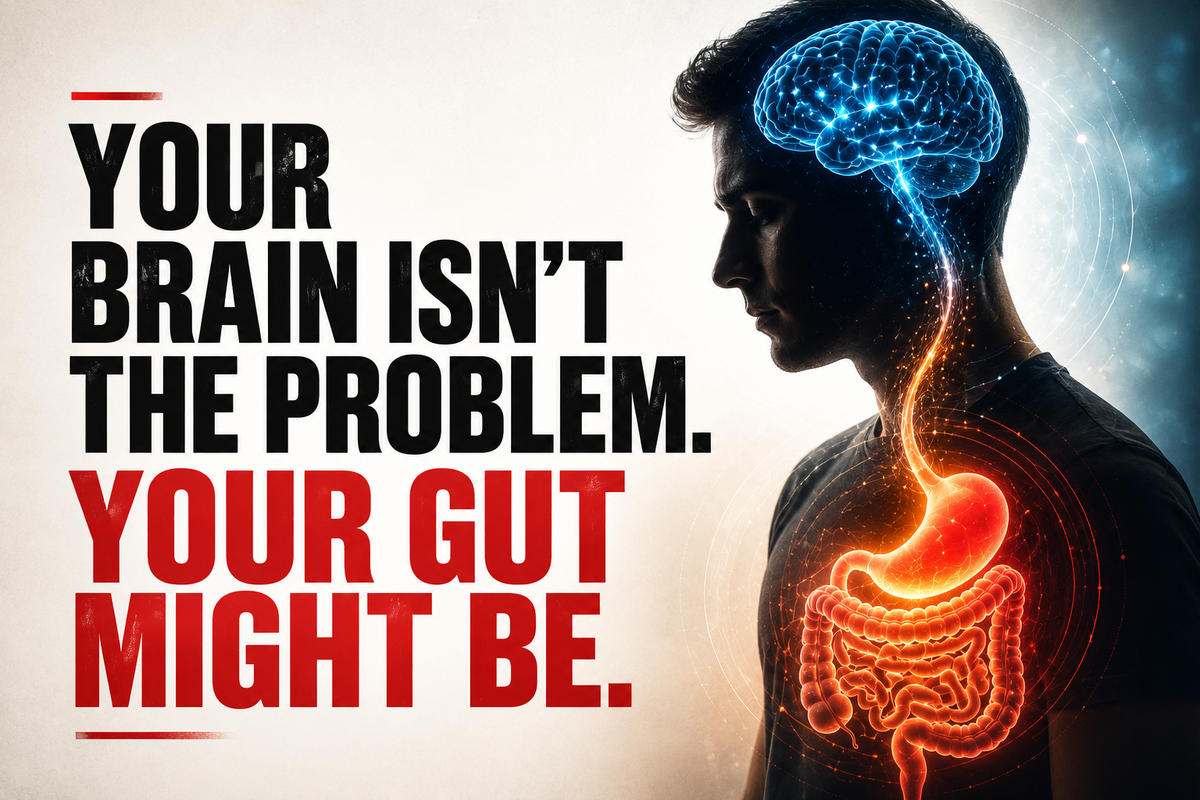
Ever felt anxious, low, or irritable for “no reason”? It could not just be stress or a bad day; your gut could be playing a bigger role than you think.
Our body has a powerful communication system known as the “Gut-Brain Axis (GBA)”, a two-way connection between the digestive system and the brain. Our gut doesn’t just process food; it actively influences how we feel and think. In fact, a large portion of key neurotransmitters like serotonin, often known as the “mood stabilizer” hormone, is produced by the gut. When your gut health is off, it can disrupt this balance, subtly impacting your mood, energy levels, and even mental clarity.
In this blog, you will discover 9 warning signs your gut health is secretly ruining your mood, and more importantly, simple, science-backed solutions on how to fix it and feel better from the inside out.
What Is Gut Health & Why Does It Affect Your Mood?
The gut is also known as the “Second Brain”. It refers to our gastrointestinal system, which includes the stomach, intestines, and colon. It digests and absorbs nutrients and excretes waste. Gut health refers to the overall functioning of our digestive system and the balance of gut bacteria. Our gut is home to trillions of gut bacteria; some are “good bacteria” that help with overall health, while others are “bad”.
When good bacteria are in balance, your body runs smoothly. However, when harmful bacteria dominate, it can lead to digestive problems that ultimately impact your mental well-being.
The Gut-Brain Connection
The brain and gut are in continuous conversation with each other through the “gut-brain axis”. This is their communication system.
The communication system that sends the signal between the brain and the gut is known as the “vagus nerve”. Simultaneously, your gut also produces “neurotransmitters,” a chemical that affects your mood, stress, and emotional response.
One of the most important neurotransmitters is “Serotonin”, the mood-stabilizer hormone, or the feel-good hormone.
Fun Fact: About 90-95% of serotonin is produced in the gut, not the brain.
So, if your gut is healthy and stable, your serotonin levels are balanced. That means your mood and stress are under control, and you sleep better.
How does poor gut health affect mood?
When your gut health is compromised:
-
Serotonin levels drop
-
Inflammation increases
-
Nutrient absorption is lower.
-
These reasons can impact your brain and lead to:
-
Anxiety and depression
-
Mood swings
-
Poor sleep quality
In simple terms, an unhealthy gut can make us feel irritated or uncomfortable without even realizing it. That’s why gut health isn’t just about proper digestion; it is also about feeling better, physically and mentally.
9 Warning Signs Your Gut Health Is Secretly Ruining Your Mood
1. Persistent Bloating & Gastrointestinal Discomfort
Digestion and the gut are deeply intertwined through the brain-gut axis. The gut is the centre for nutrient absorption, immunity, and mental wellness. The gut consists of trillions of microbiota (bacteria) that support the immune system, break down food, and absorb nutrients.
A healthy gut uses these microbes to function smoothly, preventing inflammation and bloating. An imbalanced gut (dysbiosis) can lead to increased inflammation, resulting in indigestion, bloating, or other gastrointestinal discomfort.
If your gut is persistently imbalanced, over time, it can cause Irritable Bowel Syndrome (IBS) or Chronic Inflammation. While occasional bloating is normal, experiencing it regularly means your gut health needs attention.
2. Frequent Mood Swings and Emotional Instability
If your mood feels happy for one moment, and a bit low or irritable the next moment, it wouldn’t just be psychological. Your gut might be telling you something, too.
The microbes in your gut help produce and regulate neurotransmitters such as serotonin and dopamine, which influence your mood. When this balance is disrupted, your emotional stability is also affected.
Additionally, poor gut health can affect how your body processes carbohydrates, leading to spikes or crashes in blood sugar levels. These fluctuations often make you feel irritated, low on energy, or fatigued quickly, therefore affecting your mood.
An unhealthy gut can interfere with the link between the brain-gut axis, weakening the signals sent between them. This makes it harder for the body to maintain emotional balance.
3. Elevated Anxiety or Chronic Stress Levels
If you often feel on edge, restless, or stressed without a clear or unknown reason, your gut might be contributing to this feeling.
-
An imbalanced gut may signal your body to release more stress hormone (cortisol).
-
Your body remains in a constant “fight-or-flight” mode, even when there is no real threat. This happens due to the ongoing gut irritation.
-
The production of GABA (gamma-aminobutyric acid) and serotonin, the calming neurotransmitters that help you feel relaxed and emotionally balanced, may also be reduced because of an irritated gut.
Over time, this can make small stressors feel overwhelming and hard to manage.
4. Chronic Fatigue and Low Energy
-
Impaired Nutrient Absorption: Poor gut health can reduce the absorption of key energy-supporting nutrients, such as iron, Vitamin B12, Magnesium, and Folate.
-
Low-Iron → reduced oxygen delivery → fatigue.
-
Low B12 & folate → Impaired red blood cell production → weakness and low stamina
-
Disrupted Energy metabolism: Gut imbalance can affect B-Vitamins, which are essential for converting food into usable energy. Even with adequate calorie intake, the body might still struggle to efficiently produce energy.
-
Hormonal & Neurotransmitter Impact: Gut health influences cortisol and serotonin levels. Imbalances can lead to energy crashes, burnout-like symptoms, and a lack of motivation.
You may be eating enough, but if your gut isn’t healthy, your body won’t be able to utilise that energy efficiently. Leaving you feeling constantly drained.
5. Cognitive Impairment (Poor Focus and Brain Fog)
There are days when you simply cannot focus on your work, or it is too difficult to concentrate. This may be linked to your imbalanced gut; it triggers low-grade inflammation that affects your brain function and mental clarity. At the same time, it can also interfere with neurotransmitter signaling, making it harder to focus, process information, and stay alert. Over time, increased intestinal permeability, often known as “leaky gut”, may further allow inflammatory compounds to enter your circulation, impacting cognitive performance.
6. Increased Sugar Cravings and Appetite Dysregulation
There are days when you crave sugar or your hunger is out of control; this could be your gut bacteria playing a role. Certain bacteria thrive on sugar and can actually influence your cravings to feed themselves. This often leads to repeated blood sugar spikes and crashes, which may not only affect energy levels but also mood stability. Additionally, poor gut health can disrupt hunger-regulating hormones like ghrelin and leptin, making it harder to recognize true hunger and fullness cues.
7. Poor Sleep Quality & Disturbances
Melatonin and serotonin are the key sleep-regulating hormones that are essential for sleep-wake cycles. An unhealthy gut can disrupt this process, too, leading to difficulty falling asleep or staying asleep. Poor sleep doesn’t just affect your mood the next day; it also negatively impacts your gut health, creating a bidirectional cycle where sleep and gut issues continuously worsen each other.
8. Chronic Skin Inflammation
If your gut is not healthy, it reflects on your skin. Pimples, Acne, and Eczema-like issues occur. This is due to the gut inflammation that triggers the systemic inflammatory responses, which often show up on the skin. This connection is known as the skin-gut axis, which highlights how closely your digestive health affects your skin.
9. Weakened Immune Function and Frequent Infections
Around 70% of your immune system resides in your gut. When gut health is compromised, it weakens the immune defenses, making it more prone to frequent infections, colds, and slower recovery. Dysbiosis can impair the body’s ability to respond effectively to pathogens.
How to Fix Your Gut Naturally
Healthy gut, better mood; start with these basics.
1. Prioritize a High-Fiber, Diverse Diet
Your gut bacteria thrive on fibre, as its primary fuel. A diet low in fibre can starve good bacteria and allow harmful bacteria to dominate. Dietary fiber is one of the most important nutrients for gut health because it acts as a prebiotic substrate, meaning it feeds beneficial gut bacteria such as Bifidobacteria and Lactobacilli. When these bacteria ferment fiber, they produce short-chain fatty acids (SCFAs) like butyrate, acetate, and propionate.
These SCFAs help:
-
strengthen the intestinal lining
-
reduce gut inflammation
-
improve bowel regularity
-
support blood sugar control
A diet rich in fruits, vegetables, legumes, oats, whole grains, nuts, and seeds promotes microbial diversity, which is considered a marker of a healthier gut microbiome. Studies consistently show that low-fiber, ultra-processed diets reduce microbial diversity and increase dysbiosis.
2. Include Probiotics + Prebiotics
Probiotics are live beneficial microorganisms that, when consumed in adequate amounts, help restore microbial balance in the gut. Common food sources include curd, yogurt, kefir, kimchi, sauerkraut, and other fermented foods.
However, probiotics work best when paired with prebiotics, the non-digestible fibers that nourish these bacteria. This combination is known as a synbiotic approach.
From a nutrition standpoint:
-
Probiotics help replenish beneficial strains.
-
Prebiotics help them survive and multiply.
-
Together, they improve gut barrier function and digestion.
Emerging evidence also links certain probiotic strains to improvements in stress, anxiety, and mood via the gut-brain axis.
3. Reduce Sugar and Ultra-Processed Foods
Excess intake of refined sugar and ultra-processed foods may encourage the growth of less favorable bacterial strains while reducing beneficial species. These foods are typically low in fiber and high in additives, emulsifiers, and refined carbohydrates, which may negatively affect the gut lining and microbiome composition.
From a metabolic perspective, this can contribute to:
-
increased inflammation
-
poor glycemic control
-
bloating and digestive discomfort
-
altered appetite regulation
A whole-food-based eating pattern supports better gut ecology compared with highly processed diets.
4. Manage Stress and Improve Sleep
The gut and brain communicate through the gut–brain axis, involving the nervous system, hormones, immune signals, and gut microbes. Chronic stress can alter gut motility, increase intestinal permeability, and shift microbiome composition.
Poor sleep further worsens this cycle by affecting microbial diversity and inflammatory pathways.
Scientific evidence suggests that better sleep quality and stress management may positively influence gut bacteria, while prebiotic and probiotic-rich diets may also support sleep regulation.
Practical strategies include:
-
regular sleep schedule
-
mindfulness or meditation
-
physical activity
-
Reduced caffeine late in the day
5. Stay Hydrated and Physically Active
Adequate hydration supports digestion by helping maintain stool consistency, intestinal motility, and the mucosal lining of the gut. Water also supports the movement of fibre through the digestive tract, reducing constipation risk.
Regular physical activity has been shown to positively influence gut microbiota diversity and improve bowel movement patterns. Exercise may also reduce stress-related gut disturbances through hormonal and anti-inflammatory effects.
Even moderate activity, such as walking, yoga, or strength training, can support better gut function over time.
Final Thoughts
Gut health isn’t just about digestion; it plays a powerful role in how you feel every single day. From your energy levels to your stress response and overall mood, your gut is constantly communicating with your brain, often in ways you don’t even realize.
The good news? You don’t need drastic changes to see results. Small, consistent habits like improving your diet, managing stress, staying active, and prioritizing sleep can make a noticeable difference over time.
Instead of chasing quick fixes, focus on building sustainable routines. Gut health is a long-term investment, and when you support it consistently, your mood, clarity, and overall well-being naturally follow.