











You've probably seen this at the gym: one person grabs a banana before training, while another mixes a scoop of pre-workout. Both are aiming to get more out of their workout, just in different ways. So, which is better? It depends. A banana and a pre-workout serve different purposes. Bananas give you quick carbs for fuel, while pre-workouts are made to support energy, focus, endurance, blood flow, and performance. Whether you're lifting, running, doing HIIT, or just trying to stay consistent, knowing what your body needs before exercise can help you make better choices. Let's break down both and see if you really need to choose.
What Your Body Really Needs Before a Workout
Every workout places different demands on your body, but whether you're strength training, running, or cycling, your muscles and brain need the right fuel to perform well.
An effective pre-workout strategy should support five key areas:
1. Readily Available Energy
Your muscles mainly use carbohydrates when you're doing moderate to high-intensity exercise. Eating carbohydrate-rich foods before a workout helps keep blood sugar steady and gives your muscles the fuel they need Burke et al., 2011.
That’s one of the reasons bananas are such a popular pre-workout snack. They’re easy to carry, easy to eat, and naturally packed with carbs.
2. Mental Focus
Your muscles do the work, but your brain is what keeps everything moving. When you stay focused during a workout, your form, timing, and overall performance usually improve, especially during heavy lifts or exercises that need more control. That’s why ingredients like caffeine and certain amino acid blends are often used in pre-workout supplements. They’re included to help support alertness and focus while you train Spriet, 2014.
3. Endurance
As the workout goes on, fatigue starts to build.
Endurance is what helps you keep going for longer before your muscles start to give out. Good nutrition, proper hydration, and the right performance ingredients can all help you maintain the quality of your workouts for longer Saunders et al., 2017.
4. Blood Flow and Muscle Performance
Good blood flow helps carry oxygen and nutrients to your muscles.
Better circulation may support performance, especially during resistance training, where many people look for a stronger muscle pump and better nutrient delivery Jones, 2014.
5. Recovery Support
Recovery doesn’t only start after the workout. It starts while you’re still training.
Exercise creates oxidative stress and other by-products in the body. Supporting your body’s natural recovery process can help you bounce back better for your next session Powers et al., 2011.
What works best before a workout depends on what kind of training you’re doing. For some sessions, a simple snack is enough. For others, a pre-workout supplement can give you a little extra support.
Banana as a Pre-Workout: Benefits and Limitations
Bananas have earned their place as a go-to pre-workout snack for a simple reason: they work. They’re affordable, easy to carry, gentle on the stomach, and provide a quick source of fuel before training.
Why Bananas Work
-
Natural Source of Carbohydrates
A medium banana provides about 25–30 grams of carbohydrates, making it a solid source of quick energy before a workout. Those carbs help replenish glycogen stores and give your muscles fuel for moderate-intensity exercise.
-
role="presentation"> Rich in Potassium
Bananas are also a good source of potassium, a mineral that plays a role in muscle contraction and nerve function. Potassium won’t magically stop cramps, but getting enough of it helps support normal muscle function, especially if you train regularly.
-
Easy to Digest
Compared with a heavy meal, a banana is usually easy to digest when eaten 30–60 minutes before exercise. It’s also one of the most convenient snacks to grab on the way out of the door.
-
Naturally Fat-Free
Because bananas are very low in fat, they digest fairly quickly, which makes them a practical choice before many types of workouts.
Where Bananas Fall Short
Bananas are great for quick fuel, but they don’t cover every part of workout performance. A banana gives you energy, but it doesn’t include ingredients that are commonly used to support:
-
Mental focus during training
-
Delaying muscle fatigue
-
Better muscle pumps through nitric oxide support
-
High-intensity power output
-
Workout alertness
That doesn’t mean bananas are a bad choice. It just means they handle one part of pre-workout nutrition, not the whole thing.
If you’re heading out for a brisk walk, a casual bike ride, yoga, or a light gym session, a banana may be enough.
But once your workouts get harder or longer, your body usually needs a little more support.
Beyond Quick Energy: When Food Alone Isn't Enough
Imagine you're preparing for one of these workouts:
-
Heavy squats and deadlifts
-
A 90-minute strength session
-
High-Intensity Interval Training (HIIT)
-
Sprint intervals
-
A personal record attempt
-
Early morning training before work
A banana can certainly provide carbohydrates.
But can it help maintain focus during your final working set?
Can it help delay muscular fatigue?
Can it support better blood flow to working muscles?
Can it contribute to sustained performance across an entire training session?
Not really.
This is where a well-formulated pre-workout supplement differs from simply eating a pre-workout snack. Rather than replacing food, pre-workout supplements are designed to complement your nutrition by delivering functional ingredients that target multiple aspects of exercise performance simultaneously.
Instead of providing only fuel, they aim to support:
-
Sustained energy
-
Mental alertness
-
Muscular endurance
-
Blood flow
-
Power output
-
Recovery support
The result isn't just having energy to begin your workout, but maintaining quality performance from your first set to your last.
What a Science-Backed Pre-Workout Brings to the Table
Pre-workout supplements are made with different goals in mind. Some rely too heavily on stimulants, giving a quick burst of energy that fades just as fast. A better formula supports multiple aspects of performance, with each ingredient playing its own role.
Clean Energy and Mental Focus
Caffeine is one of the most studied ingredients in sports nutrition. It works mainly by blocking adenosine receptors, especially A1 and A2A, which reduces the brain’s fatigue signal and can improve alertness, reaction time, and exercise performance. It may also influence catecholamines and lower perceived exertion. Some pre-workout formulas pair caffeine with L-tyrosine, L-theanine, and taurine. L-tyrosine supports catecholamine synthesis under stress, L-theanine may smooth caffeine’s effects, and taurine is involved in calcium handling and cell hydration.
Delaying Fatigue
During high-intensity exercise, fast glycolysis increases hydrogen ion buildup, which contributes to the burning sensation and fatigue. Beta-alanine helps by raising muscle carnosine levels over time; carnosine acts as an intracellular buffer and helps maintain pH during hard efforts. It is not a stimulant and works through regular use, especially for efforts lasting about 1–4 minutes.
Better Blood Flow and Muscle Pumps
L-arginine is a precursor to nitric oxide, which supports vasodilation and blood flow. Citrulline is another commonly used ingredient in this category because it can help raise arginine levels in the body more efficiently, supporting nitric oxide production and the muscle pump. In theory, these ingredients can help deliver oxygen and nutrients to working muscles and contribute to better training performance. Oral arginine can support this pathway, although its effect is variable because of first-pass metabolism.
Strength and Power Output
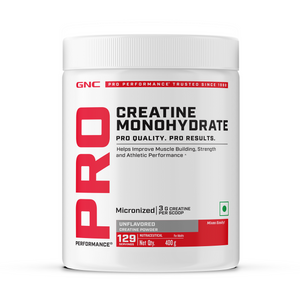
Creatine supports the phosphagen system, the body’s fastest energy pathway, by helping regenerate ATP through phosphocreatine (ISSN). It is not a stimulant. Its benefits come from increasing muscle creatine stores over time, which can improve repeated high-intensity performance and training volume.
Antioxidant and Vitamin Support
Hard exercise increases oxidative stress as part of the body’s normal response. Matcha green tea provides catechins such as EGCG, which may support antioxidant defenses. B3, B6, and B12 help normal energy metabolism, while vitamin C supports collagen formation, immune function, and antioxidant recycling.
Taken together, these ingredients support focus, endurance, blood flow, and energy metabolism rather than acting as a simple instant-energy boost.

Match Your Pre-Workout to Your Training Style
There's no one-size-fits-all answer here. Whether a banana or a pre-workout makes more sense depends on the type of workout you are doing, how much time you have before training, and what you want to get out of the session.
|
If Your Workout Looks Like... |
Choose... |
|
Walk, Yoga, Mobility |
Banana |
|
Moderate Gym Session |
Banana or Light Pre-Workout |
|
Heavy Strength Training |
Pre-Workout |
|
HIIT |
Pre-Workout |
|
Long Cardio |
Banana + Pre-Workout |
|
Morning Fasted Workout |
Banana + Pre-Workout |
When a Banana Is Enough
A banana can be a good pre-workout choice for light to moderate exercise when you want something simple and easy to digest.
It may work well if you are:
-
Going for a brisk walk or a light jog
-
Doing yoga or Pilates
-
Completing a short home workout
-
Training at a lower intensity
For these workouts, a banana often provides enough quick fuel.
When a Pre-Workout Makes More Sense
As workouts get more intense, your body may need more than carbohydrates alone.
A pre-workout supplement may be more useful if you:
-
Lift heavy weights
-
Train for strength or muscle growth
-
Do HIIT or circuit training
-
Exercise for longer periods
-
Work out early in the morning
-
Want better focus and endurance
In these cases, a pre-workout can support energy, focus, and performance.
Can You Use Both Together?
Yes. A banana and a pre-workout can work well together.
The banana provides quick carbohydrates, while the pre-workout supports energy, focus, and endurance. This can be especially helpful for longer or more demanding workouts.
A simple approach is to eat a banana before training and take your pre-workout 20 to 30 minutes before your session, while staying hydrated.
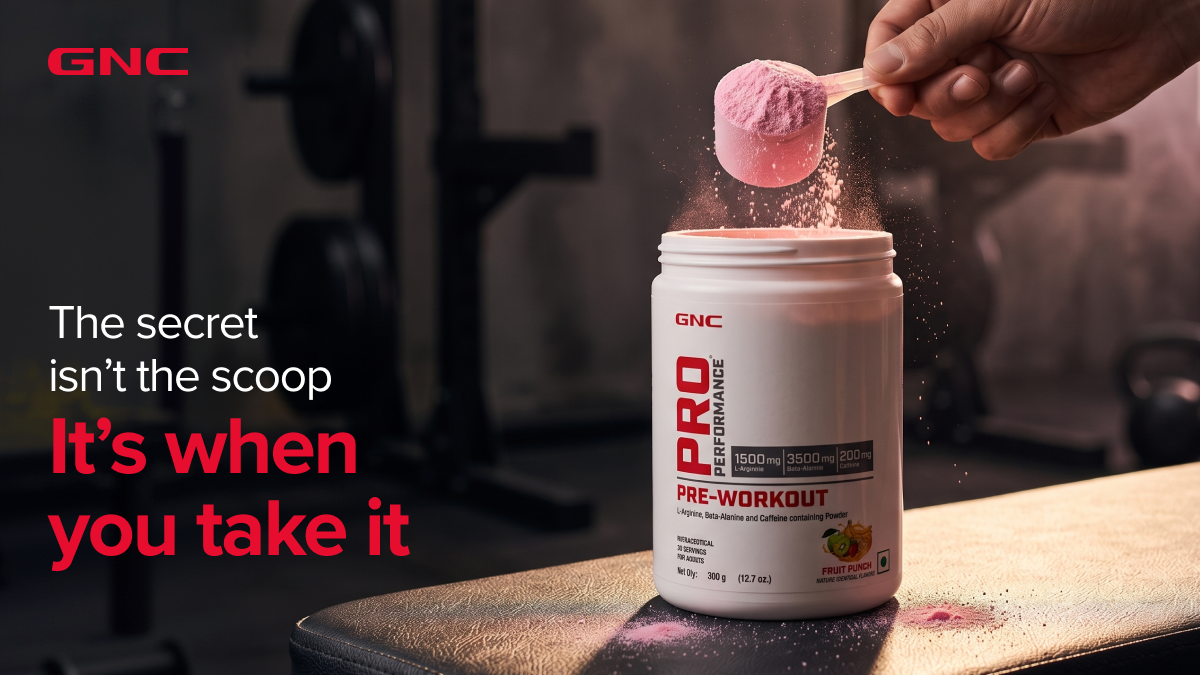
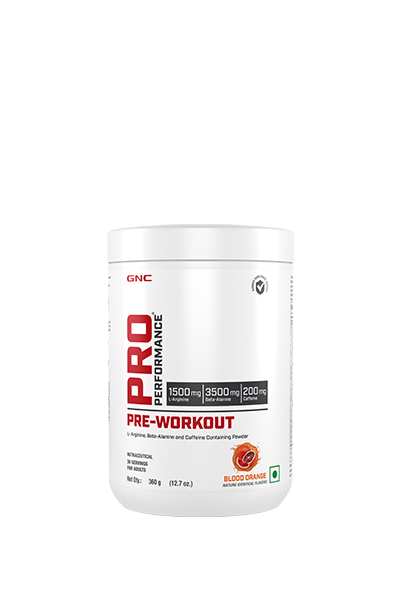
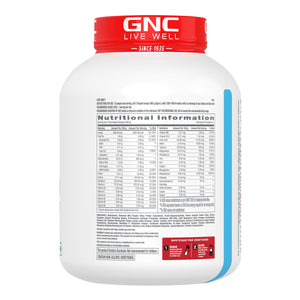
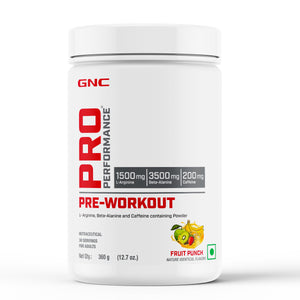
Meet GNC Pro Performance Pre-Workout
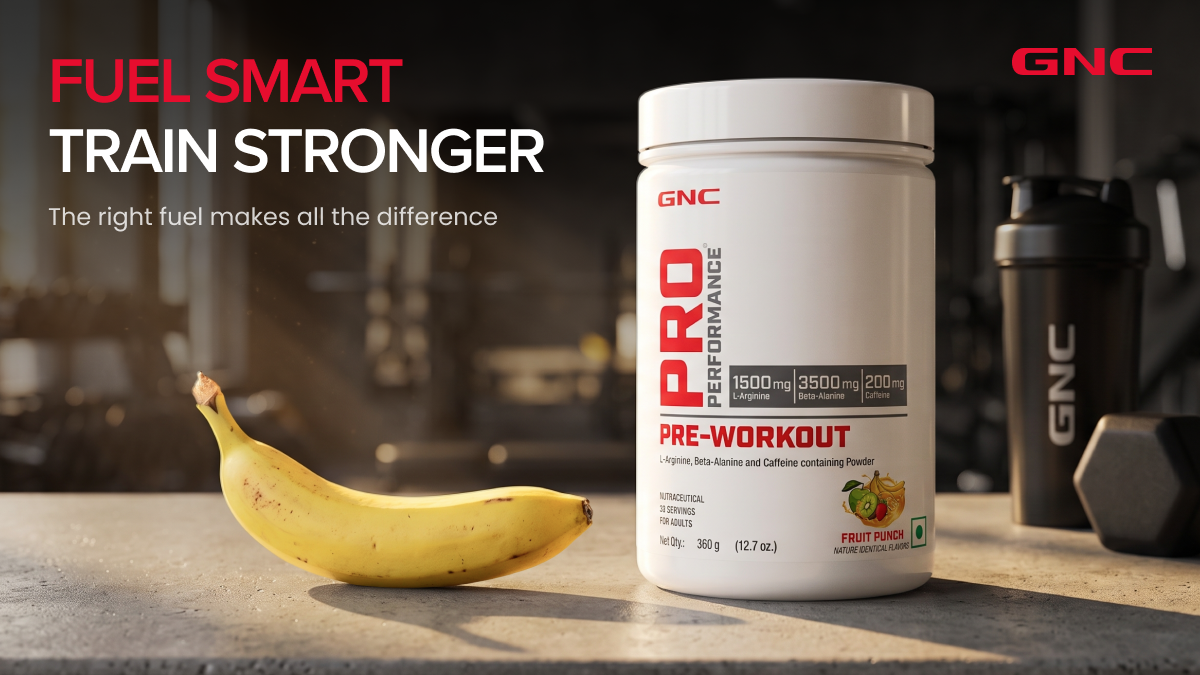
GNC Pro Performance Pre-Workout is designed with research-backed ingredients that work together to support multiple aspects of exercise performance.
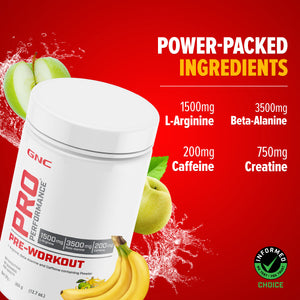
Each serving delivers 200 mg of caffeine with L-Tyrosine, L-Theanine, and L-Taurine to support energy, alertness, and focus throughout your workout. With 4 g of beta-alanine, it helps delay fatigue and support muscular endurance during high-intensity exercise. L-Arginine and L-Citrulline support nitric oxide production and healthy blood flow, helping deliver oxygen and nutrients to working muscles and promoting better pumps. It also provides 750 mg of creatine for ATP regeneration, and Vitamins B3, B6, B12, and C for antioxidant and metabolic support.
Available in Fruit Punch, Blue Raspberry, Green Apple, Blood Orange, and Lemon, it's formulated to fit seamlessly into your training routine whether you're lifting, running, or preparing for your next personal best.

Frequently Asked Questions (FAQs)
1. Is banana a good pre-workout food?
Yes. Bananas provide quick-digesting carbohydrates and potassium, making them a simple pre-workout snack for light to moderate exercise.
2. Are bananas better than a pre-workout supplement?
Not always. A banana gives energy, while a pre-workout supports focus, endurance, power, and pumps. The better choice depends on your workout.
3. Can I eat a banana and take a pre-workout together?
Yes. Together, they provide quick carbs from the banana and performance support from the supplement.
4. When should I take a pre-workout?
Most pre-workouts are taken 20-30 minutes before exercise. For GNC Pro Performance Pre-Workout, mix one scoop with 250-300 ml of water and take it about 20 minutes before training.
5. Can beginners use a pre-workout supplement?
Yes, but it is best once training is consistent. Beginners should also check their caffeine tolerance first.