












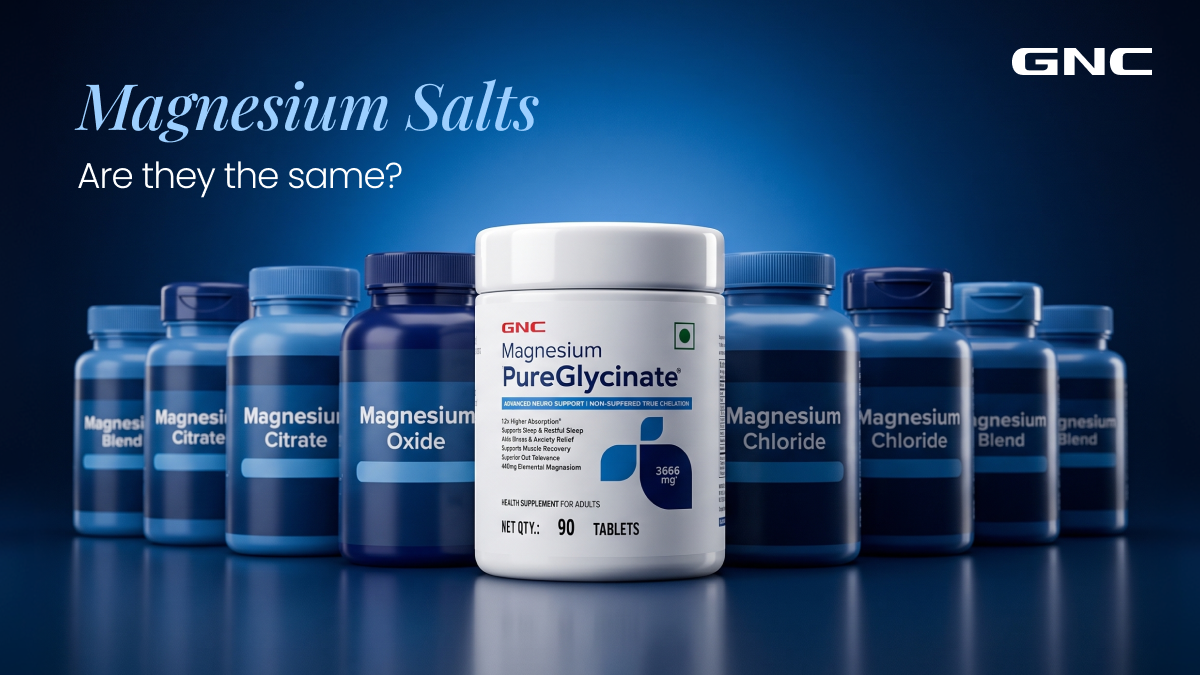
Walk into any pharmacy or browse online, and you'll find dozens of magnesium supplements - glycinate, citrate, oxide, threonate, malate, taurate and more. They all say "magnesium", so shouldn't they all work the same?
Not really.
The form of magnesium you choose determines how well it's absorbed, where it works in the body, and what benefits you actually experience. Choosing the wrong form may leave you with poor absorption or worse, digestive discomfort instead of the results you're looking for.
Let's understand why.
Why Magnesium Matters More Than You Think
After calcium, phosphorus, and potassium, magnesium is the fourth most abundant mineral in the human body and is involved in over 300 enzymatic reactions.
It helps regulate:
-
Muscle contraction and relaxation: Helps muscles work properly and may reduce cramps.
-
Nervous system function: Supports healthy nerve signaling for calm focus and coordination.
-
Energy production (ATP): Helps turn food into usable energy.
-
Sleep quality: Supports relaxation and deeper sleep.
-
Stress response: Helps regulate stress signals and cortisol.
-
Heart rhythm: Supports a steady, normal heartbeat.
-
Bone health: Helps the body use calcium and support bone strength.
-
Protein synthesis: Helps build and repair tissues, including muscles.
Research also suggests that magnesium plays an important role in regulating the hypothalamic-pituitary-adrenal (HPA) axis, the body's central stress response system. This system connects the brain and adrenal glands to control the release of stress hormones like cortisol, helping the body respond to short-term challenges. But when it stays switched on for too long, it can keep you in a constant state of alertness, making it harder to relax, sleep, and recover. Magnesium may help calm this overactive stress response by supporting normal cortisol regulation while also supporting neurotransmitters like GABA, which helps calm the brain.
Unfortunately, modern lifestyles filled with stress, caffeine, poor sleep, processed foods and intense exercise can gradually reduce magnesium levels.

Are Magnesium Salts Really the Same?
No. Magnesium cannot exist alone in a supplement. It must be attached to another molecule, known as a carrier. This combination forms a magnesium salt. Research shows that the carrier can influence absorption, digestive tolerance, and the specific benefits you may notice. For example, chelated forms such as magnesium glycinate are generally better absorbed and gentler on the stomach, while magnesium citrate is more likely to support bowel movements and magnesium oxide is often less efficiently absorbed.
The attached molecule determines:
-
How well magnesium is absorbed
-
How gentle it is on the stomach
-
Which tissues it reaches
-
What health benefits it provides
Think of magnesium as a passenger and the attached molecule as the vehicle. Different vehicles reach different destinations.
Different Types of Magnesium and Their Functions
Among the different forms of magnesium, magnesium glycinate is one of the most popular choices for daily use. It is best known for supporting sleep, relaxation, stress support and muscle recovery, and it stands out because it is highly absorbable and usually very gentle on the stomach. Research on magnesium supplementation has linked it with improved sleep quality and better stress regulation, especially in people with low magnesium status.
Magnesium citrate is best known for constipation relief. Its uniqueness lies in its osmotic effect: it draws water into the intestine, which can soften stools and support bowel movements. Because of this, it is often used when a mild laxative effect is desired.
Magnesium oxide is often used when a supplement needs to deliver a large amount of elemental magnesium at a lower cost. Its main drawback is that it is not absorbed as well as many other forms.Comparative bioavailability studies have shown that magnesium oxide is generally less well absorbed than more soluble forms such as citrate or amino acid chelates.
Magnesium threonate is best known for brain health and cognition. It was developed to help raise magnesium levels in the brain, which makes it especially interesting for memory and focus support. In an animal research, magnesium L-threonate increased brain magnesium levels and improved learning and memory performance.
Magnesium malate is best known for supporting energy production and reducing muscle fatigue. Malate is part of the body’s energy-producing pathways, so this form is often chosen by people who want a more daytime-friendly option. It is commonly discussed in relation to fatigue and muscle function, although human research is still more limited than for some other forms.
Magnesium taurate is commonly chosen for cardiovascular support. Its uniqueness comes from combining magnesium with taurine, an amino acid studied for heart and nervous system function. Taurine has been linked with healthy blood pressure regulation and overall cardiovascular wellness, which is why this form is often selected for heart-focused support.
Magnesium aspartate is another useful form, often associated with energy production and muscle function. It combines magnesium with aspartic acid, an amino acid involved in cellular energy metabolism, making it a practical choice for people looking for support with fatigue, exercise performance, and everyday vitality.
Magnesium chloride is a versatile form for supporting overall magnesium levels. Because it dissolves easily in water, it is commonly used in both oral supplements and topical products such as magnesium oils and bath flakes. It is often chosen to support muscle function, hydration, nerve health, and overall magnesium replenishment, particularly in individuals with low magnesium intake. While topical magnesium products are popular, current evidence for significant magnesium absorption through the skin remains limited, with oral supplementation continuing to be the most reliable method for correcting magnesium deficiency.
Each form has its own place but the best one depends on your health goal.
Different Types Of Magnesium

Which Magnesium is Best for Sleep, Stress & Recovery?
If your goal is better sleep, relaxation, recovery after workouts or managing everyday stress, magnesium glycinate is widely regarded as one of the most effective forms.
Why?
Because magnesium is bound to glycine, an amino acid that has calming properties of its own.
Together they support:
-
Healthy GABA activity
-
Nervous system relaxation
-
Muscle recovery
-
Better sleep quality
-
Reduced nighttime awakenings
Clinical research has shown improvements in sleep quality and insomnia severity with magnesium supplementation, particularly among individuals with low magnesium status. Magnesium has also been studied for its role in reducing stress by helping regulate cortisol and supporting normal nervous system function.
What is Magnesium Glycinate?
Magnesium glycinate, also called magnesium bisglycinate, is a chelated form of magnesium.
Chelation means the magnesium is tightly bound to two molecules of glycine, which helps protect it as it passes through the digestive tract. This can improve absorption and make it gentler on the stomach.
When choosing this form, it is also important to look for non-buffered magnesium glycinate. Non-buffered means the product contains only true magnesium glycinate, without being mixed with cheaper forms such as magnesium oxide. Buffered products may look stronger on the label, but they often contain less of the pure chelated form and may not offer the same absorption or digestive comfort.
Benefits associated with magnesium glycinate include:
-
Better bioavailability
-
Superior gut tolerance
-
Supports restful sleep
-
Helps reduce muscle cramps
-
Supports recovery after exercise
-
Promotes relaxation without causing drowsiness
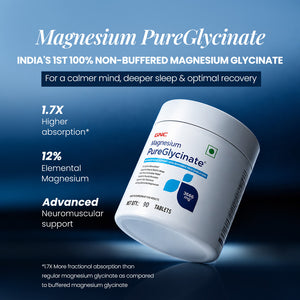
Because it is gentle and highly absorbable, it is often preferred for long-term daily supplementation. For a reliable daily option, GNC Magnesium PureGlycinate is a trusted choice in this category.

Beware of Magnesium Glycinate Products That Claim to Be Pure but Are Often Adulterated and Diluted
Here's something many consumers don't realize.
Some products marketed as "Magnesium Glycinate" are actually buffered magnesium glycinate. This means manufacturers mix true magnesium glycinate with cheaper magnesium salts such as magnesium oxide to increase the elemental magnesium number shown on the label.
While this may look attractive, it changes the supplement significantly.
Buffered products may:
-
Contain less actual magnesium glycinate
-
Offer lower bioavailability
-
Be more likely to cause digestive discomfort
-
Reduce many of the advantages associated with pure chelated magnesium
A 100% non-buffered magnesium bisglycinate contains only the chelated form without dilution from oxide or other inexpensive salts. If you're purchasing magnesium specifically for sleep, stress management or recovery, it's worth checking whether the label states 100% non-buffered magnesium bisglycinate.
Understanding Elemental Magnesium and Yield
One of the biggest causes of confusion is the number printed on the front of the bottle. In simple terms, the number on the label usually refers to the total weight of the compound, not just the magnesium itself. Elemental magnesium is the actual amount your body gets, while yield shows how much of that magnesium is available in each serving after the attached molecules are taken into account. This is why two supplements can look similar on the label but deliver very different amounts of usable magnesium. For example, one GNC serving provides 440 mg of elemental magnesium with a 13% yield, so the amount your body can use depends on the form and quality of the supplement.
How to Choose the Right Magnesium Supplement
Before buying a magnesium supplement, ask yourself these simple questions:
-
Is it the right form for my health goal?
-
Is it a chelated, highly absorbable form?
-
Is it non-buffered or diluted with cheaper salts?
-
Is it gentle enough for daily use?
-
Does the brand provide transparent labeling?
A helpful tip: look for non-buffered magnesium glycinate if you want better absorption and fewer stomach issues.
Final Takeaway
Magnesium supplements are not all created equal. Each form has its own strengths, and choosing the right one can make a real difference in how you feel. Magnesium citrate is often chosen for constipation relief, magnesium threonate is known for its brain-supporting properties, and magnesium glycinate is one of the most trusted options for sleep, stress management, muscle recovery and overall daily wellness because it is both well tolerated and well absorbed. The most important thing is to look beyond the front label and understand whether a product is buffered or non-buffered, how much elemental magnesium it actually provides, and how well your body can absorb it. In the end, the best magnesium supplement is not the one with the biggest number on the bottle, but the one your body can truly use and when you choose wisely, magnesium can become a simple but powerful part of better health.