











From whey to plant protein, the world of nutrition has constantly evolved to meet changing consumer needs. Now, a new player has stepped into the spotlight: Yeast Protein. Offering a complete amino acid profile, impressive sustainability credentials, and versatile applications, yeast protein is rapidly becoming one of the most exciting innovations in the protein industry. But what exactly is yeast protein, and does it deserve a place in your daily nutrition routine?
What is yeast protein, and how is it produced?

Yeast protein comes from a tiny single-celled fungus called Saccharomyces cerevisiae, the same one that makes your bread rise. But before you picture yourself scooping bread yeast into a shaker bottle, hold on. The yeast used for protein supplements is specifically grown, harvested, and processed for nutrition. It's a completely different product.
Here's how it works: yeast cells are fed a nutrient-rich broth (usually derived from sugarcane or sugar beet molasses) in a controlled fermentation environment. As they multiply, they pack themselves with protein; about 45 to 55% of their dry weight. Once they've done their job, they're harvested, heat-treated to deactivate them, and dried into a powder.
The result? A protein-dense, nutrient-rich powder that's naturally free from dairy and gluten, with a mild, slightly savoury taste.
The Amino Acid Profile And Why It Actually Matters
Here's the thing about protein: not all protein is created equal. What your body actually needs aren't just grams of protein; it needs the right building blocks within that protein, called amino acids.
There are 9 essential amino acids your body can't make on its own. It needs to get them from food. And yeast protein? It has all 9.
Here's a simple look at what you're getting:
| Leucine | The king of muscle building, triggers muscle protein synthesis |
| Isoleucine | Supports energy and muscle recovery |
| Valine | Helps repair tissue and regulate energy |
| Lysine | Builds collagen, supports immunity and yeast has loads of it |
| Methionine + Cysteine | Antioxidant support, liver health |
| Threonine | Gut lining integrity and immune function |
| Tryptophan | Your mood and sleep quality depend on this one |
| Phenylalanine + Tyrosine | Mental focus, dopamine production |
| Histidine | Tissue repair, red blood cell function |
Research consistently shows that indispensable amino acids make up more than 40% of yeast protein's total amino acid content, which meets the FAO/WHO benchmark for high-quality protein. That's the global standard, and yeast clears it.
One thing worth highlighting: yeast protein is particularly high in lysine, an amino acid that's almost always low in grain-heavy diets (think rice, wheat, corn). If those are staples in your eating, yeast protein fills that gap beautifully.
Is Yeast Protein a "Complete" Protein?
Most plant proteins are incomplete; they're missing or very low in at least one essential amino acid. Rice protein is low in lysine. Hemp is low in lysine, too. Pea protein is close but not quite there on methionine.
But Yeast protein contains all 09 essential amino acids in amounts your body can actually use. That puts it in rare company among plant-based sources.
A 2024 study published in Food Chemistry, the first of its kind to formally assess yeast protein's quality scores, found a PDCAAS (Protein Digestibility Corrected Amino Acid Score) of 100% for adults and children over three. That's a perfect score. The DIAAS (the newer, more precise metric) came in at 82.42%, outperforming every common plant protein tested in the study.
Key nutrients naturally present in yeast protein
In Yeast protein, you don't just get protein; you get a whole bunch of other nutrients as well.
B-Vitamins: Thiamine, Riboflavin, Niacin, B6, Folate, all naturally present. These are the vitamins your body needs to actually convertfood into energy. If you're constantly tired despite eating well, low B vitamins are often the culprit.
Beta-Glucans: These are soluble fibres found in yeast cell walls, and they're genuinely impressive. A 2024 study in iScience (Cell Press) confirmed that yeast beta-glucans are major drivers of "trained immunity," meaning they help your immune system remember and respond better to threats. A separate 2024 study in Frontiers in Immunology specifically showed that S. cerevisiae beta-glucans are among the most potent inducers of this immune memory effect. For anyone training hard and getting sick every few months, this is worth paying attention to.
Chromium: Particularly high in brewer's yeast. Plays a real role in how your body handles insulin and blood sugar. Useful for anyone managing energy crashes or cravings.
Zinc and Selenium: Both support immune function, thyroid health, and recovery. Zinc alone is involved in over 300 enzymatic processes in the human body.
Bioactive Peptides: A 2024 comprehensive review in Comprehensive Reviews in Food Science and Food Safety found that yeast-derived peptides showed blood pressure-lowering, blood sugar-regulating, and antioxidant effects in studies. These are active compounds, not just passive nutrients.
You're not just buying protein. You're buying a whole system of support.
How Well Does Your Body Actually Absorb It?
Unprocessed, whole-cell yeast doesn't digest very easily. The cell walls contain tough fibres (chitin and mannans) that your digestive enzymes struggle with. That's where older research got a bad reputation for yeast protein.
But here's what changed: modern processing.
Today's yeast protein supplements go through autolysis, heat treatment, or enzymatic hydrolysis, processes that break down those tough cell walls and unlock the protein inside. The difference in digestibility is significant.
How does it compare?
| Protein Source | DIAAS Score | Lactose-Free | Gluten-Free |
|---|---|---|---|
| Yeast Protein (processed) | 0.82-1.0 | ✓ Yes | ✓ Yes |
| Whey Protein | 1.09 | ✗ No | ✓ Yes |
| Soy Protein | ~0.91 | ✓ Yes | ✓ Yes |
| Pea Protein | ~0.82 | ✓ Yes | ✓ Yes |
| Hemp Protein | ~0.63 | ✓ Yes | ✓ Yes |
| Rice Protein | ~0.42 | ✓ Yes | ✓ Yes |
Properly processed yeast protein sits comfortably alongside soy and significantly above hemp, rice, and other popular plant options.
There's also an interesting angle here: a 2023 study in Food Research International found that yeast protein is a "slow-digesting" protein, meaning it releases amino acids gradually rather than in a spike. That's actually a feature, not a bug. Slower digestion means sustained amino acid availability, better satiety, and potentially better overnight muscle repair.
Yeast Protein in Action: GNC Select Yeast Protein
As yeast protein becomes more widely available, it's worth looking beyond just the protein content. Factors such as digestibility, ingredient quality, and third-party testing can influence the overall value of a supplement.

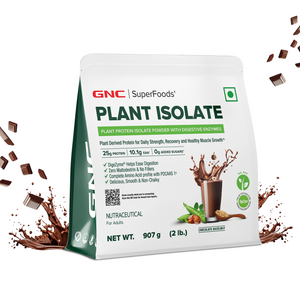
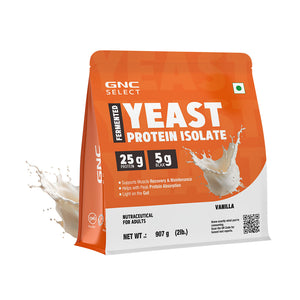
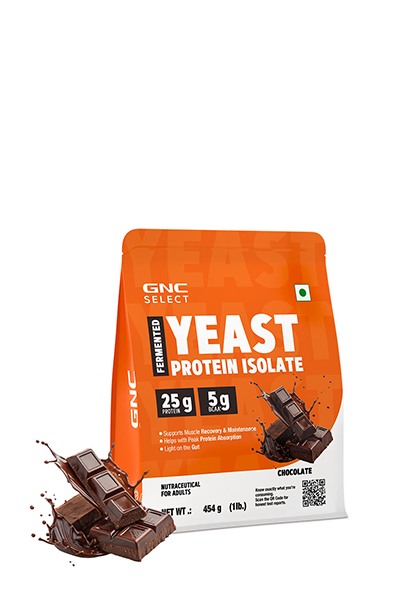
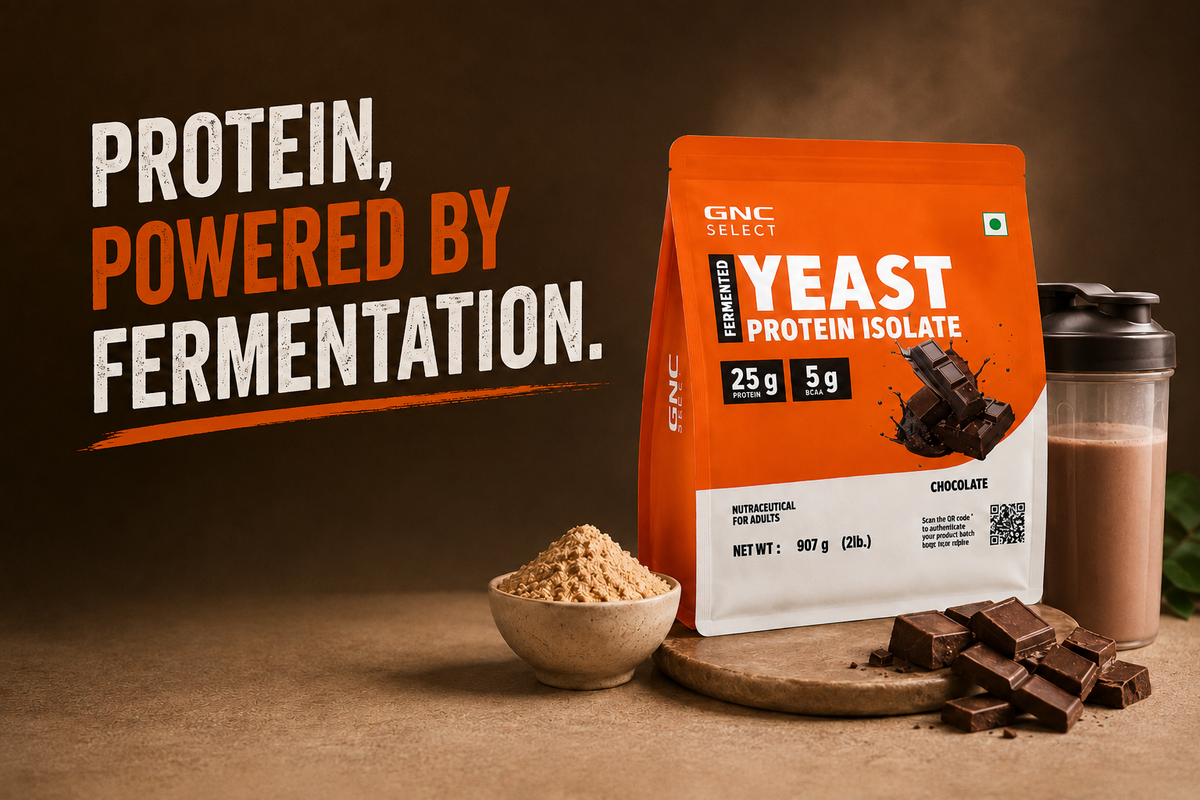
For instance, GNC Select Yeast Protein one scoop provides 25g of protein and 5g of BCAAs per serving, along with added protease, an enzyme that helps support protein digestion. The formula is 100% vegetarian, non-GMO, gluten-free, contains no added sugar, and is free from artificial colours, flavours, and preservatives. It is also certified free of banned substances, a convenient way to incorporate yeast protein into your daily routine.
Ultimately, choosing a yeast protein supplement comes down to finding a product that delivers quality protein, aligns with your dietary preferences, and fits your nutrition goals.
Who Should Actually Be Using Yeast Protein?
Athlete or gym regular: A 2024 double-blind randomised controlled trial at the University of Queensland put 79 participants through 8 weeks of resistance training while supplementing with either yeast protein, whey protein, or a placebo. The result? Yeast protein produced lean mass and strength gains statistically equivalent to whey. Equivalent. To whey. That's a headline that deserves more attention than it's gotten.
Vegan or plant-based: You finally have a complete protein that also covers your B-vitamin bases without needing five different supplements to fill the gaps.
Lactose/gluten intolerant: Yeast protein is naturally free from both. No workarounds needed.
Age over 50: Muscle loss accelerates with age (it's called sarcopenia, and it starts earlier than most people think). Getting enough high-quality, complete protein becomes more important, not less. Yeast protein delivers on both completeness and digestibility, without the digestive heaviness some people experience with whey.
Getting sick after intense training blocks: The beta-glucan content might be exactly what your immune system needs to stay resilient through heavy training periods.
Let's Bust Some Myths
"Won't eating yeast give me a yeast infection?" No. This is probably the most common concern, and it's based on a misunderstanding. The yeast in supplements is deactivated; it's dead. It cannot grow, colonise, or do anything in your gut except provide nutrition. There is zero clinical evidence linking yeast protein supplementation to fungal infections in healthy people.
"Isn't yeast protein hard to absorb?" It was in its unprocessed form decades ago. Modern commercially processed yeast protein scores 0.82-1.0 on the DIAAS scale. That concern is outdated.
"It probably tastes awful." Undebittered brewer's yeast? Yes, bitter. Primary-grown yeast protein isolates? Mild, slightly savoury, and genuinely easy to blend. The 79 participants in the 2024 clinical trial stayed compliant for 8 full weeks, which tells you something about palatability.
"It's just for vegans." Absolutely not. If you're already using whey and want to diversify, cut dairy, or add immune-support compounds to your stack, yeast protein is a smart addition regardless of your diet.
The Bottom Line
Yeast protein isn't a trend. It isn't a fad. It's a nutritionally complete, research-backed, surprisingly versatile protein source that's been quietly earning its credentials while everyone else chased the next superfood.
A perfect amino acid score. Comparable muscle-building results in whey. Natural immune support through beta-glucans. Packed with B-vitamins, zinc, and selenium. Dairy-free, gluten-free, and sustainable.
If you're serious about your health, whether you're an athlete, a busy parent trying to eat better, or someone just starting their wellness journey, yeast protein deserves a real look.
It's not about replacing what works. It's about knowing your options. And now you do