











Walk into most protein aisles, and the messaging is identical: bigger scoops, bigger numbers, bigger muscle gains. But you're not training for a stage; you're just trying to get through your day, support your fitness, and not feel weighed down after a shake. That's a different goal. And it needs a different protein.
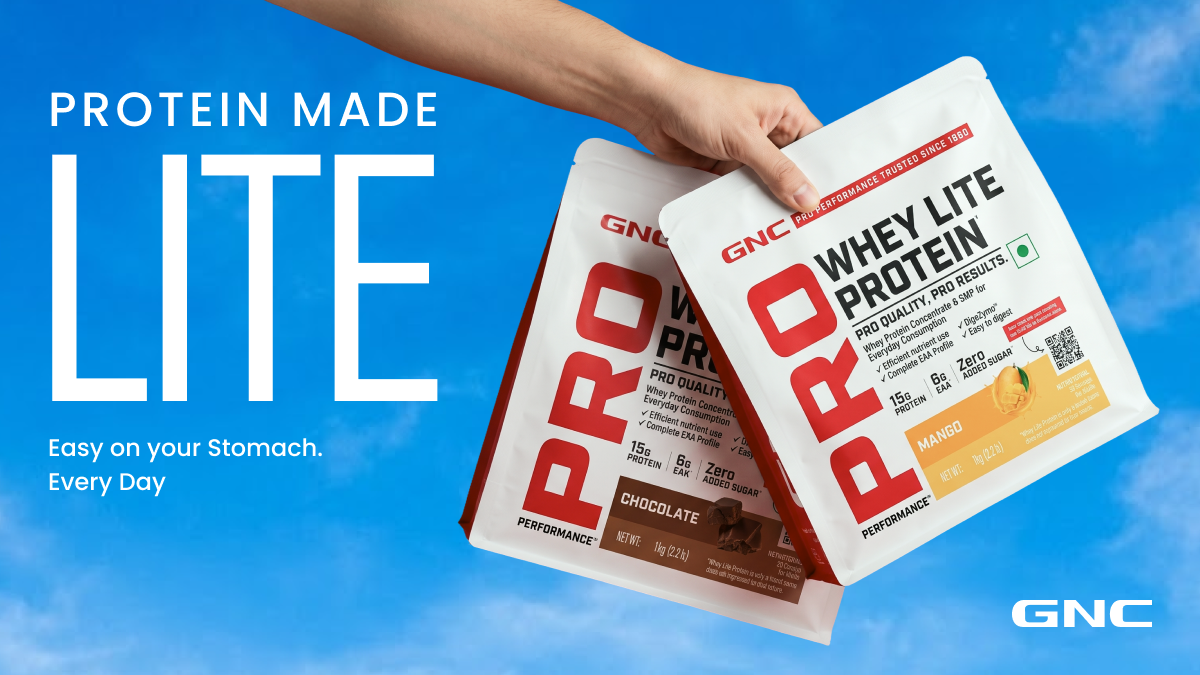
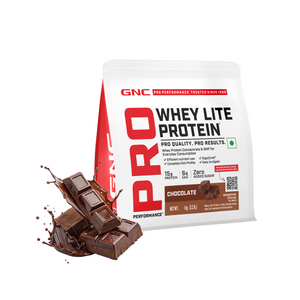
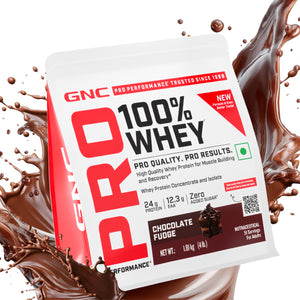
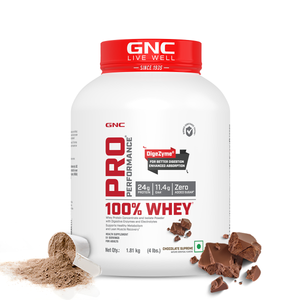
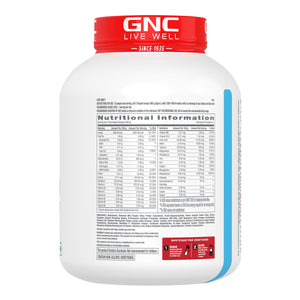
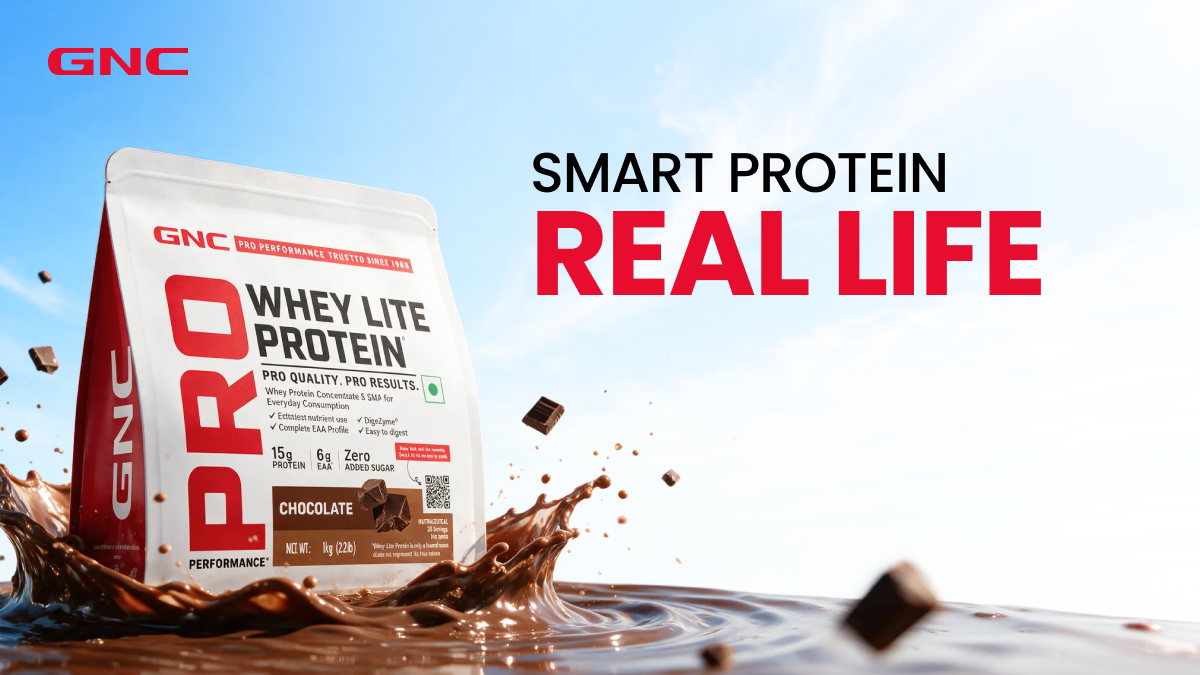
GNC Pro Performance Whey Lite Protein was built around that exact gap: 15g protein and 6g EAAs per scoop from a Whey Protein Concentrate + Skimmed Milk Powder (SMP) blend, with DigeZyme® added specifically for easier digestion. So it isn’t trying to be the biggest protein on the shelf. It’s trying to be the one you’ll actually finish the tub of.
The Everyday Protein Gap Nobody Talks About

Protein deficiency doesn’t usually look dramatic. It looks like skipped breakfasts, a carb-heavy lunch, and one big protein-dense dinner, a pattern that’s now backed by hard numbers. A large 2026 survey by LocalCircles and Country Delight , covering over two lakh responses across India’s top urban districts, found that six out of ten urban Indians surveyed don’t consume protein-rich foods daily, and only four in ten include foods like lentils, eggs, milk, paneer, fish, or nuts in their everyday meals.
Awareness is arguably a bigger problem than access: nearly three-fourths of respondents couldn’t correctly identify how much protein an average adult needs each day, and 85% don’t track or estimate their protein intake at all. For context, the ICMR recommends 0.83-1 gram of protein per kilogram of body weight per day for healthy Indian adults, a target most people aren’t consciously working toward. That’s the exact audience GNC Pro Performance Whey Lite Protein is designed for: not competitive athletes, but everyday adults with a quiet, unaddressed protein shortfall. GNC Pro Performance Whey Lite Protein is built around one simple idea: make daily protein easier to continue, easier to digest, and easier to fit into real routines.
Unlike many heavy gym-focused whey formulas, Whey Lite keeps the experience simpler and more comfortable with no added sugar and a smoother drinking texture that feels easier to continue daily. What truly sets it apart is DigeZyme®, a clinically studied enzyme blend that helps support easier digestion and improved protein utilisation while reducing the heavy, bloated feeling often associated with traditional whey proteins. Each scoop delivers: 15g protein + 6g EAAs from a Whey Protein Concentrate + SMP blend DigeZyme®, a multi-enzyme blend (alpha-amylase, protease, lactase, cellulase, lipase), is added for smoother digestion. No added sugar, with a lighter, smoother mixing texture than typical “hardcore” whey formulas Mango and Chocolate flavours, mixable with water or milk in under a minute, no blender required It’s deliberately positioned for first-time protein users, busy professionals, and people who move throughout the day (walking, yoga, cycling, regular gym sessions) without training like a competitive lifter. The base of Whey Lite isn't whey alone; it's a blend of Whey Protein Concentrate (WPC) and Skimmed Milk Powder (SMP). That combination is deliberate, not a cost shortcut, and it comes down to how the two proteins behave once they're in the body. WPC digests quickly, delivering a fast spike of amino acids into the bloodstream shortly after you drink it. SMP, on the other hand, is roughly 80% casein, a slower-digesting milk protein that forms a soft gel in the stomach and releases amino acids gradually over several hours rather than all at once. A randomised , double-blind clinical trial published in the American Journal of Clinical Nutrition found that when fast and slow dairy proteins are combined, the slower-digesting casein component is what sustains elevated amino acid delivery and muscle protein synthesis over an extended window, compared to a fast protein consumed alone, producing what researchers describe as a prolonged, more sustained synthetic response rather than a short spike.
For an everyday protein, one that might be had at breakfast and needs to hold you over for hours, not just fuel a 45-minute post-workout window, that combination of an immediate amino acid supply plus a slow, sustained release is arguably more useful than a whey-only formula built for rapid post-training absorption. SMP also brings a naturally smoother, creamier mixability than concentrate alone, along with a modest calcium contribution, practical extras for a product meant to double as a light meal replacement, not just a recovery shake. There’s a common assumption that a lighter protein must be a weaker one. The research on protein timing actually argues the opposite. Diets in most urban households, in India and elsewhere, tend to be protein-skewed, minimal at breakfast, moderate at lunch, heavy at dinner. A controlled feeding study published in the Journal of Nutrition comparing an even protein distribution across meals to a skewed one found that consuming a moderate amount of protein at each meal supports 24-hour muscle protein synthesis more effectively than concentrating most of it into the evening meal, even though U.S. dietary data show adults typically eat roughly three times more protein at dinner than at breakfast. This pattern isn’t unique to any one country; it’s simply how most modern eating schedules end up shaped.
This is where a lighter, easy-to-mix protein like Whey Lite earns its place, not as a replacement for meals, but as a bridge that makes it realistic to hit a moderate protein target earlier in the day, at breakfast or mid-morning, instead of loading it all in at night. A lot of people quietly stop using protein powders because of bloating or a heavy feeling, not because the protein itself doesn’t work, but because digesting a concentrated dose of it doesn’t always sit well. This is the specific problem DigeZyme® is designed to address. DigeZyme® has been evaluated in a randomised, double-blind, placebo-controlled clinical trial in patients with functional dyspepsia (chronic indigestion). Over 60 days, participants receiving the multi-enzyme complex showed improvements on standard dyspepsia symptom questionnaires compared to placebo, with a good safety profile. While that trial looked at digestive symptoms generally rather than whey protein specifically, it’s the same enzyme blend included in Whey Lite, and it explains the “digestive comfort” claim with more than just marketing language; it’s the reason a scoop of Whey Lite is designed to feel lighter than a standard whey shake.
First-time protein users who find regular whey too heavy or too intense to start with Busy professionals who skip meals during long workdays and need a fast, no-fuss protein option Everyday fitness enthusiasts, walkers, cyclists, yoga practitioners who aren’t training for hypertrophy Anyone managing digestive sensitivity who has struggled with bloating on standard whey People are simply trying to close the protein gap without overhauling their entire diet. Post-workout: A scoop after any activity; gym, walk, cycling, supports recovery without feeling heavy Morning routine: Blended into a quick breakfast smoothie with milk, mango, or banana Midday reset: A practical option for the long gap between lunch and dinner Backup meal: For the days when meals get skipped entirely Mix one scoop with 200-250ml of water for a lighter drink, or milk for a creamier one. No blender required, just shake and go. For someone who isn’t chasing a physique goal, the case for consistent protein intake isn’t only about muscle; it extends into general metabolic health. An umbrella systematic review of randomised controlled trials examining whey protein’s effects on type 2 diabetes risk factors found that whey protein supplementation may improve markers such as HbA1c, insulin resistance, and blood pressure in individuals at risk of metabolic syndrome, without adverse effects on these markers.
Separately, protein’s role in appetite regulation is well established: a 2026 systematic review in Nutrients notes that protein is considered the most satiating macronutrient, with satiety increasing in a roughly linear relationship to the amount consumed, relevant for anyone using a shake to manage hunger between meals rather than to bulk up. None of this means a shake replaces real food. But it does mean that a light, everyday protein habit has research-backed benefits that go beyond the gym. 1. Is Whey Lite suitable if I don’t work out regularly? Yes. It’s built for everyday nutrition, not just workout days, and can be used on rest days or lighter-activity days as a simple way to close the protein gap in your regular diet. 2. How is this different from a regular whey protein? GNC Pro Performance Whey Lite Protein uses a Skimmed Milk Powder + Whey Protein Concentrate blend with a lighter, smoother formulation and added DigeZyme® for easier digestion, versus the heavier, higher-protein formulas built for intensive training. 3. Does it contain added sugar? No. It has zero added sugar, though it does contain naturally occurring sugars from the milk-based ingredients. 4. Can beginners use this safely? Yes, it’s specifically designed to be an approachable entry point for first-time protein users. 5. What does DigeZyme actually do? It’s a multi-enzyme blend that helps break down carbohydrates, proteins, and fats, supporting easier digestion and reducing the heavy or bloated feeling some people associate with standard whey.What’s Actually Inside GNC Pro Performance Whey Lite Protein

Why the WPC + SMP Blend Actually Makes Sense
Why “Lite” Doesn’t Mean Less Effective
The Digestion Piece: What DigeZyme Actually Does
Who This Is Really Built For
How to Fit It Into a Real Day

The Bigger Picture: Protein and Everyday Health
FAQs