














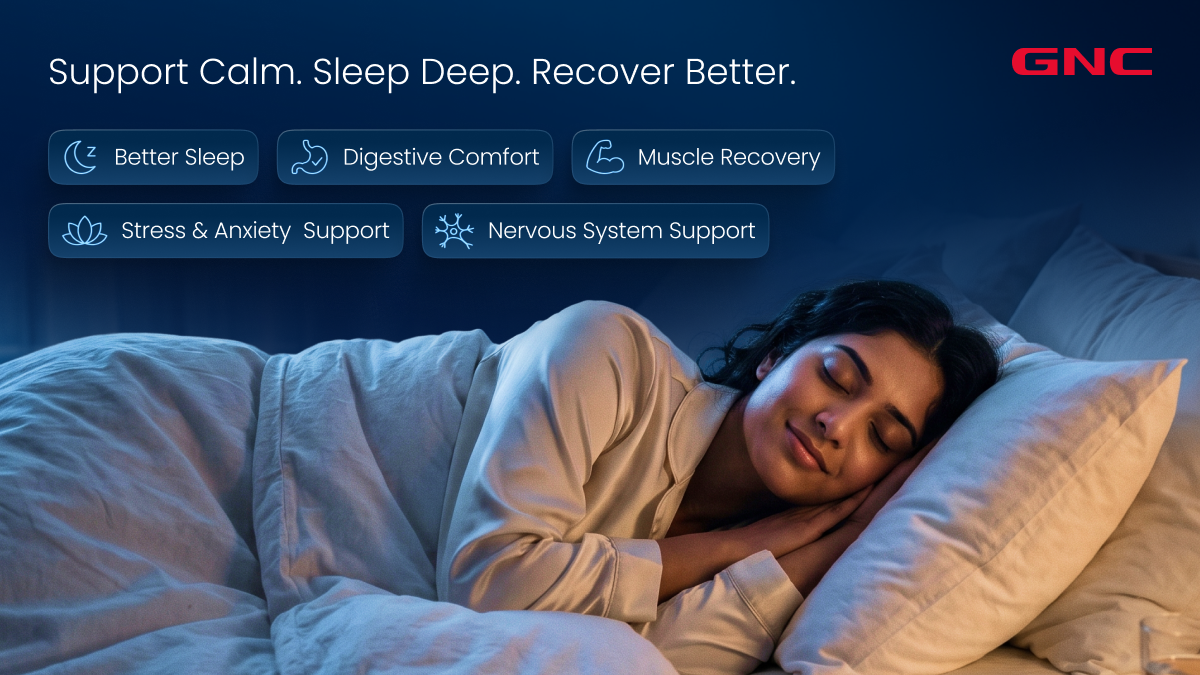
Most people associate magnesium with muscle cramps or sleep recovery. But magnesium's role extends far beyond that. It influences how your brain handles stress, how well you sleep, how efficiently your muscles recover, and even how effectively your body switches into recovery mode.
The catch? All magnesium supplements do not work the same way.
Understanding how magnesium interacts with your nervous system can help you choose the right form and experience the benefits you may have been missing.
Magnesium and Your Nervous System: The Link Worth Understanding
Your body operates through the Autonomic Nervous System (ANS), which controls many unconscious processes, including heart rate, digestion, breathing, stress response, and sleep.
The ANS has two major branches:
Sympathetic Nervous System (SNS): Fight or Flight
The SNS prepares your body for action. It is activated during stressful situations, intense work, excessive caffeine intake, late-night screen exposure, or emotional stress.
When activated:
-
Cortisol levels rise
-
Heart rate increases
-
Muscles stay tense
-
Digestion slows down
-
Sleep quality declines
Parasympathetic Nervous System (PNS): Rest and Digest
The PNS is responsible for recovery.
When activated:
-
Heart rate slows
-
Muscles relax
-
Digestion improves
-
Recovery processes begin
-
Deep sleep becomes possible
The challenge is that modern lifestyles often keep us in a prolonged SNS-dominant state, making it difficult for the body to fully switch into recovery mode.
Magnesium is an essential mineral for nervous system function. Research has highlighted magnesium’s role in central nervous system regulation and neurotransmission.
Magnesium may also support calming pathways in the brain, including GABA-related signalling, which is important for relaxation and sleep. When magnesium intake is low, people may be more prone to nervous system overactivity, stress sensitivity, and poor sleep quality. Studies have linked magnesium status with stress susceptibility and sleep outcomes.
When Your Body Refuses to Switch Off
Ever feel exhausted but unable to relax? This often involves a combination of cortisol, GABA, and NMDA receptor activity.
Cortisol is essential for helping the body respond to short-term stress, but when the stress response stays switched on for too long, it can disrupt circadian rhythm, delay relaxation, and make it harder for the body to enter true recovery mode.
NMDA (N-methyl-D-aspartate) receptors help control how brain cells send activating signals in the brain. When they are overactive, the nervous system can stay in a more alert, switched-on state, making it harder for the body to relax and transition into rest.
Gamma-Aminobutyric Acid (GABA) is the brain's primary calming neurotransmitter. It acts like the nervous system's natural brake, helping quiet overactive signals that keep the body in a constant state of alertness. By reducing neural excitability, GABA supports relaxation, makes it easier to fall asleep, and helps the body shift from fight-or-flight mode into parasympathetic rest-and-digest mode.
GABA helps:
-
Reduce excessive brain activity
-
Promote relaxation
-
Support sleep initiation
-
Help your body switch into rest-and-digest mode
Magnesium is closely linked to the body’s stress and calming pathways. It helps regulate the hypothalamic-pituitary-adrenal (HPA) axis, which influences cortisol release during stress. When magnesium levels are low, the stress response may become more pronounced, and cortisol activity may remain elevated for longer than ideal. Magnesium also naturally sits within NMDA receptors and helps prevent excessive stimulation. By acting as a natural blocker of NMDA receptors, it helps limit excessive neuronal excitation and supports a calmer nervous system. At the same time, magnesium supports GABA activity, the brain’s primary calming neurotransmitter, which helps promote relaxation and prepare the body for sleep.
When magnesium levels are insufficient:
-
Cortisol regulation may become less balanced
-
NMDA activity may become overactive
-
GABA’s calming influence may be reduced
-
Neural excitability increases
-
Racing thoughts become more common
-
Falling asleep becomes harder

Role of Magnesium
Magnesium supports several essential functions in the body, including sleep, stress management, digestion, growth hormone activation, and muscle recovery.
Restful Sleep
Magnesium supports sleep through several pathways by helping maintain normal GABA activity, promoting relaxation, and supporting nervous system balance, while also contributing to healthy sleep architecture and circadian regulation. A clinical study has reported better sleep quality and sleep onset in people with low magnesium intake.
Stress and Anxiety Management
Chronic stress can increase magnesium loss and raise the body’s need for magnesium, making adequate intake important for normal stress response and nervous system support; research suggests magnesium, especially with vitamin B6, may help reduce perceived stress and anxiety scores.
Digestion
The digestive system functions best when the body is in a parasympathetic, “rest-and-digest” state, and magnesium may support this by helping maintain nervous system balance, promoting relaxation, and participating in numerous enzymatic reactions involved in nutrient metabolism.
Growth Hormone Activation
Much of the body's repair and regeneration happens during deep sleep, when growth hormone is released to support tissue repair, muscle recovery, and cellular regeneration. By supporting quality sleep, magnesium helps create the right environment for healthy growth hormone release.
Muscle Recovery and Relaxation
Much of the body's repair and regeneration happens during deep sleep, when growth hormone is released to support tissue repair, muscle recovery, and cellular regeneration. By supporting quality sleep, magnesium helps create the right environment for healthy growth hormone release.
The Science Behind How Magnesium Glycinate Acts in the Body
Magnesium Glycinate, also known as Magnesium Bisglycinate, is a chelated form of magnesium in which elemental magnesium is bound to two glycine molecules. This is called true chelation.
What that means in simple terms is:
-
Magnesium is protected as it moves through digestion
-
It may be absorbed more efficiently in the intestine
-
The form stays more stable
-
It can be delivered into the body more effectively
Compared with inorganic forms like magnesium oxide, magnesium glycinate may make better use of amino acid transport pathways, which can support absorption and overall utilization. It also comes with the added benefit of glycine. Glycine is an amino acid linked with relaxation and is often associated with healthy sleep support.
Because of this combination, magnesium glycinate is often chosen for sleep, recovery, and nervous system support.
Why Magnesium Glycinate Outperforms Other Forms
Different magnesium salts act differently in the body. Magnesium oxide contains a high amount of elemental magnesium on paper, but it is usually less well absorbed and more likely to cause digestive discomfort. Magnesium citrate may absorb better than oxide, but it can still have a laxative effect in some people. Magnesium chloride is absorbable, though its taste and GI tolerance may not suit everyone. Other forms like magnesium malate or taurate may be used for specific wellness goals, but they are not always the most gentle or versatile for everyday use.
Magnesium glycinate stands apart because it is a true amino acid chelate, meaning magnesium is bound to glycine. This structure helps protect the mineral during digestion and supports efficient absorption. It is also generally much gentler on the stomach than many other magnesium salts.
Magnesium Glycinate offers:
-
Superior bioavailability compared with many common magnesium salts
-
Better gastrointestinal tolerance
-
Reduced likelihood of laxative effects
-
Enhanced absorption through true amino acid chelation
-
Additional support from glycine, which is associated with relaxation and calmness
These characteristics make magnesium glycinate one of the best choices for daily magnesium replenishment, especially for people looking for a form that is effective, gentle, and well suited for sleep, stress support, and recovery.
The Case for Pure, Unadulterated Magnesium
When selecting a magnesium supplement, purity matters.
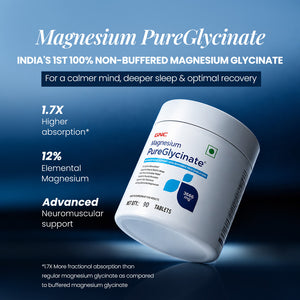
GNC Magnesium PureGlycinate is made with pure magnesium bisglycinate, an unadulterated, non-buffered form of magnesium designed for better absorption and stomach comfort. “Unadulterated” means the formula is not diluted with cheaper magnesium salts or lower-absorption fillers. “Non-buffered” means it contains only fully reacted magnesium bisglycinate, without being mixed with magnesium oxide or other forms to increase the magnesium content on paper. It is also a true chelated mineral, which means the magnesium is chemically bound to glycine amino acids for improved stability and absorption. Each serving provides 440 mg of elemental magnesium and is suitable for vegetarians. Compared with some magnesium supplements that use mixed or buffered forms, this formula is designed to deliver magnesium in a cleaner, more effective way, supporting everyday needs like sleep, relaxation, muscle recovery, and nervous system health.

Is This For You?
Magnesium Glycinate may be particularly beneficial for:
Athletes & Fitness Enthusiasts
To support muscle recovery, electrolyte balance, and post-workout relaxation.
Busy Professionals
To help manage daily stress and support recovery from demanding schedules.
Individuals Experiencing Poor Sleep
To support relaxation and healthy sleep quality.
People Under Chronic Stress
To help support nervous system balance and calmness.
Active Adults
To support muscle function, recovery, and overall wellness.
FAQs
1. What makes GNC Magnesium PureGlycinate different from regular magnesium supplements?
It uses non-buffered magnesium bisglycinate, true amino acid chelation, and enhanced absorption technology for superior bioavailability and gut tolerance.
2. What does non-buffered magnesium mean?
Non-buffered magnesium contains pure magnesium bisglycinate without dilution from magnesium oxide or other lower-absorption magnesium salts.
3. Can this help with stress and anxiety support?
Magnesium plays a role in nervous system function and relaxation, which may help support the body during periods of stress.
4. Does it help with sleep and muscle recovery?
Magnesium glycinate is commonly used to support restful sleep, relaxation, and normal muscle function, making it a popular choice for active adults and nighttime routines.
5. How long does it take to notice benefits?
Results may vary depending on your magnesium status, diet, and lifestyle. Some people notice benefits sooner, while others may need consistent daily use over time.
6. How and when to consume this product?
Recommended usage is 3 tablets daily after meals with water, or as directed by a healthcare professional. For best effects, use it consistently each day and preferably after food for better tolerance. Many people choose to take magnesium glycinate in the evening or at night as part of their relaxation or sleep routine.
7. Are there any side effects?
When taken as directed, magnesium glycinate is generally well tolerated. Excess intake may cause digestive discomfort in some individuals.