











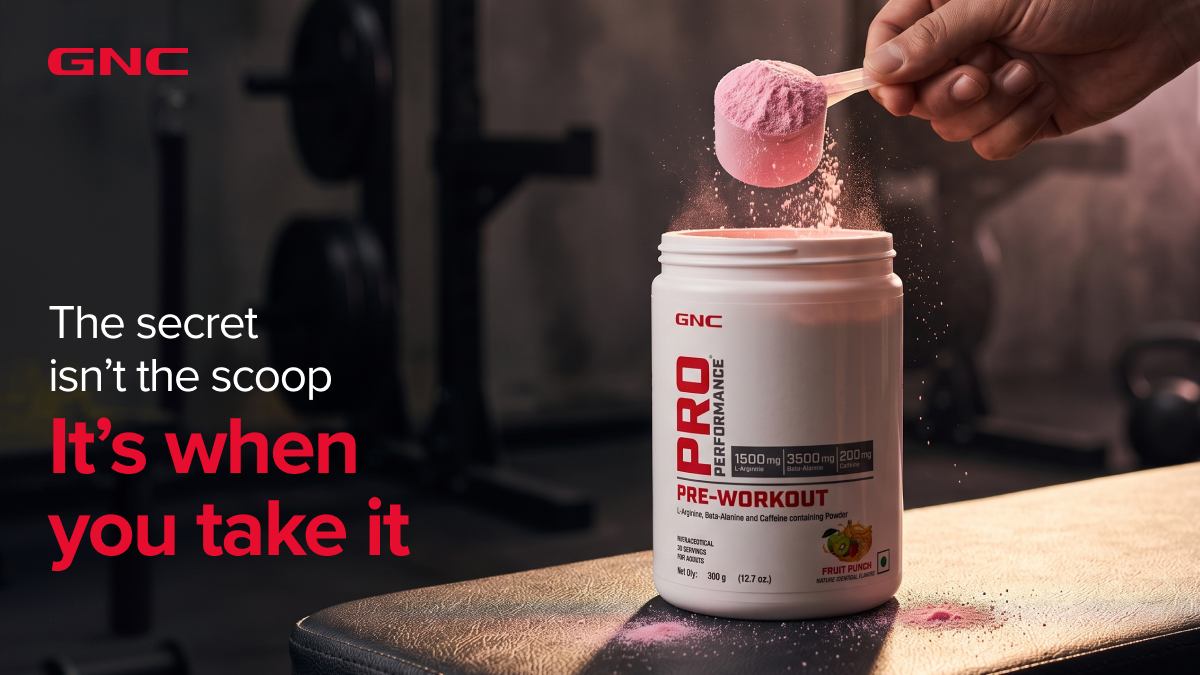
Picture this: it's 6:45 AM, you're staring at your gym bag, scoop of pre-workout in hand, and your phone's buzzing with a "you're late" text. You mix it fast, gulp it down, and jump straight into your warm-up. Ten minutes in... nothing. No energy kick, no focus, no extra push. Just you, tired, wondering what went wrong.
Here's the thing nobody explains when you buy your first tub: it's not just about what's in the pre-workout, it's about when you drink it. Your body needs a little time to actually absorb it before it can kick in. Drink it too close to your workout, and it simply hasn't kicked in yet. Take it too early, and by the time you're lifting, the effect has already worn off.
This blog breaks down exactly when to take your pre-workout, how much to take, and the small timing mistakes that are quietly costing you the results you're working so hard for.
Why Pre-Workout Timing Actually Matters
 Most pre-workout formulas rely on caffeine as the primary driver of energy and focus, alongside ingredients such as beta-alanine, citrulline, and creatine. None of these works the second they touch your tongue. They need to be digested, absorbed into your bloodstream, and reach peak concentration, and that process takes time.
A well-designed 2020 randomised, placebo-controlled crossover study from the University of Exeter set out to answer this exact question. Researchers already knew that low-dose caffeine supplements could improve endurance performance. What wasn't clear was when to take them for maximum benefit, and how the body's own caffeine metabolism played into it. That single distinction- knowing caffeine helps versus knowing when it helps most is exactly why timing deserves its own conversation, separate from the supplement label.
Think of it like watering a plant. Dump the water and walk away, and most of it runs off before the roots can use it. Give it time to soak in, and the plant actually gets what it needs. Your pre-workout works the same way; the "soak in" period is what determines whether you feel primed or flat by the time you hit your first set.
The Ideal Pre-Workout Window, According to Research
So, what does the science actually recommend? The consensus among sports nutrition researchers is a window of 30 to 60 minutes before training, with current guidance suggesting an intake of roughly 3–6 mg of caffeine per kilogram of bodyweight about an hour before exercise.
This isn't a rounded-off, "just to be safe" number pulled from nowhere. A 2024 study involving 20 resistance-trained participants found that consuming a multi-ingredient pre-workout supplement one hour before an upper-body workout led to measurably faster reaction time and a lower rating of perceived exertion compared to a placebo. In everyday terms, the same workout felt lighter and sharper, purely because of when the supplement was taken relative to training.
That's the real value of dialing in your timing: you're not changing your training program, your effort, or your form; you're just making sure your body is chemically ready to perform when it matters most.
Does the Type of Workout Change When You Should Take It?

Slightly yes. While the 30-60 minute window is a solid general rule, understanding why caffeine helps can guide small adjustments based on your training style.
For endurance and cardio-based training: Caffeine's benefit largely comes from its effect on fat utilization and fatigue perception. Research has connected caffeine intake to improved fat oxidation, which helps spare muscle glycogen, along with reduced perception of pain and effort during sustained exercise . This effect builds gradually, so a slightly shorter window, around 30-45 minutes, tends to work well.
For strength and power training: The priority is peak stimulation aligning with your heaviest and most demanding sets. The same body of research has linked caffeine intake to an increase in anaerobic peak power output , exactly what you want available during your working sets, not your warm-up. For lifting days, lean toward the fuller 45-60 minute window.
A simple way to remember it: For cardio, take it a little early and let the effect build up gradually. For strength training, time it so the peak hits right as you start lifting.
Dosage: Bigger Scoop Doesn't Mean Better Results
It's tempting to think a bigger scoop equals a bigger pump. Still, caffeine tolerance and response vary hugely from person to person, and pushing past your personal threshold usually only trades performance gains for jitters and an upset stomach.
A 2025 study on professional male kickboxers is a useful real-world example of this. Researchers compared two caffeine doses, 3 mg/kg and 6 mg/kg, against a placebo to evaluate their effects on performance markers and muscle soreness. The point wasn't that the higher dose won across the board; it's that the dose-response is individual, and finding your effective dose matters far more than chasing the largest serving size on the tub.
If you're new to pre-workout supplementation:
-
Start with half a scoop to gauge your tolerance.
-
Track how you feel across a few sessions before increasing.
-
Avoid stacking multiple caffeine sources (coffee + pre-workout + energy drink) on the same day.
Common Pre-Workout Timing Mistakes
1. Taking it too close to bedtime. Caffeine's performance benefits are well documented, but so is its cost to sleep quality. Researchers describe an ongoing tension between using caffeine to enhance performance and the need to protect sleep; training late in the evening with a strong stimulant dose can mean lying awake long after your last rep.
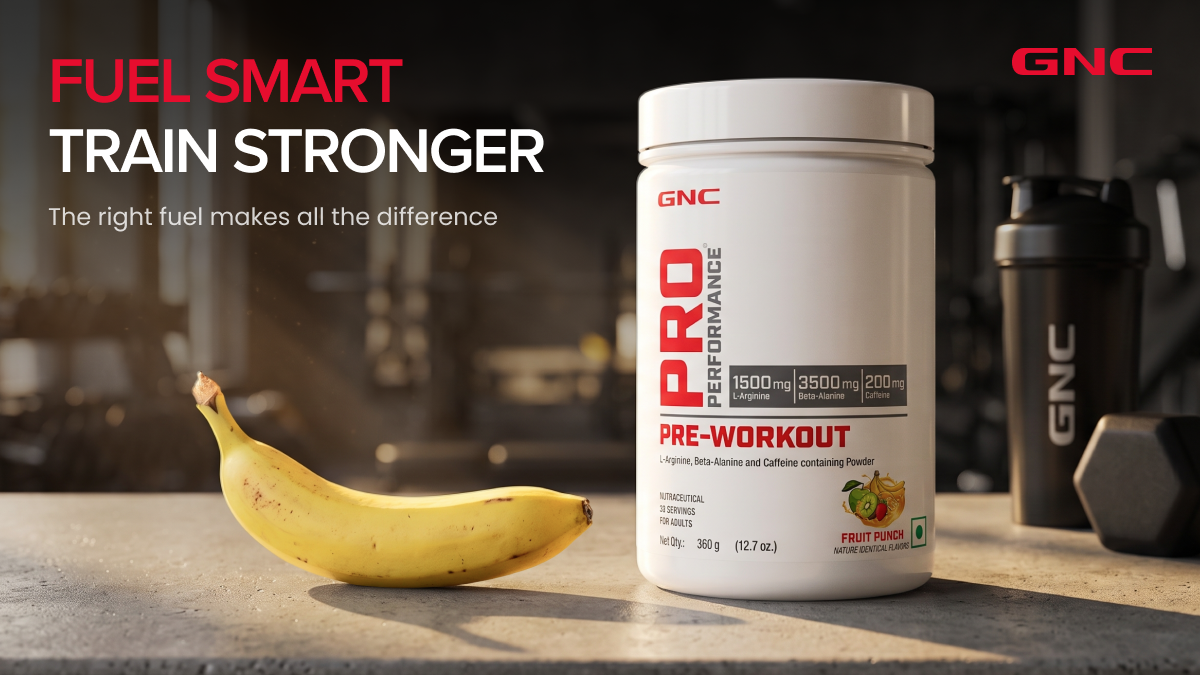
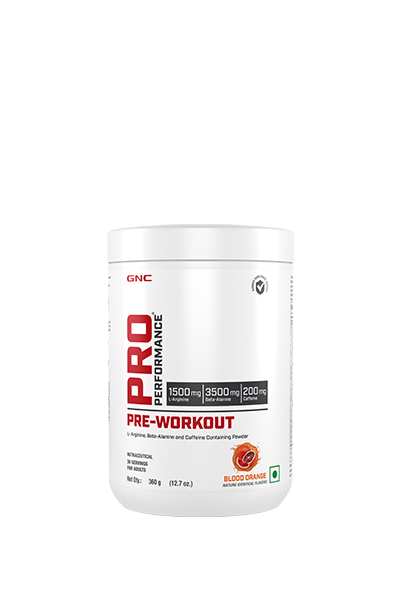
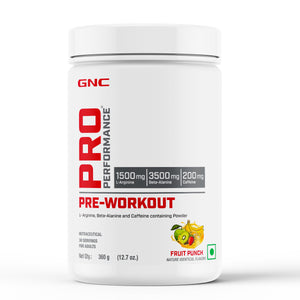
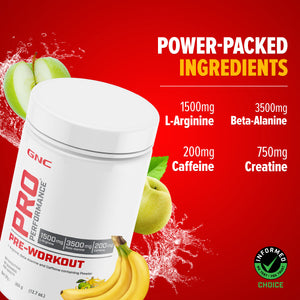
2. Training on an empty stomach with a strong formula. A strong, stimulant-loaded pre-workout with nothing in your stomach usually leads to nausea and dizziness, not a better workout. 3. Inconsistent timing session to session. If you take it 10 minutes before training one day and an hour before the next, you'll never actually know what's working. Consistency is what lets you learn your own response curve. 4. Ignoring your own caffeine sensitivity. What works for your gym buddy might genuinely be too much or too little for you. Timing research gives you a starting point, not a universal rule. Take your pre-workout 30-45 minutes before training (shift toward 60 minutes for heavy lifting days) New to pre-workout? Start with half a scoop. Pair it with proper hydration; a stimulant is not a substitute for water. Avoid taking it after 4-5 PM if you're sensitive to caffeine or sleep is easily disrupted. Keep your timing consistent so you can actually track what's working for your body. If you’re building your routine around a clean, dependable option, GNC Pro Performance Pre-Workout is worth looking at. It’s Informed Choice Certified and 100% sugar-free, with a formula built around a few standout actives:
3000mg L-Citrulline 4000mg Beta-Alanine for muscle pump and endurance 200mg caffeine alongside Vitamins B3, B6, B12, and Vitamin C to keep energy levels steady through a session, and L-Arginine, L-Tyrosine, L-Theanine, and L-Taurine to sharpen alertness and support muscle potential. At the end of the day, pre-workout isn’t magic; it’s a tool, and like any tool, it works best when you use it right. Get your timing window in place, respect your own dosage threshold, and stay consistent enough to actually notice what is working. Once that foundation is set, every scoop starts pulling its full weight, and your training finally gets the energy, focus, and endurance it deserves, right when you need it most. Q: How long before a workout should I take pre-workout? Most research points to a window of 30-60 minutes before training, giving your body enough time to absorb and activate the active ingredients. Q: Can I take pre-workout on an empty stomach? You can, but it increases the chance of nausea or jitteriness, especially with higher-caffeine formulas. A small snack beforehand can help if you're sensitive. Q: Is it bad to take pre-workout every day? Daily use can lead to caffeine tolerance building up, which reduces its effectiveness over time. Many people cycle their use or reserve it for higher-intensity training days. Q: What happens if I take pre-workout too late in the day? It can interfere with your sleep quality, even if you don't feel "wired" at bedtime. If you train in the evening, consider a lower-caffeine or caffeine-free formula. Q: How do I know the right dosage for me? Start with half a serving, especially if you're new to pre-workout, and adjust gradually based on how your body responds rather than jumping straight to a full or double scoop.Best Practices Checklist
Choosing the Right Pre-Workout for Your Routine
 Timing only gets you halfway there; the formula you’re timing matters just as much. Not every pre-workout is built the same way, and the right one should match your training intensity, your caffeine tolerance, and the specific outcome you’re training for.
A Final Thought
FAQs