





Let’s be honest. If you’ve been on a plant-based diet for any amount of time, you already know protein matters, and you’ve probably done your research. Pea protein. Soy protein. Brown rice protein. Each one brings something solid to the table. But the plant-based world doesn’t stop there, and the most exciting development in this space right now isn’t a new blend or a better flavour. It’s an entirely different ingredient, one that’s been quietly earning serious scientific attention. Meet yeast protein. And trust us, it’s worth knowing about.
The Ingredient You Never Thought to Look For
Yeast. Yes, the same thing that makes bread fluffy. It turns out this tiny, ancient organism has been quietly sitting on one of the most impressive nutritional profiles in the food world, and science has finally caught up to it.
Yeast protein is exactly what it sounds like: protein extracted from yeast cells, specifically a strain called Saccharomyces cerevisiae that humans have been using in food and fermentation for thousands of years. Through a careful process of fermentation and purification, the protein inside these cells is isolated and concentrated into a clean, high-quality supplement ingredient.
The result doesn't look or taste like anything you'd associate with yeast. No bread smell, no bitterness, no strange aftertaste. What you get is a smooth, neutral protein that works beautifully in a shake, and carries a nutritional profile that has researchers genuinely excited. Once you understand what's inside it, the excitement makes complete sense.
Why Does "Complete" Actually Matter?
Here's something that doesn't get explained clearly enough: most plant proteins are incomplete. That means they're missing one or more of the nine essential amino acids your body needs to function at its best.
Amino acids are the individual building blocks your body uses to repair muscles after a workout, keep your immune system running, support your energy levels, and maintain tissue across your entire body. Your body can make some of them on its own, but 09 of them have to come from your food. These are called essential amino acids, and if your protein source is short on even one, your body has to compensate by pulling from other sources, which isn't ideal.
The frustrating reality of most plant proteins is this: pea protein is low in methionine. Rice protein falls short on lysine.
Yeast protein doesn't have that problem. Research confirms that yeast protein contains all 09 essential amino acids at levels that rival whey, one of the most respected proteins in sports nutrition, and comfortably outperform pea, rice, soy, and wheat protein on amino acid quality benchmarks. For a non-animal source, that's a genuinely significant achievement. You're not settling for "good enough." You're getting the complete picture in a single ingredient.
What Does the Research Actually Say?
The science on yeast protein has been building steadily, and 2024 delivered some of its most convincing evidence yet.
A rigorous clinical trial published in the Journal of Food and Nutrition Research took 79 real adults, put them through eight weeks of structured resistance training three times a week, and split them into three groups: one taking yeast protein, one taking whey protein, and one taking a placebo. This wasn't a small or informal study; participants underwent DEXA scans at the start and end of the trial to precisely measure changes in body composition.
The results? Both the yeast protein and whey protein groups showed meaningful improvements in lean muscle mass and strength compared to the placebo group.
That's a significant finding. Whey protein has decades of research, billions of dollars of industry backing, and near-universal trust in the fitness world. For yeast protein to stand alongside it in a properly controlled human trial, matching it for muscle-building outcomes, is the kind of result that changes conversations.
And it's not just for gym-goers. Muscle health is a lifelong concern, not just a fitness one. Research has also found yeast protein to be a cost-effective, sustainable alternative to whey for helping older adults maintain muscle mass and mobility and reduce cardiometabolic risk. Whether you're 25 and training hard, or 55 and focused on staying strong and active, the protein your body needs doesn't change, and yeast protein delivers it reliably.
The Digestibility Piece, And Why It's the Missing Conversation
Here's something the supplement industry doesn't love talking about: consuming protein and actually absorbing protein are two entirely different things. You could be drinking a 30g protein shake every morning and only truly benefiting from a fraction of it, depending on how well your body processes that particular source.
Most plant proteins have what's called an "anti-nutrient" problem. Compounds naturally present in legumes and grains, things like phytates in soy or certain fibres in peas, can interfere with how efficiently your gut absorbs the protein. This is also a major reason why so many people experience that uncomfortable, heavy, bloated feeling after a plant protein shake. It's not in your head. It's in chemistry.
Yeast protein sidesteps a significant amount of this. Because it goes through fermentation during production, the protein arrives in a form that's already easier for your digestive system to handle. Yeast protein contains higher levels of essential amino acids and branched-chain amino acids compared to many legume-based proteins, and because of how it's processed, your body gets better access to all of it.
The practical takeaway? Less bloating. Less post-shake discomfort. And more of that protein actually reaches your muscles and does the work you're taking it for. For anyone who has quietly suspected that their plant protein isn't really working as well as advertised, yeast protein's fermented advantage is worth paying close attention to.
Let's Talk About Taste, Because Taste Is Non-Negotiable
If you've ever choked down a grassy, chalky, gritty plant protein shake and told yourself it was "fine", you deserve better. Taste isn't a superficial concern. It's the single biggest reason people stick with a supplement long enough for it to actually work. If you dread your post-workout shake, you'll skip it. And skipping it defeats the entire purpose.
Plant proteins, for all their nutritional merit, have a well-documented taste problem. Pea protein has a distinct earthy, sometimes beany flavour that doesn't disappear no matter how much chocolate flavouring is added. Soy protein can be slightly bitter. Rice protein brings a grittiness that no amount of blending fully resolves.
Yeast protein is genuinely different. Its natural flavour is mild and neutral, which means it works with other ingredients rather than fighting them. Chocolate flavour comes through cleanly. Vanilla stays smooth. A banana or berry smoothie isn't competing with a lingering aftertaste; it's just a banana smoothie with great protein in it. The texture is smooth, the mouthfeel is light, and the overall experience is one of the first times a plant-adjacent protein feels like something you'd actually choose, not something you endure.
That might sound like a small thing. It isn't. Consistency is everything in nutrition, and consistency starts with not dreading your shake.
Where GNC Select Fermented Yeast Protein Isolate Comes In
Once you start looking for yeast protein, you want to make sure you're getting it from a source that does it right, because the quality of the fermentation and purification process makes a real difference to what ends up in your body.
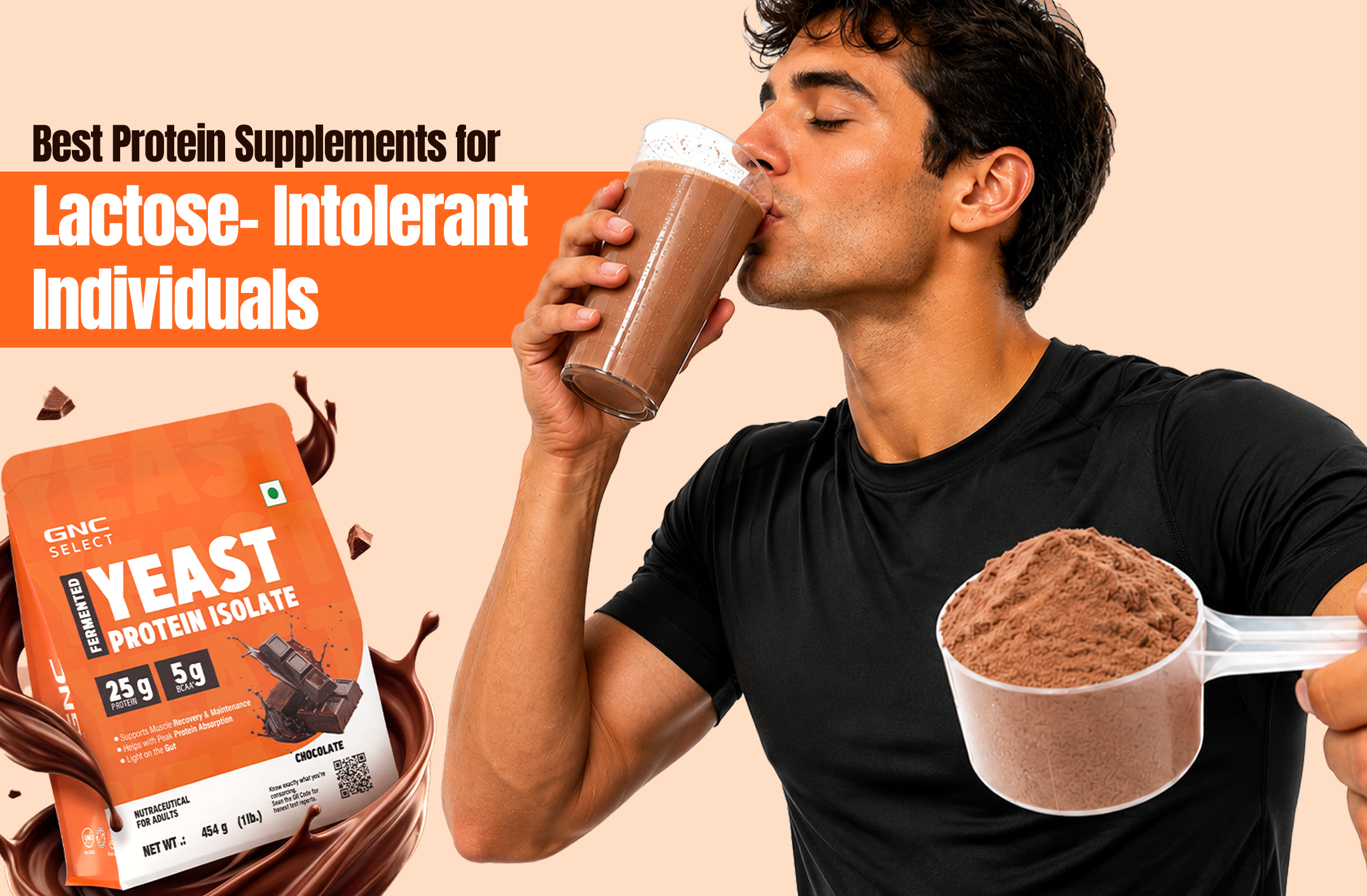
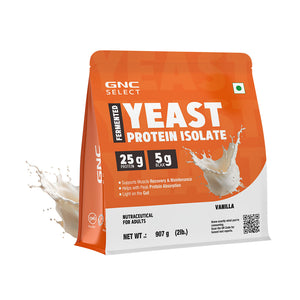
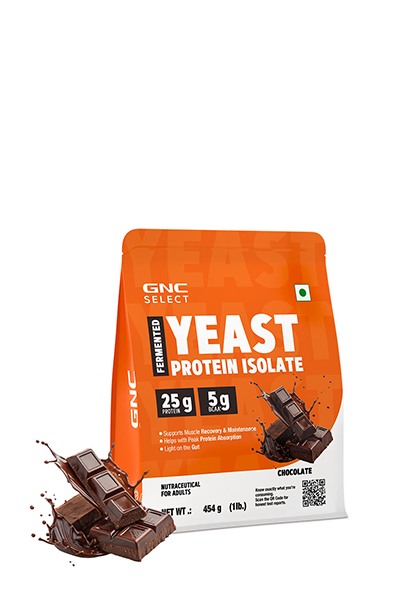
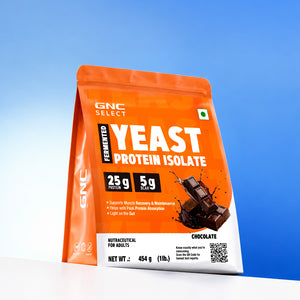
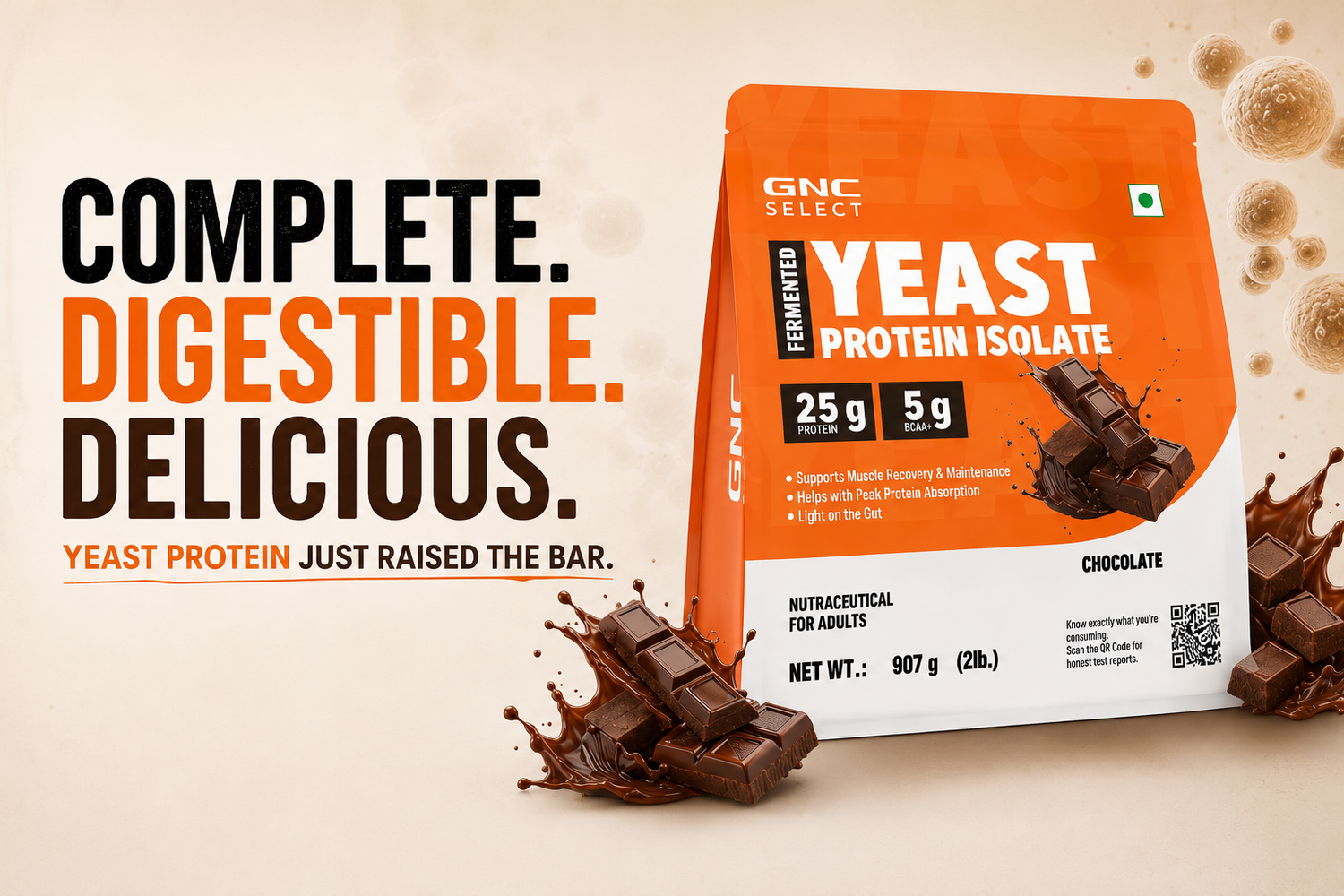
GNC Select Fermented Yeast Protein Isolate delivers 25g of protein per serving, sourced from fermented yeast isolate. No dairy. No soy base. No unnecessary fillers or complicated ingredient lists. Just a clean, complete protein designed to give your body everything it needs in one straightforward scoop.
The fermentation process isn't just a label claim; it's the step that separates yeast protein that gets absorbed well from protein that doesn't. GNC Select takes that seriously, which is why each serving gives you a full amino acid profile your muscles can actually use, in a form your gut can comfortably handle, and in a chocolate flavour that holds up on its own.
If you've been plant-based and quietly underwhelmed by what your current protein is doing, or if you've simply been curious about stepping outside the pea-and-soy loop, this is the option worth exploring.
The Bottom Line
The plant-based protein conversation has been going in circles for years. Same ingredients, same blends, same compromises. Yeast protein breaks that loop, with a complete amino acid profile that rivals animal protein, a fermented formula that your body absorbs more efficiently, a taste that doesn't ask you to suffer for your nutrition goals, and real clinical research backing it all up.
The bar for plant-based protein just got raised. And it was fermented, naturally.