











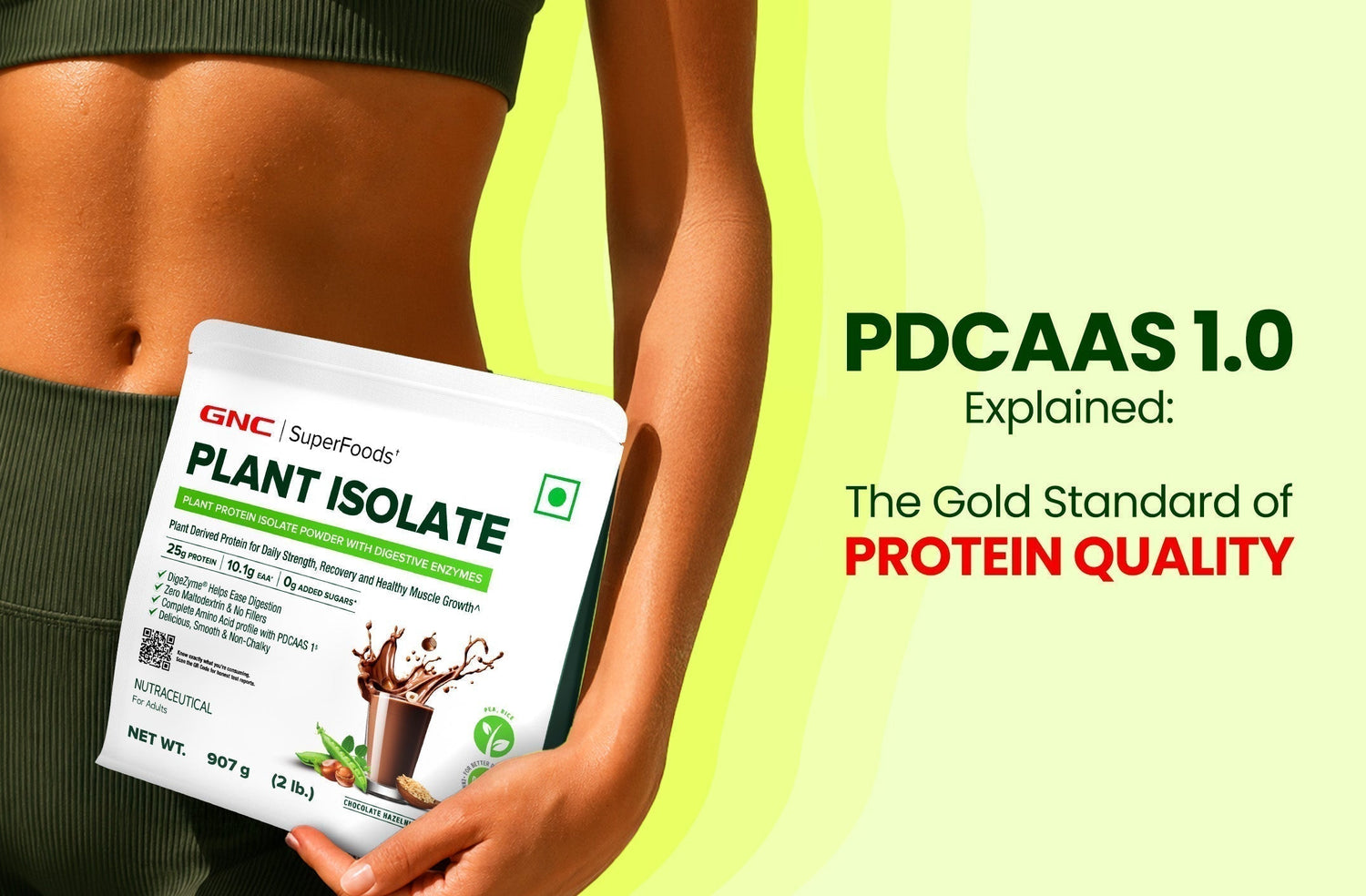
Plant protein has come a long way. Today, it's no longer just an alternative to traditional protein sources; it's a smart, sustainable, and effective choice for supporting your fitness and wellness goals. Whether you're vegan, vegetarian, lactose-intolerant, or simply looking to incorporate more plant-based nutrition into your diet, high-quality plant protein can help you meet your daily protein needs with confidence.
But what exactly makes a plant protein "high quality"? That's where PDCAAS (Protein Digestibility Corrected Amino Acid Score) comes into the picture. Widely recognised as the gold standard for measuring protein quality, PDCAAS evaluates both a protein's amino acid profile and its digestibility. And when a protein earns a score of 1.0, it has reached the highest benchmark possible.
Let's explore what PDCAAS means and why GNC Plant Isolate's PDCAAS score of 1.0 sets it apart in the world of plant-based protein.
What Is PDCAAS?
PDCAAS stands for Protein Digestibility Corrected Amino Acid Score. It is a global standard metric recommended by the FAO/WHO for evaluating protein quality.
The score answers 2 fundamental questions at once:
- Does this protein contain all 09 essential amino acids in the right amounts?
- Can your body actually break it down and absorb it?
When you buy a protein supplement, it looks great on the label, is high in protein, and is derived from a good-quality source. But it can still underperform if it is missing key amino acids or is poorly digested. PDCAAS accounts for both factors, making it far more meaningful than a raw protein gram count.
PDCAAS Score Chart
The result is a score on a scale of 0 to 1.0, and here's what that scale actually means for your body:
|
1.0 |
Perfect quality: complete amino acid profile, fully digestible. Every gram works. |
|
0.8 - 0.9 |
High quality: minor gaps in amino acids or digestibility. Most protein is usable. |
|
0.6 - 0.7 |
Moderate quality: noticeable amino acid or digestibility limitations. |
|
0.4 - 0.5 |
Low quality: significant gaps. Only half or less of the protein is truly usable. |
|
Below 0.4 |
Poor quality: major amino acid deficiencies or very low digestibility. |
Scores above 1.0 are mathematically possible but are capped (truncated) at 1.0.
The limiting amino acid concept is key here. Your PDCAAS is determined by the weakest link in your amino acid chain. Take wheat protein as an example; it is reasonably rich in most essential amino acids, but critically low in lysine. Because of this single deficiency, wheat protein scores approximately 0.25-0.42, regardless of how well it performs on every other amino acid. One missing link pulls the entire score down.
Where Do Plant Proteins Typically Fall?
Plant proteins have historically faced scrutiny on quality grounds, and some of that reputation is earned. Most individual plant proteins score between 0.4 and 0.9 on the PDCAAS scale, meaning only 40-90% of the protein consumed is actually available for use after digestion.
Here's a quick look at common plant protein PDCAAS scores:
|
Soy Protein Isolate |
1.00 |
|
Pea Protein |
~0.60-0.70 |
|
Brown Rice Protein |
~0.63-0.90 |
|
Oat Protein Concentrate |
~0.58-0.69 |
|
Wheat Protein |
~0.25-0.42 |
|
Lupin Seeds |
~0.30-0.40 |
(Sources: Hughes et al., 2011)
The clear standout in the plant world is soy protein isolate, which consistently scores at 1.00; on par with whey, casein, and egg.
But here's the exciting part: strategic blending of plant proteins can close the gap. When proteins with complementary amino acid profiles are combined, such as pea (high in lysine, low in methionine) with rice or canola (high in methionine, lower in lysine), the blend covers each other's deficiencies and the combined PDCAAS approaches or reaches 1.0.
The Science Behind Plant Protein Blends
Recent research has validated what smart formulation has long suggested: the right plant protein blend can match animal protein for muscle-building results.
A landmark 2024 study published in Medicine & Science in Sports & Exercise (van der Heijden et al.) found that a plant protein blend of pea, brown rice, and canola (39.5% / 39.5% / 21%) stimulated post-exercise myofibrillar protein synthesis rates equivalently to whey protein in resistance-trained young adults. The amino acid complementarity of the blend was identified as the key driver.
A 2025 study in the European Journal of Nutrition (Dijk et al.) further showed that a pea and soy protein isolate blend fortified with leucine stimulated muscle protein synthesis comparable to whey protein, with leucine identified as a key anabolic driver in the blend.
A 2025 systematic review in Nutrients (Effect of Plant-Based Proteins on Recovery from Resistance Exercise) confirmed that well-formulated plant protein blends, particularly combinations of pea, rice, and canola, can stimulate MPS at levels comparable to whey when consumed at adequate doses (≥30g with approximately 2.5g leucine).
The science is clear: protein quality through intelligent blending is no longer a compromise; it's a validated strategy.
GNC Plant Isolate: How It Earns a PDCAAS of 1.0
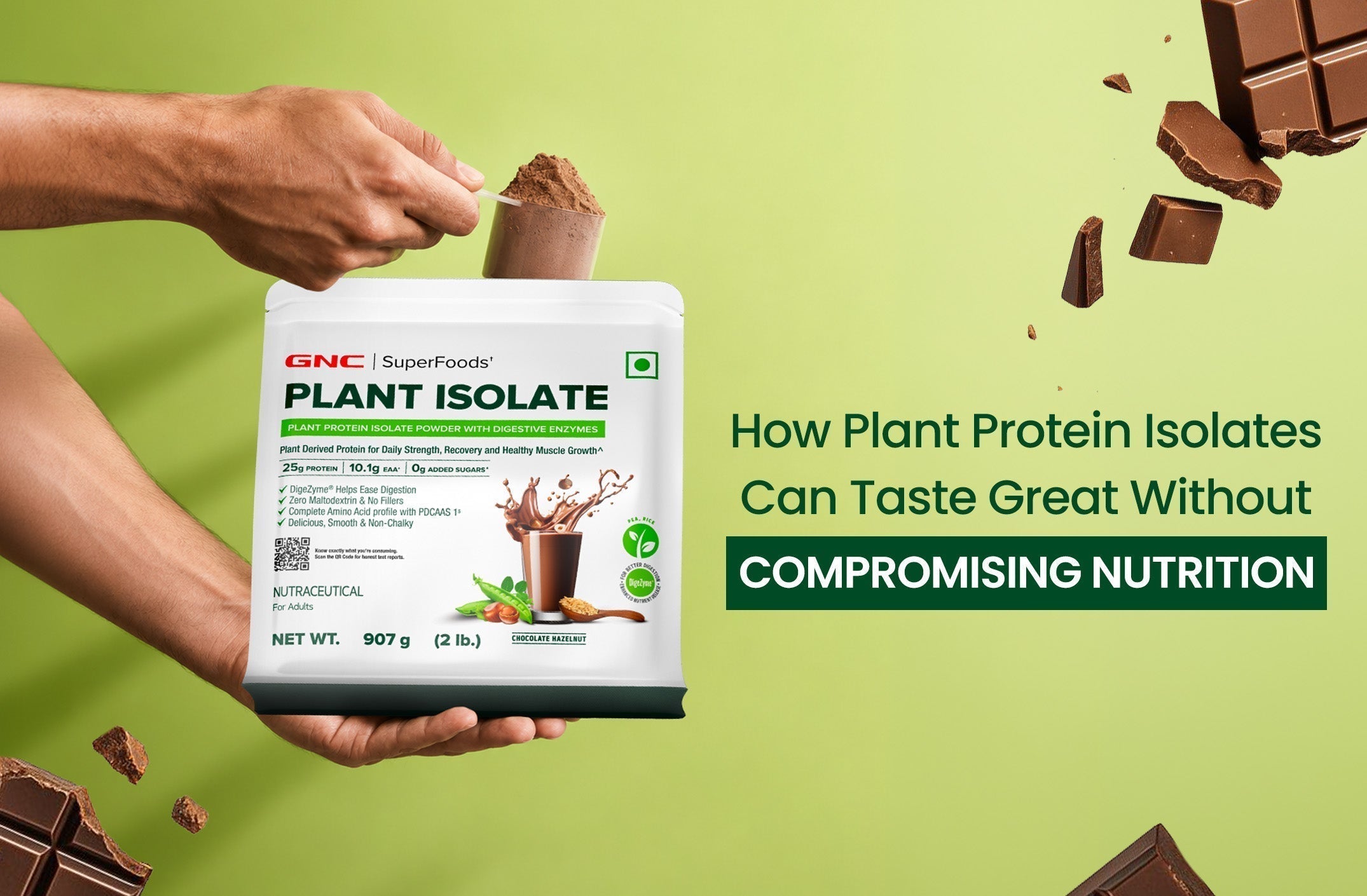
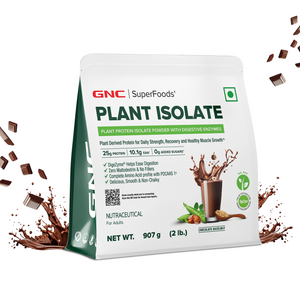
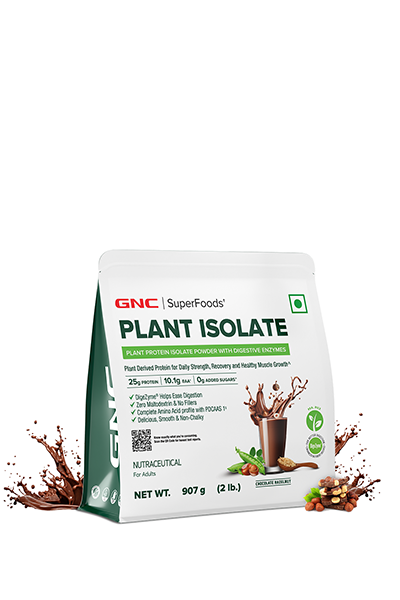
GNC Superfood Plant Isolate is built around one core idea: deliver clean, plant-based protein that your body can actually digest, absorb, and use efficiently, without compromise.
Here's exactly how it earns that perfect score:
The Pea + Brown Rice Protein Blend; Nature's Answer to Complete Protein
No single plant protein is perfect on its own. That's why GNC Superfood Plant Isolate uses a carefully chosen blend of pea protein isolate and brown rice protein, two sources that complement each other's amino acid gaps. Pea protein is rich in lysine but lower in methionine, while brown rice protein fills in that gap. Together, they deliver all nine essential amino acids (EAAs), providing approximately 10.1g EAAs per scoop, a complete amino acid profile that meets the first requirement for a PDCAAS of 1.0.
Isolate Form = Exceptional Digestibility
GNC Superfood Plant Isolate goes through an 8-step purification process that removes impurities and concentrates the protein to its cleanest, most bioavailable form. The result is a protein that is easy to digest, light on the stomach, and highly absorbable, directly elevating the digestibility score that forms the second pillar of the PDCAAS formula. This is why isolates consistently score higher than concentrates.
DigeZyme®, The Digestive Edge
What truly sets GNC Superfood Plant Isolate apart is the inclusion of DigeZyme®, a clinically studied, multi-enzyme complex containing Alpha-Amylase, Protease, Lipase, Cellulase, and Lactase. DigeZyme® actively supports the breakdown and absorption of protein in the gut, reduces bloating, and ensures that the protein you consume is the protein your body actually uses. Better digestion means better PDCAAS outcomes in practice.
Clean Label, Nothing Hidden
GNC Superfood Plant Isolate contains no lactose, no soy, no added sugar, no maltodextrin, and is gluten-free, non-GMO, and 100% plant-based. A PDCAAS of 1.0 means the math checks out: every gram on the label is a gram your body can use. No inflated numbers. No hidden digestibility gaps.
Who It's For:
- Fitness enthusiasts looking for muscle recovery and strength without animal protein
- Vegans and plant-based diet followers who need daily, reliable complete protein
- Anyone with lactose intolerance or dairy sensitivity, gentle on the gut, zero dairy
- Weight management seekers; high protein, low fat, no maltodextrin helps control cravings
- Busy professionals who need a clean, convenient protein source they can trust
PDCAAS vs. DIAAS: A Quick Note
You may have come across the term DIAAS (Digestible Indispensable Amino Acid Score). Introduced by the FAO in 2013, DIAAS is a newer, more granular method that assesses each amino acid individually at the ileal (small intestinal) level rather than relying on fecal digestibility.
DIAAS scores
- Above 100 - Excellent
- 75-99 - Good
- Below 75 cannot carry a protein quality claim.
Because it doesn't cap at 1.0, DIAAS can differentiate between proteins that all score 1.0 under PDCAAS; whey, egg, and soy, for example, have meaningfully different DIAAS values.
However, PDCAAS remains the current FDA regulatory standard and the most widely referenced system in consumer nutrition and supplement labelling. Until DIAAS achieves full regulatory adoption, the PDCAAS 1.0 benchmark remains the most universally recognised mark of protein quality excellence.
Think of PDCAAS 1.0 as the quality passport, the minimum standard for calling a protein truly complete.
How to Read a Protein Label Like a Pro
Next time you pick up a protein supplement, go beyond the front-of-pack number. Here's your quick checklist:
- Check the protein source: Is it an isolate or a concentrate? Isolates digest better.
- Look for a complete amino acid profile: All nine essential amino acids should be accounted for.
- Ask if complementary proteins are blended: Especially for plant-based products, a blend typically means better quality than a single source.
- Check for PDCAAS or DIAAS disclosure: Brands confident in their protein quality will include it.
- Don't be misled by the big number: 25g of protein at PDCAAS 0.5 is functionally 12.5g of usable protein.
The Bottom Line
PDCAAS 1.0 isn't just a score. It's a promise that the protein you consume is complete, digestible, and fully available for what your body actually needs: building muscle, supporting recovery, and keeping you performing at your best.
Plant protein has come a long way. With the right formulation, it no longer means settling for less. GNC Plant Isolate proves that you can choose plant-based protein without compromising on quality; backed by science, validated by research, and certified by the gold standard.
Try GNC Plant Isolate and experience what a perfect protein score actually feels like.