











Creatine is one of the most researched and trusted sports supplements. It consistently supports strength, power, and high-intensity performance.
But one key question often arises:
Has it been tested for banned substances?
Not all supplements are independently tested. While reputable brands adhere to quality standards, issues such as manufacturing errors or cross-contamination can still occur. For athletes, this can risk a failed drug test. For everyday users, it raises concerns about product quality and trust.
That’s why third-party certifications like Informed Choice matter. They provide independent testing for banned substances and assess products and manufacturing processes against defined quality standards.
This blog explains what banned-substance testing is, why it matters, and how certified creatine helps you choose more safely.
What Does "Banned-Substance Tested" Really Mean?
When a supplement carries a credible third-party certification, it means an independent organisation has screened the product for substances prohibited in sport. These substances are listed on the World Anti-Doping Agency (WADA) Prohibited List and include categories such as anabolic agents, stimulants, hormones, and other prohibited substances.
This testing isn't about the effectiveness of creatine itself. Creatine is not a banned ingredient. Instead, it helps identify accidental contamination or undeclared substances that could enter a product during manufacturing, packaging, or sourcing.
This highlights the importance of independent testing in the supplement industry.
Can Creatine Be Contaminated?
Creatine monohydrate is one of the safest and most researched sports nutrition supplements. However, product quality still depends on manufacturing standards.
Contamination is usually unintentional and can result from issues like shared equipment, poor cleaning between batches, weak quality control, unreliable raw materials, or accidental mix-ups during production. Inadequate controls can increase the risk of undeclared substances or cross-contamination in the final product.
For elite athletes, even tiny amounts of banned substances can have serious consequences due to strict liability rules, where athletes are responsible for anything found in their system.
Even for non-competitive users, contamination matters. Most consumers expect supplements to be safe, consistent, and accurately labelled, and independent testing helps ensure that is the case.
What Is Informed Choice Certification and Why Is It Trusted?
One of the most recognised certification programmes in sports nutrition is Informed Choice Certification . Managed by LGC, a global leader in laboratory testing and anti-doping science, the programme verifies that certified supplements meet strict quality and safety standards.
Products carrying the Informed Choice logo undergo rigorous assessment, including:
-
Testing for more than 285 substances prohibited by WADA
-
Regular product testing
-
Manufacturing facility inspections
-
Ongoing quality assurance and monitoring
Certification is not a one-time approval. Manufacturers must consistently meet these standards to maintain certification. This is why many professional athletes, sports teams, and informed consumers actively look for the Informed Choice logo when choosing supplements.
Importantly, certification does not mean a product is more effective. Instead, it confirms that the product has been independently tested for banned substances and manufactured under strict quality controls.
Why Athletes and Everyday Gym-Goers Choose Certified Supplements
When people hear the words banned-substance tested, they often assume it's only relevant for elite or professional athletes.
In reality, it matters for everyone.
While competitive athletes need it the most due to strict anti-doping rules and the risk of accidental contamination, everyday consumers also benefit from the added assurance of product safety and quality.
If you're investing in a supplement for health, performance, or general fitness, third-party testing provides confidence that what's on the label is what's in the product. It also signals that a brand is committed to independent verification rather than relying solely on internal checks.
Research published in the Journal of the International Society of Sports Nutrition found that up to 25% of supplements tested contained undeclared contaminants, some of which could lead to anti-doping violations.
Similarly, broader analyses of sports supplements have shown that contamination and undeclared ingredients are a significant cause of unintentional doping violations, with studies reporting the presence of WADA-prohibited substances in a notable proportion of tested products. This reinforces the importance of independent quality assurance and third-party testing systems such as Informed Choice, which help reduce the risk of inadvertent exposure to banned substances through contaminated supplements.
Choosing a High-Quality Creatine
Walk into any supplement store or browse online, and you'll find dozens of creatine products that look similar. The packaging may differ, but the claims are often the same. So how do you choose a high-quality creatine?
Here are the key things to check before buying.
1. Choose Creatine Monohydrate
Creatine monohydrate is the gold standard, the most researched form, and has consistently been shown to improve strength, power, and lean muscle gains.
2. Look for Third-Party Testing
Certifications like Informed Choice ensure the product is tested for banned substances and meets strict quality standards.
3. Check Ingredient Transparency
A good creatine clearly states dosage per serving and avoids hidden blends or unnecessary fillers. Clear labeling also supports better long-term consistency of use, which is important for results.
4. Consider Micronized Creatine
Micronized creatine is still 100% creatine monohydrate, just processed into smaller particles. This improves mixability, reduces clumping, and makes it easier to drink. Some users also find it gentler on the stomach. It does not change effectiveness, only convenience and user experience.
5. Buy from a Reputable Brand
Quality sourcing, transparent manufacturing, and third-party testing all ensure a safer and more reliable product.
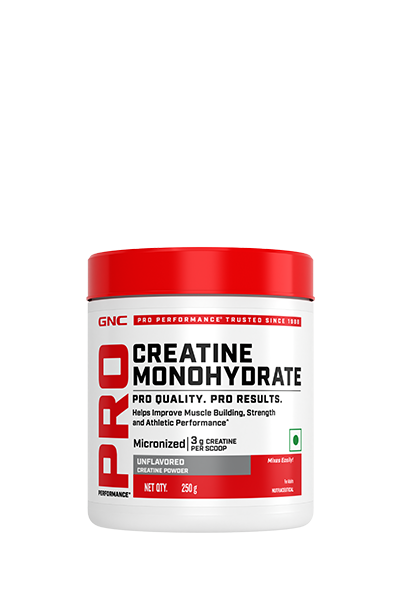
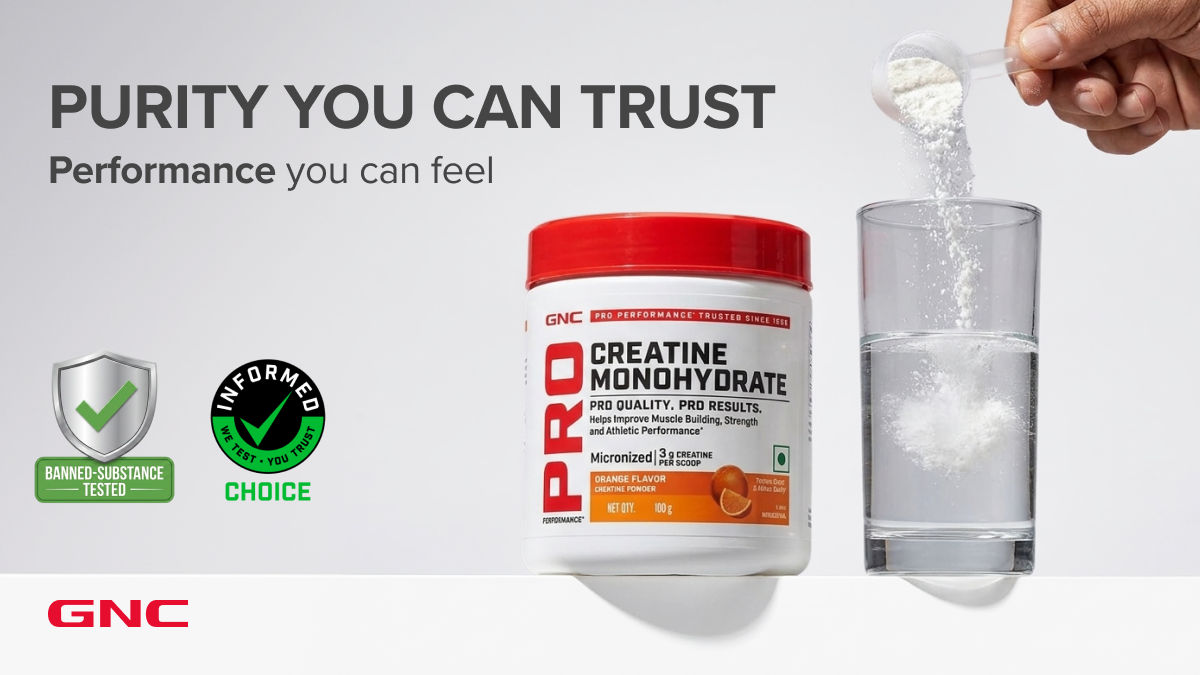
Inside GNC Pro Performance Creatine Monohydrate
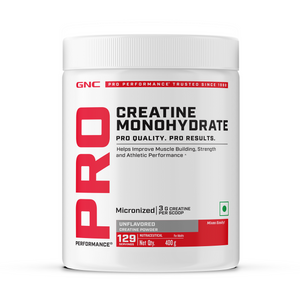
Each serving of GNC Pro Performance Creatine Monohydrate provides 3000mg of creatine monohydrate, the most researched and widely recommended form of creatine for improving strength, power, and high-intensity exercise performance.
The formula contains 99.9% pure creatine, helping deliver a high-quality ingredient with every scoop. One of its standout features is that the creatine is both micronized and instantized. The smaller particle size allows the powder to mix more easily with water or your favourite beverage, creating a smoother drinking experience with less clumping. Unlike many standard creatine products, it also includes 100mg of Fructooligosaccharides (FOS), a prebiotic fibre that supports beneficial gut bacteria.
Quality is another area where the product stands out.
GNC Pro Performance Creatine Monohydrate is Informed Choice Certified and undergoes regular testing for more than 285 substances prohibited by World Anti-Doping Agency (WADA).
In addition, the formula is:
-
100% lab-tested
-
Gluten-free
-
Zero added sugar
-
Free from unnecessary fillers
-
Suitable for vegetarians
Together, these features make it a practical option for athletes and fitness enthusiasts looking for a creatine supplement that prioritises purity, quality, and transparency alongside performance.

Frequently Asked Questions
1. What does banned-substance tested mean?
Banned substance tested means the product has undergone independent screening for substances prohibited in sport.
2. Is Informed Choice the same as FDA approval?
No. Informed Choice is an independent third-party certification programe that verifies supplement quality and screens for banned substances. It is different from regulatory approval.
3. What is micronized creatine?
Micronized creatine is creatine monohydrate that has been processed into smaller particles. This improves mixability, reduces clumping, and creates a smoother drinking experience while providing the same well-researched form of creatine.
4. How does creatine monohydrate work?
Creatine is stored in muscle partly as phosphocreatine, which helps rapidly regenerate ATP during short bursts of intense activity such as weightlifting, sprinting, or HIIT.
5. Can beginners take creatine?
Yes. Creatine monohydrate is suitable for beginners as well as experienced athletes when used according to the recommended serving instructions.
6. When should I take creatine?
Consistency matters more than the exact timing. You can take creatine before or after your workout, or at another convenient time of day.
7. Can I mix creatine with my pre-workout or protein shake?
Yes. Creatine can be mixed with pre-workout supplements, protein shakes, or even plain water, making it easy to include in your daily nutrition plan.