






You must have heard about liposomal magnesium from your friend/colleague, or someone close to you. Or, while casually scrolling through your social media, an ad pops up saying, “Best Absorbed form of Magnesium; Improved Sleep, Recovery, and Calm. That’s Liposomal Magnesium.”
You think about it, do a bit of your own research, but find another form of magnesium; one that’s gentler on your gut, actually crosses the blood-brain barrier to ease stress and support deep sleep, and works with your body’s natural pathways instead of around them.
That’s Magnesium Glycinate…
Turns out, the supplement world loves a good story. And Liposomal magnesium has one - fancy delivery system, premium price tag, and marketing that makes it sound like the future of supplementation. But when you dig deeper into science, a question comes into your mind: Is Liposomal hype backed by evidence, or is it just backed by margins?
Time to separate the science from the sales pitch.
What is Magnesium and how does it help you?
Magnesium is an essential mineral that is abundant in the human body. It participates in more than 300 enzymatic systems that handle biochemical regulation, including protein synthesis, muscle and nerve function, blood glucose control, and blood pressure regulation.
Your body uses magnesium for almost everything: energy, bone strength, DNA repair, muscle function, nerve signalling, and even keeping your heart rhythm in check. It’s not a wellness trend. It’s infrastructure.
And yet, recent studies have found that 75% of urban Indians are magnesium-deficient. Modern lifestyle impairs magnesium absorption through stress, excessive caffeine intake, poor sleep, and intense training without adequate recovery.
That’s why it is very important to understand which form of magnesium actually matters.
What does Liposomal mean, and what does it do?
Liposomal may sound like something advanced, but the idea is straightforward. A liposome is a tiny, fat-based bubble made from the same material as your cell membranes. This wraps around the nutrient to help it travel through your body more efficiently.
The thought behind this? Your gut can be a tough gatekeeper. Some nutrients get broken down or poorly absorbed before they even make it into your bloodstream. Liposomal delivery is designed to sneak past that barrier, protecting the nutrient in transit and maximising the benefit till it reaches your cells.
Liposomal technology is a delivery system, not a nutrient upgrade. The magnesium itself doesn’t change, just the packaging, which comes with a price.
This technology was originally developed in pharmaceutical research for drug delivery, where precise absorption makes a critical difference. The supplement industry borrowed this concept, applied it to vitamins and minerals, and built a compelling story around it.
The real question isn’t whether liposomal delivery is smarter; it is. The question is whether magnesium actually needs it.
Liposomal is impressive. Just NOT for Magnesium.

Here, the story starts getting interesting.
Liposomal delivery is genuine for certain nutrients. Vitamin C, glutathione, and some medications benefit significantly from liposomal encapsulation because they are difficult to absorb in standard forms. For such nutrients, this technology earns a price tag.
But magnesium isn’t one of them.
Magnesium is absorbed through your small intestine via a well-established, natural transport mechanism. It doesn’t need a fat-based bubble to escort it there. The issue with the magnesium absorption was never with the delivery system; it was all about the form of magnesium you consume.
And the research backs this up. A 2021 systematic review comparing magnesium supplements found that inorganic forms tend to be less bioavailable than organic forms, and that the absorption is largely dose-dependent. So basically, what matters is the compound magnesium is bound to, not the packaging around it.
A 2023 pharmacokinetic study published in Nutrients compared liposomal and non-liposomal multivitamin formulations and found that for minerals like magnesium, liposomal delivery did not demonstrate a consistent, meaningful advantage over well-formulated non-liposomal alternatives.
So when a brand wraps magnesium in a liposome and charges a premium for "superior absorption," they're solving a problem that the right form of magnesium already solved, without the extra engineering, and without the extra cost.
It's a smart solution. Just pointed at the wrong problem.
Meet The Magnesium That Actually Shows Up

If your aim is for better sleep, stress management, muscle recovery, and a nervous system that actually deserves rest, the answer isn’t a fancier delivery system. It’s the right form of magnesium.
And that form is Magnesium Glycinate…
It's magnesium bound to glycine, an amino acid your body already knows how to absorb. This pairing does 2 things at once.
- It gets magnesium into your cells efficiently.
- Brings glycine’s own calming properties along for the ride.
No Liposomal bubble required.
Here is why it stands out among all forms:
-
Gentle on the Gut: People who have tried magnesium and quit did so because of the digestive side effects, the discomfort. Glycinate is one of the well-tolerated forms available, making it one you’ll actually stay consistent with.
-
Supports your nervous system directly: Glycine is a calming neurotransmitter. When paired with magnesium, which already plays a key role in regulating cortisol and supporting GABA, the result is that it works with your body’s natural wind-down process, not just around it.
-
Absorbs through a dedicated pathway: Unlike other forms of magnesium, glycinate uses the dipeptide transport pathway, meaning more of it reaches the cells for it to function effectively.
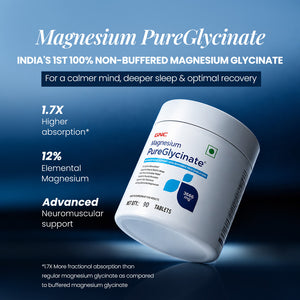
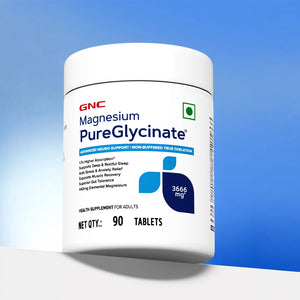
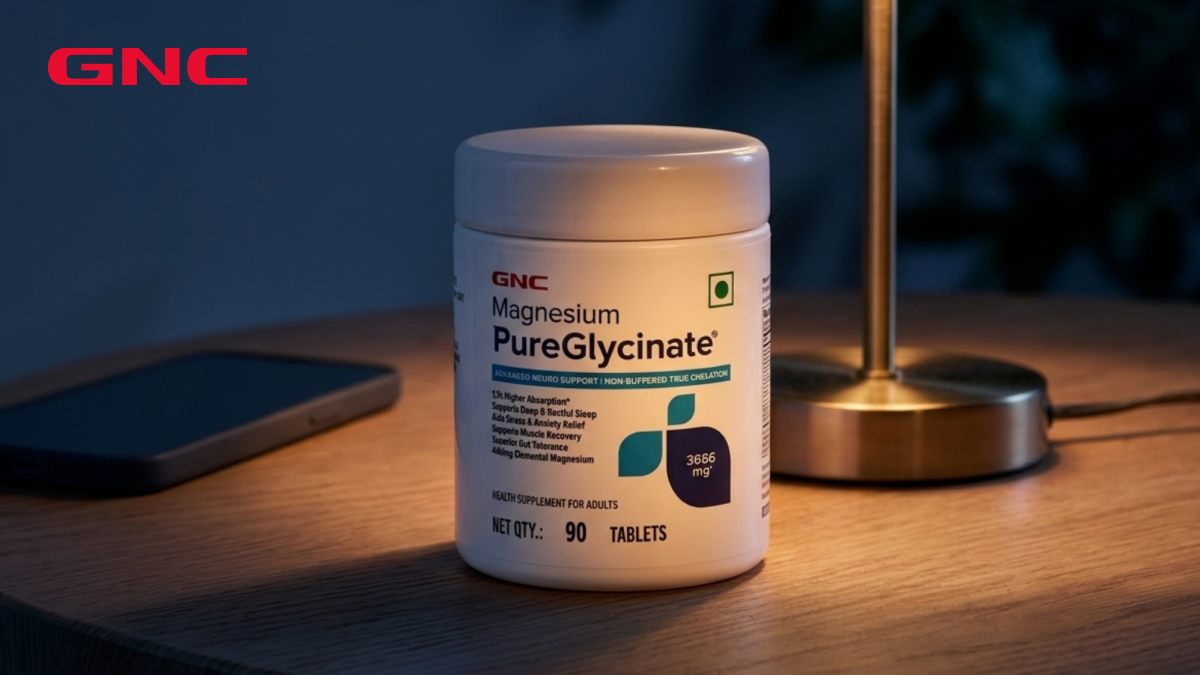
This is exactly what GNC Magnesium PureGlycinate delivers: a clean, well-formulated magnesium with no unnecessary additives, at a dose that delivers real and consistent results, made with 100% Non-Buffered Unadulterated Magnesium.
- 1.7x Higher Absorption
- 440mg Elemental Magnesium
- Superior Gut Tolerance
- Advanced Neuro-Muscular Support
Turns out, the best form of magnesium doesn't need a story. It just needs to work.
Why does Purity Matter?
The label says Magnesium Glycinate. But what’s inside the capsules tells a different story.
The difference comes down to 4 things: chelation, buffer vs non-buffer, yield, and elemental magnesium content.
Chelation, is it truly bound?
True magnesium glycinate is a chelated form, meaning magnesium is tightly bonded to glycine at a molecular level. This bond is what enables absorption through the dipeptide transport pathway.
A 2024 in vitro study by Innophos further confirmed that fully chelated magnesium bisglycinate delivered superior absorption in the gastrointestinal tract compared to magnesium oxide and partially chelated competitors.
Buffered vs. Non-Buffered
Some products labelled "magnesium glycinate" are actually buffered, meaning magnesium oxide is quietly added to inflate the milligram count on the label without raising costs. It looks impressive. But magnesium oxide has an absorption rate as low as 4%, and because it's osmotic, the unabsorbed portion draws water into the intestines, causing the bloating and digestive urgency that people mistakenly blame on magnesium itself. A non-buffered magnesium glycinate contains only the chelated form, nothing diluting it.
Yield, what the label isn't always telling you
Yield refers to how much magnesium is actually released and available after digestion. A supplement can list 500mg of magnesium glycinate on the label, but if chelation is weak or the formula is buffered, the usable magnesium is significantly lower.
Elemental Magnesium, the number that actually matters
This is the real figure to look for. Not the total compound weight, but how many milligrams of actual magnesium are delivered per serving. Pure magnesium glycinate typically contains around 10-14% elemental magnesium. If a capsule claims 200mg of magnesium in a single 500mg capsule, that's 40% elemental density; it is almost certainly buffered with magnesium oxide.
GNC Magnesium PureGlycinate 440mg delivers fully chelated magnesium glycinate at a dose that reflects what's genuinely in the formula, not what's been padded to win the milligram war.
Purity isn't just about what's left out. It's about what's genuinely in there, and whether it's in a form your body can actually use.
How And When To Take GNC Magnesium Pureglycinate?

Dosage: 1-3 tablets daily, delivers 440mg of Elemental Magnesium.
When: Evening works best for most people. Taking it 30-60 minutes before bed gives magnesium time to support your body's natural wind-down process. If sleep is your goal, this is your window.
With or without food: Magnesium glycinate is gentle enough for an empty stomach, but a light meal works too if you're just starting out.
Who Actually needs Magnesium and what to expect
If you’re dealing with poor sleep, frequent muscle cramps, low energy, brain fog, or stress that won’t quit, there’s a good chance magnesium is part of the picture. These are some of the earliest and most common signs that your body isn’t getting enough.
You’re also more likely to be running low if you:
- Eat a highly processed diet.
- Are under chronic stress
- Take medications like PPIs or diuretics.
What to expect once you start: Most people notice better sleep quality first, usually within the first two weeks. Muscle tension eases next. Over time, the more subtle shifts show up, steadier energy, a calmer baseline, less of that wired-but-tired feeling at the end of the day.
It won’t feel dramatic. It’ll just feel like things are finally working the way they should.
Final Thought
Liposomal magnesium isn't a bad product. It's just the right answer to the wrong question. The real question was never how to deliver magnesium better; it was which form of magnesium your body actually needs. Liposomal technology has its place in the supplement world, but magnesium was never the problem it was designed to solve. When you strip away the sleek packaging and the premium price tag, what you're left with is a solution in search of a problem, one that a well-formulated magnesium glycinate already solved, quietly and efficiently, long before the trend arrived.
Frequently Asked Questions (FAQs)
Q1. Is liposomal magnesium better than regular magnesium?
Not for magnesium specifically. Liposomal technology has merit for nutrients that are hard to absorb, magnesium isn't one of them. The right form absorbs efficiently on its own. The liposomal wrapper adds cost, not results.
Q2. What is the best form of magnesium for absorption?
Magnesium glycinate. It absorbs through a dedicated dipeptide transport pathway, it's gentle on the gut, and it's the form you're most likely to stay consistent with, which matters more than anything else.
Q3. Why is magnesium glycinate more expensive than magnesium oxide?
Because it's harder to make. Pure chelated glycinate requires a precise bonding process. Oxide is cheap and easy to produce, which is exactly why many brands use it as a filler inside products still labelled "magnesium glycinate."
Q4. Can I take liposomal magnesium if I already take magnesium glycinate?
You can, but there's little reason to. If your glycinate is fully chelated and non-buffered, it's already doing the job. Stacking both doesn't meaningfully improve outcomes.
Q5. How do I know if my magnesium supplement is actually working?
Better sleep is usually the first sign, within one to two weeks. Then muscle tension eases, energy stabilises, and stress feels more manageable. No changes after four weeks of consistent use? Check if your supplement is buffered, underdosed, or poorly absorbed.