
















Table Of Contents
- Introduction
- What Does Magnesium Actually Do In Your Body
- Magnesium Salts Available in the Market
- Why Choosing the Right Magnesium Matters
- Let's Dive Deeper: Sleep, Recovery, Anxiety & Stress Management
- Why Magnesium Glycinate Has Become the Preferred Choice
- How to Pick a High-Quality Magnesium Glycinate
- Is It For You?
- Key Takeaways
- FAQs
Introduction
Magnesium has become one of the most popular dietary supplements in recent years and for good reason. It supports sleep, stress management, muscle recovery, and overall health, while playing a role in hundreds of essential body processes.
But choosing the right magnesium supplement is not as simple as picking the highest dose. Pharmacies and online stores offer many forms - glycinate, citrate, oxide, malate, threonate, taurate, and more, each with different absorption, bioavailability, and benefits.
The key is that not all magnesium supplements are the same. The best form depends on your goal, whether that is better sleep, brain support, constipation relief, or muscle recovery.
This guide will help you understand different forms of magnesium and its function; why magnesium glycinate is one of the most recommended for daily wellness, and what to look for in a high-quality supplement.
What Does Magnesium Actually Do In Your Body
Magnesium being the fourth most abundant mineral, serves as a co-factor in more than 300 enzymatic reactions and is indispensable for energy production, protein synthesis, muscle contraction, nerve signaling, blood glucose regulation, and cardiovascular function.
Every cell depends on magnesium to help produce adenosine triphosphate (ATP), the body’s main source of energy. When magnesium levels are too low, ATP may not be activated efficiently, which can lead to fatigue and lower cellular performance.
Magnesium also helps the nervous system work properly. It supports communication between nerve cells, helps muscles relax after they contract, and plays a role in keeping the heartbeat steady. It is also involved in the body’s stress response. Magnesium supports the hypothalamic-pituitary-adrenal (HPA) axis, which helps regulate cortisol, and it influences neurotransmitters linked to relaxation and sleep.
A comprehensive review in Nutrients found that low magnesium levels have been linked to poor neuromuscular function, metabolic issues, chronic inflammation, and a greater risk of stress-related problems.
Magnesium Salts Available in the Market
Different magnesium salts have different applications.
| Form of Magnesium | Best Known For |
|---|---|
| Magnesium Glycinate | Sleep support, Relaxation, Stress management |
| Magnesium Threonate | Brain health, Memory, Cognitive support |
| Magnesium Citrate | Constipation relief, Bowel regularity |
| Magnesium Oxide | Short-term laxative use, Constipation relief |
| Magnesium Malate | Energy production, Fatigue support |
| Magnesium Taurate | Heart health, Cardiovascular support |
| Magnesium Aspartate | Cellular energy, Muscle and nerve function |
| Magnesium Chloride | General magnesium replenishment, Absorption support |
Each form serves a purpose, and there is no single magnesium supplement that is ideal for every situation. Understanding your health goal is the first step toward making the right choice.
Different Forms Of Magnesium & What They Are Best Known For

Why Choosing the Right Magnesium Matters
Now that we've looked at the different magnesium salts available in the market, the next question is how to choose the right one. One of the biggest misconceptions surrounding magnesium supplements is that all forms work the same way. In reality, magnesium is always attached to another compound, known as a salt, and this determines how well it is absorbed, where it acts in the body, and how well it is tolerated.
For example, magnesium oxide contains a high percentage of elemental magnesium but is poorly absorbed and is commonly used as a laxative. Magnesium citrate is also widely used for constipation because it draws water into the intestines. In contrast, magnesium glycinate is bound to the amino acid glycine, making it highly bioavailable and gentle on the digestive system.
Simply comparing the elemental magnesium content on the label can therefore be misleading. A supplement with a higher number isn't necessarily the one your body will absorb and utilize most effectively.
Another important consideration is bioavailability, the proportion of magnesium that reaches circulation and becomes available for physiological functions. Organic, chelated forms such as magnesium glycinate generally demonstrate better absorption and gastrointestinal tolerance than many inorganic salts.
Choosing the right magnesium means matching the supplement to your specific needs rather than focusing solely on dosage.
Let's Dive Deeper: Sleep, Recovery, Anxiety & Stress Management
Modern lifestyles often keep the body in a prolonged state of sympathetic nervous system activation, commonly known as the "fight-or-flight" response. Tight deadlines, prolonged screen time, inadequate sleep, emotional stress, and excess caffeine can all contribute to elevated cortisol levels.
When cortisol remains chronically elevated, the body struggles to transition into the parasympathetic nervous system, often referred to as the "rest-and-digest" state. This shift is essential for muscle recovery, digestion, tissue repair, and restorative sleep.
Magnesium glycinate can be especially helpful in this transition because it combines magnesium with glycine, an amino acid known for its calming properties. Glycine supports relaxation and may help the body wind down more easily at night, making this form of magnesium a popular choice for sleep and stress support.
Magnesium itself also supports the activity of GABA, the brain's primary inhibitory neurotransmitter, and helps regulate NMDA receptors involved in neural activity.
Studies suggest that chronic stress can cause the body to lose more magnesium through urine, creating a cycle that can be difficult to break.
Why Magnesium Glycinate Has Become the Preferred Choice
Among the many magnesium salts available today, magnesium glycinate has gained widespread recognition for its combination of excellent bioavailability, superior gastrointestinal tolerance, and broad applicability for everyday wellness.
Magnesium glycinate is a fully chelated form, meaning magnesium is bound to two molecules of the amino acid glycine. This structure supports efficient absorption while glycine contributes to relaxation and healthy sleep.
How to Pick a High-Quality Magnesium Glycinate
1. Look for 100% Non-Buffered Magnesium Bisglycinate
Choose products that do not contain added magnesium oxide.
2. Choose a Fully Chelated Form
Chelated magnesium is generally better absorbed than many inorganic salts.
3. Don't Focus Only on Elemental Magnesium
Absorption matters more than the number printed on the label.
4. Prioritize Purity and Transparency
- Exact magnesium form
- Whether it is fully chelated
- Buffered or non-buffered
- Elemental magnesium per serving
- Manufacturing and quality standards
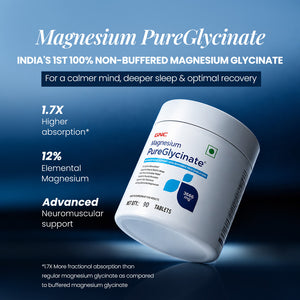
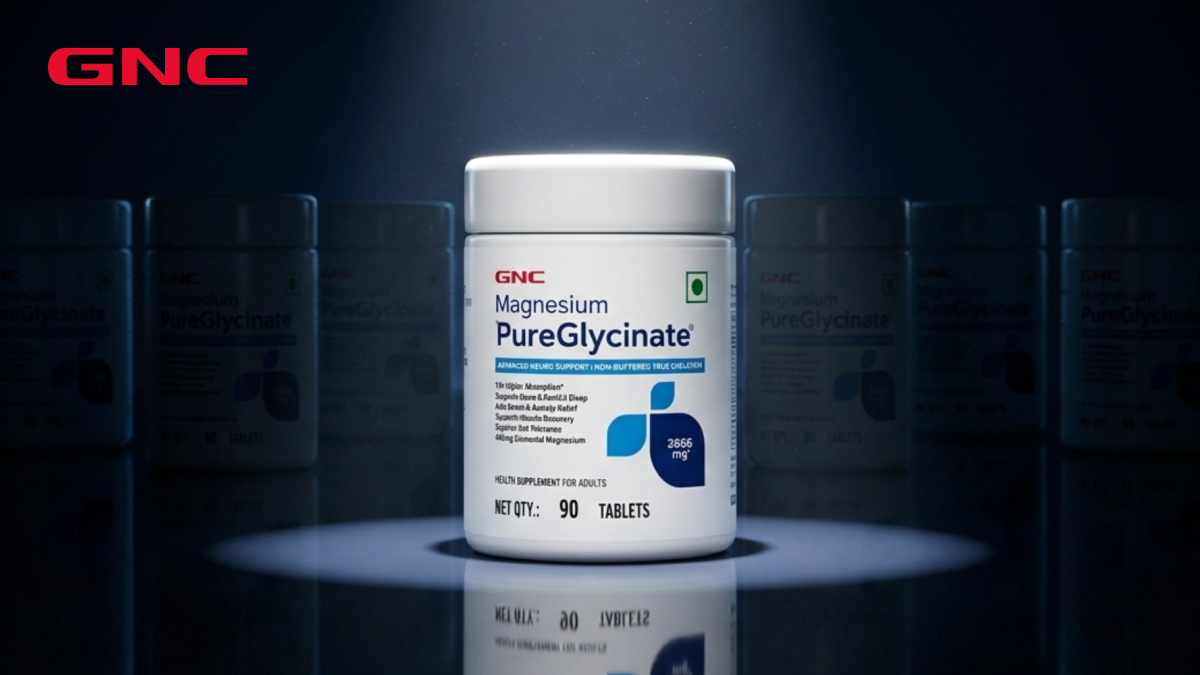
When selecting a magnesium glycinate supplement, formulation quality matters just as much as the ingredient itself. GNC Magnesium PureGlycinate is a strong example of what to look for because it delivers 440 mg of elemental magnesium in a non-buffered, true chelation blend, with 1.7x higher absorption, superior gut tolerance, and support for sleep, recovery, stress, and muscle function.
Is It For You?
- Busy Professionals – Supports relaxation and nervous system function.
- People Experiencing Stress – Helps maintain healthy magnesium levels.
- Individuals Looking to Improve Sleep Quality – Supports relaxation and healthy sleep.
- Athletes and Active Individuals – Supports muscle recovery and energy production.
- Anyone Looking for Everyday Wellness – Supports over 300 enzymatic reactions.
Key Takeaways
- Choose the magnesium form based on your health goal.
- Magnesium supports more than 300 enzymatic reactions.
- Different forms provide different benefits.
- Look for 100% non-buffered, fully chelated magnesium bisglycinate.
- The right form may support better sleep, recovery, and overall well-being.
FAQs
Which magnesium is best for sleep?
Magnesium glycinate is widely preferred for sleep support because it combines magnesium with glycine.
When is the best time to take magnesium glycinate?
It is commonly taken in the evening or before bed, although consistency is most important.
What does "non-buffered magnesium glycinate" mean?
It contains only magnesium bisglycinate without added lower-cost magnesium salts.
Can magnesium glycinate cause digestive discomfort?
It is generally well tolerated and less likely to cause digestive discomfort than oxide or citrate.
Can I take magnesium glycinate every day?
Most healthy adults can take it daily within recommended intake levels. Consult a healthcare professional if pregnant, breastfeeding, taking medications, or living with kidney disease.