











Quick Answer: No, not in healthy adults on standard doses: research on creatine and liver health hasn't found harm. A University of Memphis trial tracked liver enzymes in 98 college footballers for up to 21 months and saw no meaningful change. The rare liver-injury reports involve single patients, unrecorded doses or a second supplement taken alongside.
Your blood report came back this morning, and one line is flagged in bold: SGPT, high.
Two months into creatine, someone at home has found the culprit. "That powder is ruining your liver."
Is creatine bad for the liver, or is it just the easiest thing on the shelf to blame?
Fair question.
It deserves a better answer than a forum thread, and the evidence is clearer than most people expect.
This guide follows the chain link by link: what your liver does with a scoop, what those four letters on a lab report measure, and what the scary case reports can and cannot show.
Here's the evidence at a glance.
| Study | Who | Dose | How long | Liver markers | Result | Type of evidence |
|---|---|---|---|---|---|---|
| Kreider 2003 | 98 college footballers | About 5 g/day after loading | Up to 21 months | Liver enzymes, 69-item panel | No significant differences | Controlled trial, open label |
| Todorovic 2022 | 5,957 people aged 12+ | Food: 2 g+/day vs under 1 g | 2017–2018 survey | Liver-stiffness scan, blood panel | No link to fibrosis, cirrhosis or fatty liver | Cross-sectional |
| Suga 2021 | 1 man, aged 27 | Not recorded | Not recorded | Liver enzymes | Acute liver failure | Case report |
| Whitt 2008 | 1 man, aged 27 | Not recorded | Creatine 8–9 months, whey protein 4 weeks | Bilirubin, liver enzymes | Cholestatic injury, recovered | Case report |
What do studies on creatine and liver health actually show?
In healthy adults, studies that tracked liver enzymes for up to 21 months found no clinically meaningful change from creatine.
Richard Kreider's University of Memphis team took the long view. Their 2003 study in Molecular and Cellular Biochemistry followed 98 college footballers for up to 21 months, with creatine users on about 5 g a day after a 5-day loading phase.
Blood panels, liver enzymes included, showed no significant differences from teammates who skipped it.
Open label, athletes only, but 21 months is a long watch.
Todorovic and colleagues took the population view in a 2022 analysis in Food Science & Nutrition of 5,957 people from a US national health survey. Eating 2 g or more of creatine a day from food was not linked to more liver scarring, cirrhosis or fatty liver than eating under 1 g.
One snapshot, not a trial, and food creatine rather than powder.
Does creatine affect liver function?
Very little. Your liver helps make creatine, but a scoop is absorbed in the gut, stored mostly in muscle and cleared in urine as creatinine.
The International Society of Sports Nutrition's 2017 position stand, also led by Kreider, maps the route:
- Your body makes its own. Your liver and kidneys build it from arginine, glycine and methionine, three amino acids.
- Food supplies about half. Meat and fish cover roughly half your daily need.
- Absorption is near complete. Close to 100% is absorbed, peaking in blood about 60 minutes later.
- Muscle holds most of it. About 95% sits in skeletal muscle.
- A little is cleared daily. About 1–2% a day becomes creatinine, a waste product that leaves in urine.
- So your liver is a maker, not a processor.
Notice what's missing?
No step asks your liver to break the powder down. The scoop travels from gut to blood to muscle, and the leftover leaves through the kidneys.
Does creatine raise SGPT or SGOT on a liver function test?
Not in the controlled studies. SGPT is another name for ALT and SGOT for AST, and AST also sits in muscle, so it is not a liver-only signal.
Indian lab reports print the older names. Mayo Clinic's guide to liver function tests, a blood panel of liver-linked enzymes and proteins, explains both:
- ALT (SGPT) is an enzyme found in the liver. Damaged liver cells release it into your blood, and the reading rises.
- AST (SGOT) helps your body break down amino acids. A raised level can mean liver damage, liver disease or muscle damage.
That last part matters if you lift.
Mayo Clinic adds that an irregular liver test does not always mean liver disease.
So does creatine increase liver enzymes? Not in Kreider's 21-month footballer study, where the blood panels held steady.
Got a flagged report? Show it to your doctor, mention the creatine and every other supplement, and say if you trained hard in the days before the test.
Does creatine cause liver damage or liver failure?
The evidence doesn't show it. The liver-injury reports linked to creatine describe single patients, with unrecorded doses or other supplements involved.
A case report describes one patient: it alerts doctors to a possibility but cannot prove cause.
A 2021 case report in the American Journal of Gastroenterology described a previously healthy 27-year-old with sudden liver failure who needed a transplant. Doctors ruled out other causes, and he later said he'd taken "high doses" of creatine for basketball. Nobody recorded the dose or product.
A 2008 case in Seminars in Liver Disease described another 27-year-old with cholestatic injury, where bile cannot drain from the liver, turning skin yellow. He'd taken creatine for 8–9 months plus whey protein for 4 weeks, and recovered after stopping both.
Two products. No recorded dose. No way to pin it on one.
Warnings worth taking seriously, but not proof. The ISSN found weight gain is creatine's only consistently reported side effect; our complete creatine guide covers the wider safety picture.
How do you verify creatine is genuine and safe?
Check the dose, the ingredient list and an independent test mark. Product quality is the part you control, and neither published case recorded the dose or the product used.
The research answers whether creatine strains a healthy liver. The label tells you what should be in the tub, and an independent mark tells you an outside lab has screened it.
What should you check before you start?
Work back from what those two reports couldn't tell us:
- Know the dose. The ISSN's usual maintenance dose is 3–5 g a day; see how much creatine you need in a month.
- Read the ingredient list. A short, readable list leaves less to question if your blood test comes back odd.
- Start one new product at a time. In the 2008 case, creatine and whey protein were taken together, so neither could be singled out.
- Look for an independent test mark. Informed Choice, NSF Certified for Sport and USP Verified are common; our guide to supplement test marks in India explains each. Each certifier lists the products it has certified on its own website, so you can look yours up there, and buy from the brand's own store or an authorised seller.
Where does GNC's creatine fit in?
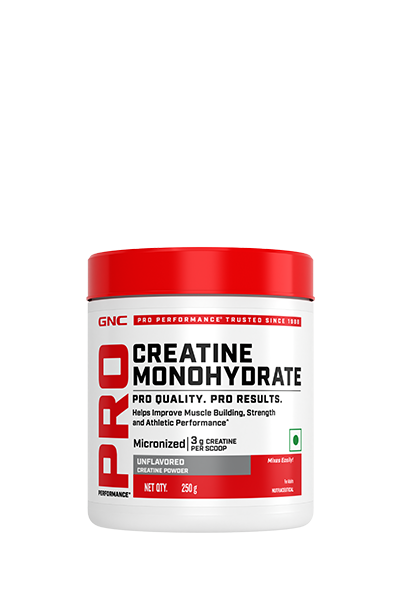
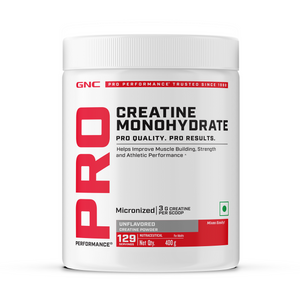
GNC Pro Performance Creatine Monohydrate gives 3 g of creatine monohydrate per serving, the low end of the usual 3–5 g daily range, and its product page lists it as Informed Choice Certified.
Here's how it maps onto the checks above:
- A known dose. Each serving delivers 3 g, so your daily amount is never a guess.
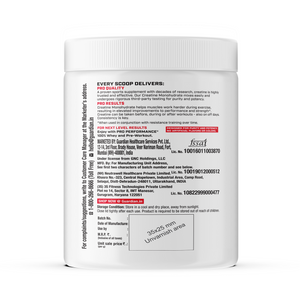
- A short ingredient list. The unflavoured version lists two ingredients: creatine monohydrate and fructooligosaccharides, a type of fibre. Flavoured versions add flavours, sweeteners and acidity regulators, each listed on the product page.
- An independent test mark. The product page lists it as Informed Choice Certified, a mark explained in the test-marks guide above.
A measured dose, a label you can read and a mark you can check.
You'll find it in GNC's creatine collection alongside the other formats.
The Bottom Line
Is creatine safe for the liver in healthy people on standard doses? The research has not found harm, from 21 months of tracked blood tests to a survey of 5,957 people.
Your liver makes creatine. It doesn't have to process the scoop. For what creatine does do, see our overview of creatine's benefits.
The liver-injury stories are real cases, but they're single patients with missing details, and they cannot show cause. A flagged SGPT is a reason to talk to your doctor, not a verdict on your tub.
None of this makes creatine a liver tonic, and none of it means a raised reading should be ignored; it means the reading needs a doctor's eyes and the full list of what you take.
That's the balance.
What stays in your hands is the product: a dose you know, a label you can read and a test mark you can check.
Frequently Asked Questions
Is creatine safe if you have fatty liver?
There's little research on creatine supplements in people who already have fatty liver, so if you have it or another medical condition, consult your doctor before you start. A 2022 survey analysis of 5,957 people found that eating more creatine from food was not linked to more fatty liver, fibrosis or cirrhosis, but it measured food creatine, not supplements.
Do the liver and kidneys handle creatine the same way?
No. The liver helps make creatine, while the kidneys clear its waste product, creatinine, in urine. That is why creatinine on a blood report is read as a kidney marker, not a liver one.
Does the US FDA approve supplements before they're sold?
No. The FDA says it does not have the authority to approve dietary supplements for safety and effectiveness before they're sold. That's why independent marks such as Informed Choice, NSF Certified for Sport and USP Verified exist: an outside lab screens the product.
Which symptoms mean you should stop and see a doctor?
MedlinePlus, the US National Library of Medicine's health site, lists yellowing skin or eyes, dark urine, belly pain or swelling, nausea, vomiting and tiredness as possible signs of liver damage. If any of them appear, stop your supplements and see a doctor promptly.