












Quick Answer: No, creatine did not increase resting uric acid in the studies that measured it. College football players taking about 5 g a day for up to 21 months kept uric acid in line with teammates who took none. What creatine can nudge up is creatinine, a different waste product, and that is where lab-report confusion starts.
You're holding a blood report, and one line is flagged: uric acid, a little above the range.
There's a tub of creatine on your shelf, and a friend at the gym has already delivered his verdict. "Stop the creatine. It's wrecking your uric acid."
Is he right?
It's a fair worry, because uric acid is the number most people link with gout, and creatine sits on a lot of gym shelves. When the two turn up on the same page, it is easy to join the dots.
Joining dots isn't evidence, though.
So this piece takes three claims you've probably heard, checks each one against the evidence, and then covers what to ask your doctor. Start with the three names that keep getting mixed up:
| Uric acid | Creatinine | Creatine | |
|---|---|---|---|
| What it is | Waste from breaking down purines | Waste left after muscles use creatine | A compound muscles store for quick energy |
| Where it comes from | Purines in food and in your own cells | Creatine in your muscles | Built from glycine, arginine and methionine |
| What the blood test is for | Uric acid levels and gout | Kidney function | Not a routine test |
| What creatine studies showed | No change at rest (Kreider 2003) | Small rise (Naeini 2025) | About 95% is stored in skeletal muscle |
Does creatine increase uric acid in the studies that measured it?
Myth one: creatine pushes uric acid up.
Not at rest. In a 21-month study of college football players, creatine users' serum uric acid matched that of teammates who took none.
Richard Kreider's team at the University of Memphis followed 98 Division IA football players over 21 months for a 2003 study in Molecular and Cellular Biochemistry. Users took 15.75 g a day for 5 days, then about 5 g daily.
Serum is the clear liquid part of blood.
| Serum uric acid (mg/dL) | Start | End |
|---|---|---|
| No creatine | 5.5 | 5.4 |
| Creatine, 0 to 6 months | 5.5 | 5.6 |
| Creatine, 7 to 12 months | 5.7 | 5.5 |
| Creatine, 12 to 21 months | 5.3 | 4.9 |
The groups didn't differ statistically (p = 0.78), so the last row's dip is no sign creatine lowers uric acid either.
Limits? It was open-label, so players knew what they took and chose it, and all were young athletes.
Creatine vs creatinine: what's the difference on your lab report?
Creatinine is what is left after your muscles use creatine for energy, so creatine can lift blood creatinine. That says nothing about uric acid.
A 2025 review in BMC Nephrology by Naeini and colleagues pooled 12 trials with 177 people on creatine and 263 without. It found a small rise in serum creatinine, which the authors describe as "modest, transient", while the kidneys' filtering rate, called GFR, showed no significant change.
The authors say the rise is "likely due to metabolic turnover rather than renal impairment": more creatine being processed, not weaker filtering.
In Kreider's study, serum creatinine rose in every group, even players on no creatine (1.23 to 1.35 mg/dL), which the authors tied to hard training.
Mayo Clinic's guide to the creatinine test notes creatine can affect creatinine levels, and people taking it may be asked to stop before the test. It adds that eGFR, a calculated estimate of how fast the kidneys filter blood, may be more accurate than creatinine alone.
Is creatine a purine, the thing uric acid is made from?
Myth two: creatine is a purine.
No. Uric acid comes from breaking down purines, while creatine is built from three amino acids and breaks down into creatinine, not uric acid.
Purines are natural compounds found in certain foods, and the body makes them too. Mayo Clinic's page on high uric acid levels explains that uric acid comes from their breakdown, after which the blood carries it to the kidneys and most of it leaves in urine.
Creatine is a different kind of molecule altogether. The body assembles it from glycine, arginine and methionine, and about 95% of it ends up stored in skeletal muscle, as Kreider's 2003 paper sets out.
So the claim you may have read online, that creatine and uric acid "both come from purine metabolism", does not hold up. They run on separate tracks.
Want the basics of how creatine works in muscle first? This explainer on what creatine is covers it.
Where does the idea that creatine causes high uric acid come from?
Myth three: a sprint study proves creatine raises uric acid.
The idea mostly traces to one short, high-dose sprint study and the creatinine mix-up above, not to trials of normal daily doses.
In 2012, Marcelo Barros's team at Cruzeiro do Sul University in Brazil gave 16 active young men 20 g of creatine or a look-alike powder daily for 7 days, double-blind, so neither side knew who got what.
At rest, uric acid showed no change in either group.
After an all-out sprint on an exercise bike, the creatine group released about 20% more uric acid over the next 60 minutes than before supplementing; the placebo group showed no significant change.
What was tested:
- The dose: 20 g a day, four times Kreider's 5 g
- The timing: the hour after a sprint, not a resting test
- The size: 16 men, 5 of whom dropped out
- The reading: the authors link it to energy-starved muscle
The worry traces back to a sprint, not your resting level.
Does creatine cause gout, and what if your uric acid runs high?
There's no evidence either way: we found no trial that tested creatine in people with gout or high uric acid. If yours runs high, see your doctor before starting and mention creatine before any test.
The studies above tested healthy young men, not people with raised uric acid.
Gout is a painful joint condition caused when uric acid forms crystals in a joint. Mayo Clinic notes that a high uric acid level is not a disease, that most people with one do not have gout symptoms, and that common causes include water pills, heavy drinking, genetics, obesity and kidney problems.
Creatine isn't on that list.
If you have a medical condition or take daily medicines, check with a doctor before adding any supplement.
Before your next blood test
- Tell your doctor you take creatine, and how much.
- Mention recent hard training.
- Have your doctor read creatinine and eGFR with creatine in mind.
- If uric acid comes back high, ask about retesting before changing anything.
How do you verify creatine is genuine and safe, and where does GNC's creatine fit?
Pick a creatine monohydrate that a third-party programme has tested, and confirm the mark on that programme's own website. That mark is a check on what's in the tub; whether creatine suits your health is a question for your doctor.
Why monohydrate? It is the form the 21-month football study used, so it is the form the uric acid evidence actually covers.
Third-party testing means an independent lab checks the product; sport programmes such as Informed Choice screen it for substances banned in sport. This guide to supplement test marks like NSF, Informed Choice and USP explains what each covers.
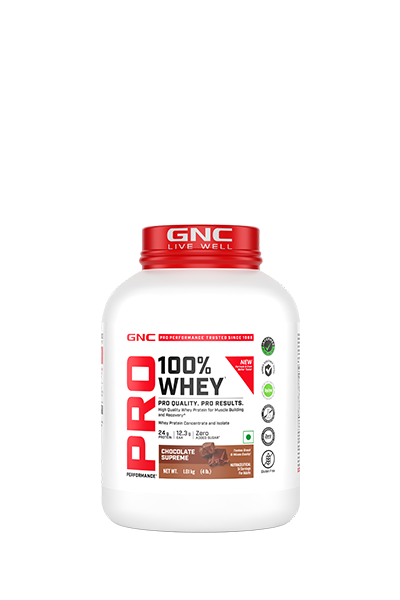
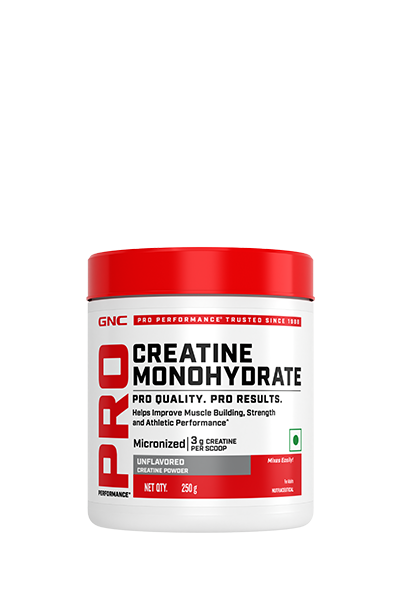
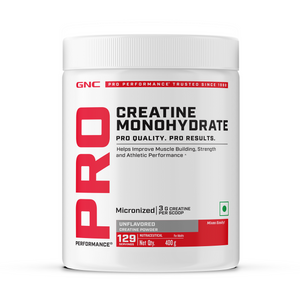
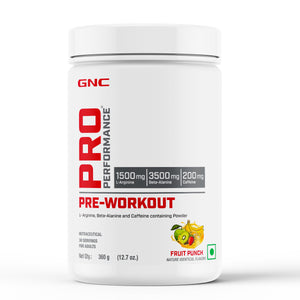
GNC Pro Performance Creatine Monohydrate shows how those checks apply:
- The form: creatine monohydrate, the same form Kreider's players took
- The serving: 3 g of creatine monohydrate, mixed into 200 ml of water or another drink
- The test mark: listed as Informed Choice Certified on its product page
GNC Pro Performance Creatine Monohydrate is part of the creatine range.
The Bottom Line
Your uric acid reading and your creatine tub probably aren't connected.
In the studies that measured it, resting uric acid did not move on creatine, whether the course lasted a week or 21 months. The number that can move is creatinine, which has a different job on your report and a known reason for rising.
So keep the two apart, and tell your doctor about creatine before any blood test.
For the wider picture on safety, including side effects, the complete guide to creatine walks through it.
And if you already live with gout or high uric acid, talk to your doctor first, because we found no study that has tested creatine in people like you.
Frequently Asked Questions
Does creatine increase creatinine on a blood test?
Often a little. A 2025 review of 12 trials found a small rise in serum creatinine with creatine and no significant change in GFR, the kidneys' filtering rate. Tell your doctor you take creatine so they can read creatinine and eGFR in that light.
What should you tell your doctor before a uric acid or kidney test?
Say you take creatine, how much, and whether you trained hard in the days before. Mayo Clinic notes that creatine can affect creatinine readings and that you may be asked to pause it, so that context changes how results are read.
Does the form of creatine make a difference to uric acid?
No evidence says so. The long-term study that tracked uric acid used creatine monohydrate, and no study we found compares forms on uric acid, so there is no basis for calling one form gentler than another.
What does third-party testing on a supplement check?
Programmes such as Informed Choice test supplements for substances banned in sport. That's a check on what's in the tub, not a medical safety verdict for your own health, so it does not replace advice from your doctor.
How much creatine do people normally take?
In the 21-month football study, players settled on about 5 g a day after taking 15.75 g a day for the first 5 days, and this guide to how much creatine you need in a month works through a daily amount.