

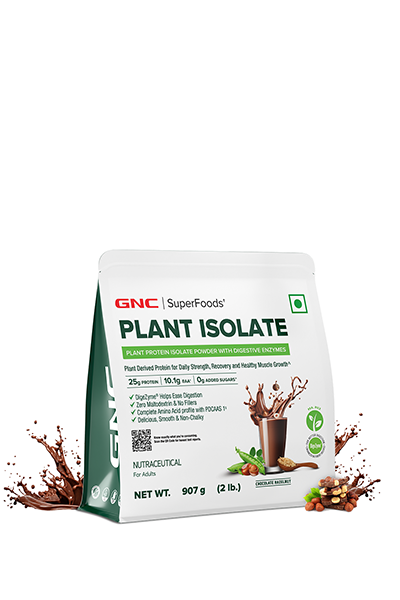
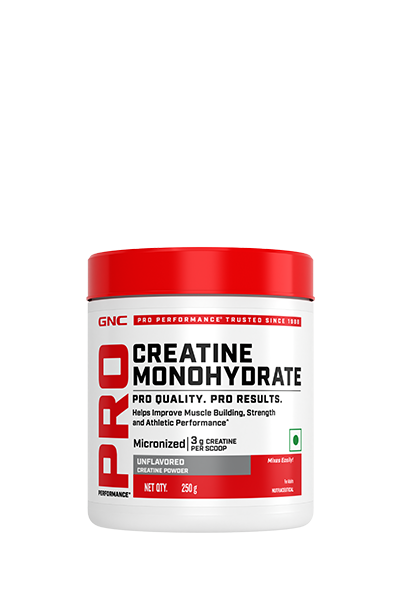
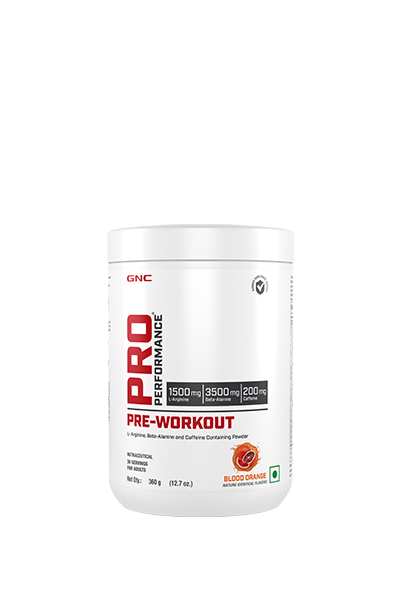










Quick Answer: Yes, but not the entire range: two whey powders on guardian.in are third-party tested and Informed Choice certified. Informed Choice is an independent programme that screens each certified batch for substances banned in sport. A lab report for every batch is published online too, matched to the batch number printed on your pack.
You're standing in front of a protein tub and the front of the pack says "tested". Tested by whom, against what, and how would you check it yourself? It's a fair question, because the answer is not the same for every tub on the shelf, and it isn't even the same for every batch inside one product.
Here's what the marks on a whey pack actually mean, where the paperwork lives, and what a test mark still can't promise you.
Is the whey range third-party tested? The direct answer
Two whey powders listed on guardian.in hold Informed Choice certification, and both appear on the programme's public register of certified products. Informed Choice is run by an independent testing organisation, separate from the brands whose products it certifies.
The rest of the whey range does not carry that mark, so the honest answer is "some, not all". Certification attaches to one product and one batch of it, never to the brand.
Separately, guardian.in publishes its quality documentation on a product certification hub, including lab reports for individual batches. Those reports state that every batch is independently tested before it reaches you.
So there are two separate trails here, and you'll want to keep them apart before you buy anything.
Which certifications are in play, and which tubs carry them
Two marks show up on whey packs here, and they answer two different questions. Informed Choice answers whether a product was screened for substances banned in sport. A NABL-accredited lab report answers what an accredited laboratory found inside one specific batch.
NABL is India's National Accreditation Board for Testing and Calibration Laboratories. It accredits the laboratory, not the supplement, so a NABL line and a certification mark are not interchangeable. Neither one covers what the other one answers.
Two of the whey powders on guardian.in carry the Informed Choice mark, and both are named further down alongside the page that states it. Nothing else in the whey range is listed, because a mark you cannot confirm is a mark you should not repeat.
The two marks side by side
Use this to work out what a claim on a pack is really telling you.
A pack that says nothing has not failed anything. It just means you have no published result to read, and that's a different situation from a bad one.
What Informed Choice actually tests for
Informed Choice screens certified products against the World Anti-Doping Agency prohibited list. The programme looks for banned substances. It does not assess taste, digestibility or protein content.
It also works batch by batch rather than once and forever. A product stays on the register, and every new certified batch is tested and logged against it with its own test date and its own expiry date.
Which substances the programme screens for
The screen covers anabolic agents, stimulants and the other classes banned in sport. The risk it manages is that these turn up in supplements as contaminants rather than as declared ingredients.
For a competing athlete the value is narrow and very real. It lowers the chance that a routine scoop carries something that surfaces in a doping control. For everyone else it reads as a cleanliness signal, and you should not stretch it further than that.
Why contamination is the risk being managed
Contamination in sports supplements is a measured problem, not a marketing story. An international study by Geyer et al. published in the International Journal of Sports Medicine in 2004 analysed 634 non-hormonal supplements and found that 14.8% of the samples contained anabolic-androgenic steroids that were not declared.
The pattern held after that. A 2017 review in Nutrients by Martinez-Sanz and colleagues, on doping substances in dietary supplements, found contamination common enough to leave athletes at genuine risk of an unintentional positive test.
Duiven et al. (2021) published an article in the Journal of Sports Science and Medicine reporting that undeclared doping substances are highly prevalent in commercial sports nutrition products. Mathews reached much the same conclusion in Sports Health in 2018, reviewing prohibited contaminants in dietary supplements.
All four papers describe the same risk: what the label does not say, rather than what it does.
How to match your tub's batch number to its report
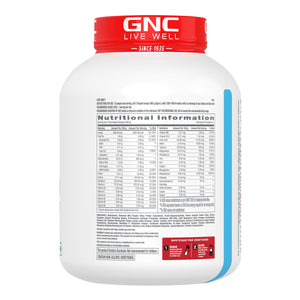
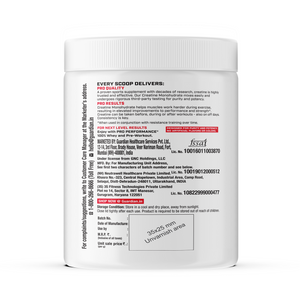
Find the batch number printed on your pack, then open the certificate of analysis page and look for the same code. Each row shows a batch number beside the product name, and opens the lab report for that batch.
Match on the batch code, never on the flavour. Several batches of the same flavour can be in circulation at once, so the code is the only thing that ties a report to the tub in your hand.
Why a report can be missing and your tub still be fine
A batch report stays published only while that batch is inside its expiry date, and it comes down once the batch expires. So an older tub can be genuine, correctly tested, and still have nothing on screen for you today.
The certified-product register works the same way. It lists each certified batch with its flavour, its test date and the date it drops off the register. Give the page a moment; the report list loads after the rest of it does.
What the certification does not tell you
A test mark tells you what was screened for, and nothing past that. Informed Choice certification does not rate protein quality, absorption, mixability, taste, or whether a powder fits the training you are doing.
It also does not cover the tub in your hand unless that tub's batch number is on the register. Certification is granted product by product and logged batch by batch.
What you still have to judge yourself
The same caution applies to labels. A mark on one product says nothing about the next product from the same manufacturer, so every claim in this article belongs to the specific product page it cites, not to the range.
Everything else is your call: how the protein sits with you, and what the nutrition panel says about the things a test mark never covers.
Dietary supplements should be used to supplement the nutritional value of a healthy diet rather than replacing it. Before you start taking supplements, consult your physician if you are facing health issues, if you are pregnant, or if you take medicine regularly.
GNC's certified whey powders, product by product
Two products in the whey range hold Informed Choice certification, and both say so on their own product pages.
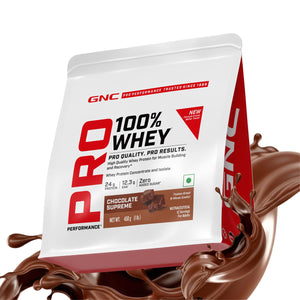
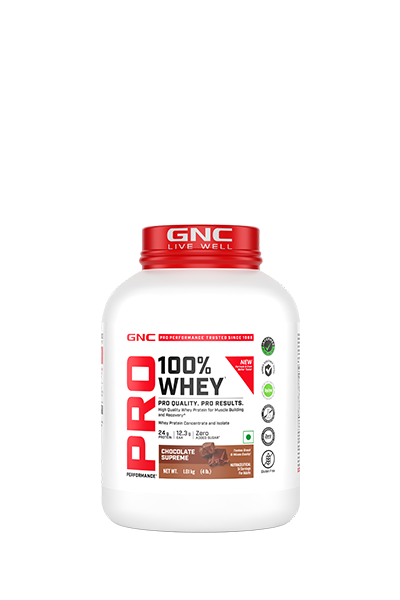
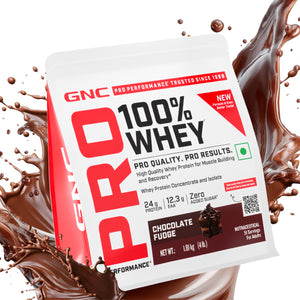
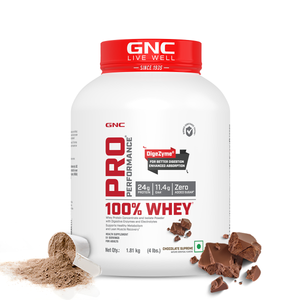
GNC Pro Performance 100% Whey (New Formulation) is listed as Informed Choice certified on its product page, which also states that every batch is third-party lab tested at a NABL-accredited laboratory and links through to the test results. One scoop of the Pro Performance whey gives you 24 g of protein. The certified-product register carries a matching India entry, certified since 2018, with batch records logged flavour by flavour and test dates running into 2026.
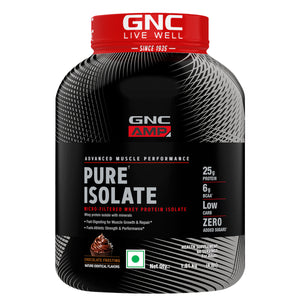
GNC AMP Pure Isolate (Low/Zero Carb) states Informed Choice certification on its product page too. The register carries a matching India entry for it as well, certified since 2019, with its own batch table and its own test dates running into 2026.
That is the whole list, and it stops there deliberately. Other whey products in the range publish no third-party mark, and this article is not going to invent one for them.
Why a company standard isn't a certification
GNC has operated since 1935 across roughly 50 countries, and its stated global standard is truth in labeling, ingredient safety and product potency. A standard is a commitment a company makes about its own work.
Certification is a check somebody else ran on a batch, and published. Both are worth having. Neither one stands in for the other.
The Bottom Line
Yes, parts of the whey range are third-party tested, and you can verify that yourself instead of taking it on faith. Two products carry Informed Choice certification and say so on their own pages, batch lab reports are published against batch numbers, and both records attach to a batch rather than to a brand.
So read the mark on the whey protein range page you're actually buying from, match your batch code, and check the date sitting next to it. Where a product publishes no mark, the accurate reading is that you don't know, which is not the same as knowing it failed.
The same reading applies beyond whey. Our piece on banned-substance testing on creatine runs the check on another category, and any pack you receive can be authenticated on the product verification page.
Frequently Asked Questions
Which GNC whey is Informed Choice certified?
Two products: GNC Pro Performance 100% Whey (New Formulation) and GNC AMP Pure Isolate (Low/Zero Carb). Both state Informed Choice certification on their own product pages, and both appear on the programme's public register as separate India entries with their own batch records. No other whey product in the range publishes that mark.
Where can I see the lab report for my tub?
On the certificate of analysis page on guardian.in. Find the batch number printed on your pack, match it to the row carrying the same code, and open the report. The list loads a moment after the page does. Reports stay published while a batch is inside its expiry date, so an expired batch will not appear.
Does third-party testing mean it is banned-substance free?
No screen can promise that absolutely. Informed Choice tests certified batches against the World Anti-Doping Agency prohibited list, which lowers the risk rather than removing it. The result covers the batch that was tested, not every pack ever made, so read certification as strong published evidence rather than as an absolute promise.
Is the India product tested the same way as the US one?
The India products are listed separately on the register, each with its own batch records and test dates. So every India batch is tested and logged on its own, rather than inheriting a result from another market. Formulations and flavours differ by market, so read the product page for the pack you actually bought.