

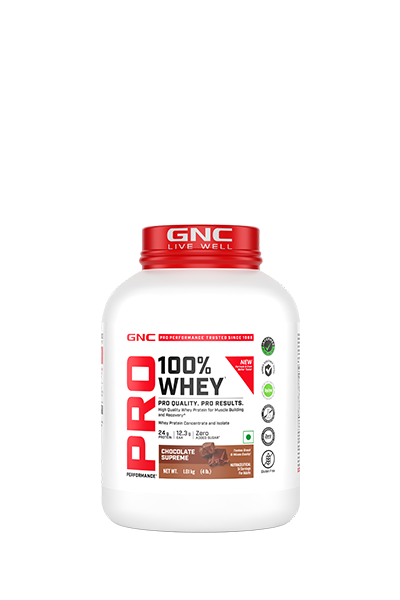






Quick Answer: No, independent evidence does not show that micronized creatine builds more muscle or strength than regular creatine monohydrate. It is the same molecule, milled into smaller particles so it mixes into a drink more easily, and taken at the same 3 to 5 g a day. The one 2026 study claiming an edge was funded by the product's maker.
You stir a scoop of creatine into a glass of water, drink it down, and there it is. A thin white layer at the bottom of the glass.
So you start eyeing tubs that say micronized creatine monohydrate on the front. It sounds like an upgrade: finer, faster, cleaner.
Surely it works harder too?
That is the real question behind the label.
It is a fair thing to wonder when two tubs on a shelf look identical apart from that one word, and it deserves a straight answer. Micronized creatine does change one thing you can see in the glass, and it is not the thing most people assume it changes.
Below, you will see what micronizing does to creatine and what it does not. Then comes what the research has measured on muscle and strength, why a little powder settles whichever kind you buy, and what the label words mean.
Is micronized creatine the same as creatine monohydrate?
Yes, micronized creatine monohydrate is ordinary creatine monohydrate ground into finer particles. Nothing is added, nothing is removed, and the molecule itself is untouched.
Micronized means milled down to a particle size measured in microns, and a micron is a thousandth of a millimetre. Think of it as the icing-sugar version of the same powder.
Myth: micronized is a separate, upgraded form of creatine.
Fact: it's the form the research is built on, just cut finer.
That distinction is the whole story.
The research backs monohydrate, not the other forms
The 2017 position stand from the International Society of Sports Nutrition (ISSN), led by Kreider in the Journal of the International Society of Sports Nutrition, calls creatine monohydrate the most extensively studied and clinically effective form of creatine.
The same paper says claims that other forms reach your muscles better are currently unfounded, and those other forms are different compounds, such as creatine ethyl ester or buffered creatine.
Micronized creatine isn't one of them.
It sits on the monohydrate side of that line, the side with the evidence.
How does micronization change particle size and mixing?
Micronization changes how the powder behaves in a drink. That is the whole difference. Smaller particles spread through water faster and stay suspended longer, so your drink looks smoother.
Icing sugar and granulated sugar are the same sugar, but one just vanishes into your chai faster.
A finer grind changes how fast creatine dissolves, not how much can dissolve. That ceiling is called solubility: the most a set amount of water can hold at a given temperature. Particle size does not move it; temperature does.
| Standard | Micronized | |
|---|---|---|
| Molecule | Creatine monohydrate | Creatine monohydrate |
| Particle size | Coarser | Milled finer |
| Mixing | Slower, more sinks | Faster, smoother |
| Dissolves per litre at 20°C | About 14 g | About 14 g |
| Amount used in research | 3-5 g a day | 3-5 g a day |
| Independent proof of more muscle | It is the reference | Thin |
Same creatine, different grind.
Does micronized creatine change the dose or the result?
No, micronizing hasn't been shown to change the dose or the result: the ISSN's 3-5 g a day applies to both.
A 2021 expert review in the Journal of the International Society of Sports Nutrition, led by Antonio, tackled 12 common creatine questions, including other forms. It found that claims made for them have not held up against creatine monohydrate. Several of its authors disclose creatine-industry ties.
Myth: a finer powder gets more creatine into your muscles.
Fact: no independent trial has shown that.
One study says otherwise: a 2026 study in Cureus by Aggarwal and Agarwal reported stronger results for a micronized product than standard monohydrate. The product's maker funded it, one author works for the company, and its blood-level phase tested just 10 people.
Does that make it wrong? Not necessarily, but no independent team has repeated it.
On current evidence, the benefits of micronized creatine monohydrate are those of creatine monohydrate.
Why a little powder can settle at the bottom of the glass
Powder settles because water can only hold so much creatine, and a glassful can reach that limit, especially when the water is cold. It's solubility, not a sign of fake or poor-quality creatine.
Cold water holds less than half as much creatine
Fridge-cold water holds less than half of what room-temperature water does. A 2011 review in Amino Acids reports how much creatine dissolves in one litre of water:
- Fridge-cold, 4°C: about 6 g
- Cool room, 20°C: about 14 g
- Hot, 50°C: about 34 g
So a cold shake leaves more behind. Warmer water dissolves more.
A few grains staying put is exactly what chemistry predicts.
Myth: creatine that settles is fake or low quality.
Fact: the water is simply full.
Swirl and drink the last sip; that sediment is creatine too. The 2011 Amino Acids review on creatine forms also reports that the dry powder showed no breakdown after more than 3 years, even at 40°C.
Is micronized creatine easier on the stomach?
Nobody has shown that micronized creatine is easier on the stomach. None of the studies in this article measured stomach comfort, and the one maker-funded trial that compared the two reported no side effects with either.
Some people say a finer powder sits better with them, perhaps because it leaves a less gritty last mouthful. That is a reasonable guess.
It is not a finding.
Myth: micronized creatine is the gentle option.
Fact: the evidence is not there yet.
Micronized creatine monohydrate side effects, as far as research goes, match those of creatine monohydrate: it is the same compound. Our guide on how to tell good quality creatine from the rest covers the label checks.
If you have kidney disease or another medical condition, are pregnant or take regular medication, ask your doctor before starting any creatine. Supplements add to a balanced diet and training; they don't replace them.
What "micronized and instantized" means on the GNC label
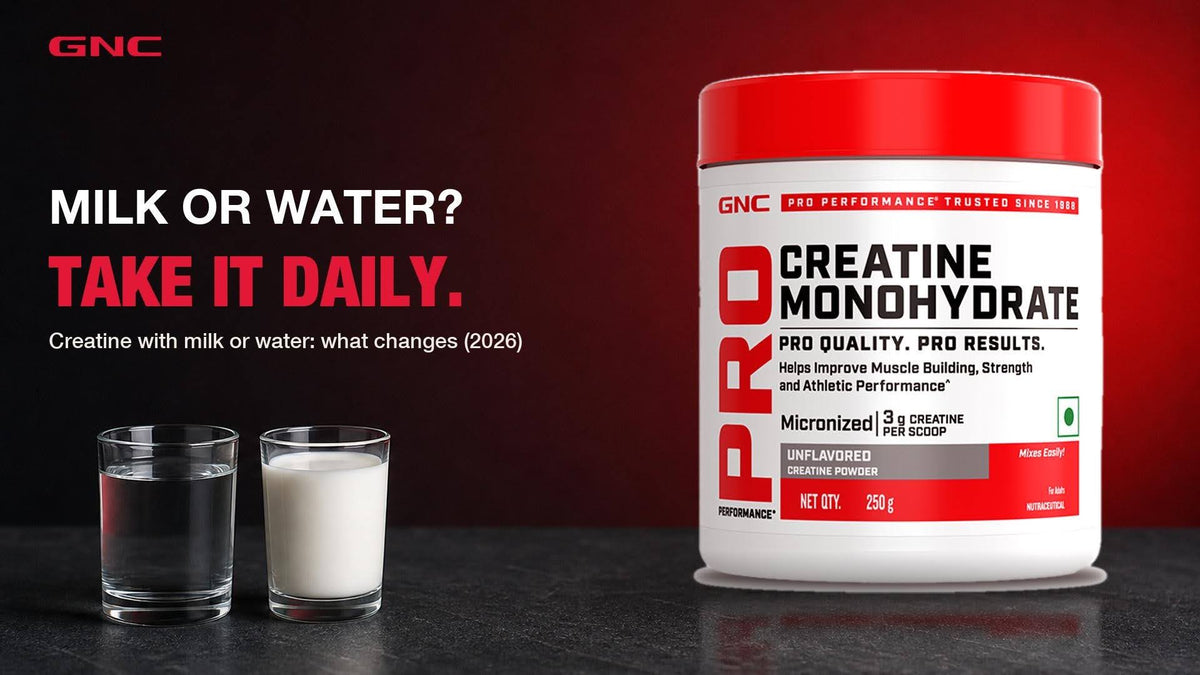
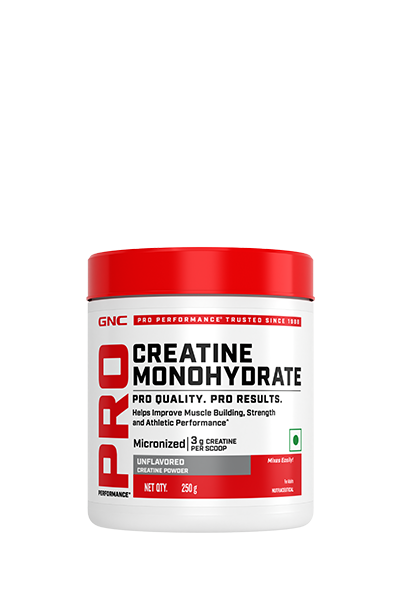
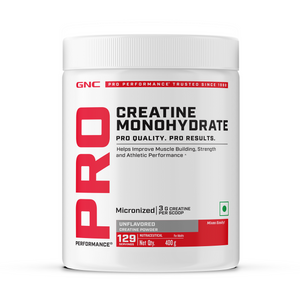
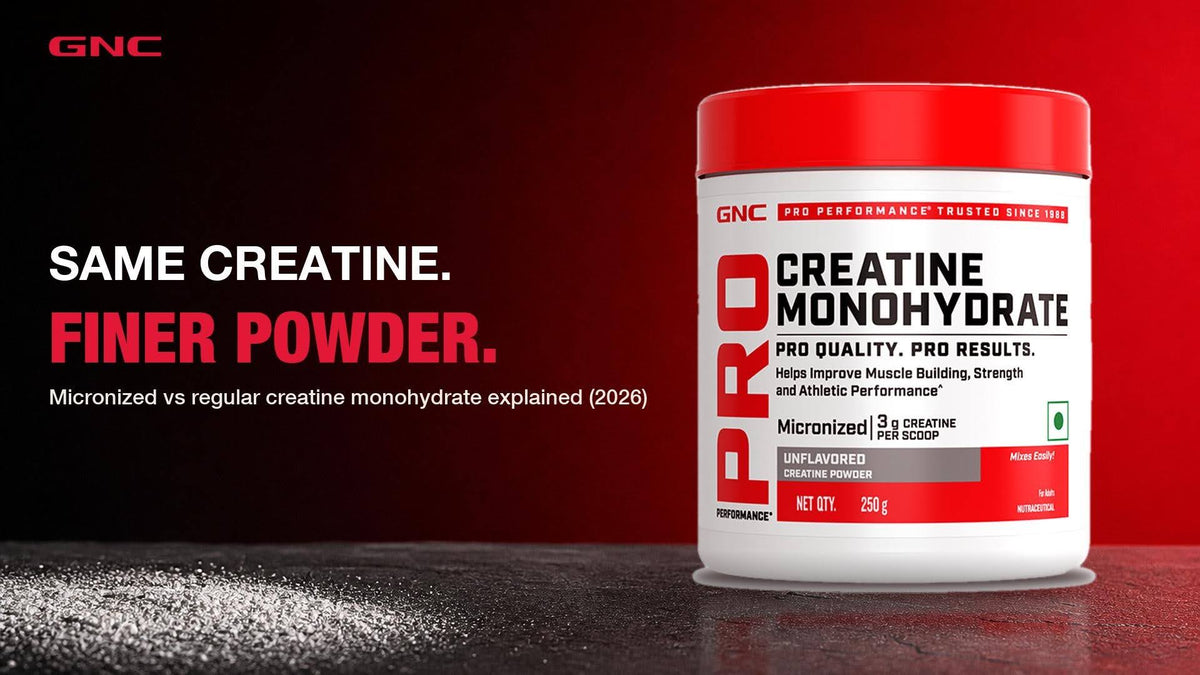
The GNC Pro Performance Creatine Monohydrate page says "micronized and instantized", words that usually describe particle size and mixing. The product is still micronized creatine monohydrate, the same form the creatine research is built on.
Micronized means the monohydrate is milled into very fine particles, measured in microns.
Instantized is a mixing word. It tells you the powder is meant to stir into a drink quickly. The product page does not describe the process behind it, so we will not guess at one.
The GNC Pro Performance Creatine Monohydrate product page says to mix one serving in 200-250 ml of water or your favourite sports drink, right after your workout, and to drink plenty of water while taking it.
A thin layer after a cold-water shake is the solubility limit at work. You can browse GNC's creatine range too.
The Bottom Line
In micronized creatine vs creatine monohydrate, the choice is about texture, not strength.
Everything that makes creatine useful, the molecule, the 3-5 g a day and the weeks of steady use alongside training, is identical whichever grind you buy.
So choose on how you'll actually take it.
If gritty creatine puts you off and you keep skipping days, a finer powder that mixes smoothly is a sensible pick; you're likelier to take it consistently, and steady daily use is what the research describes.
If standard monohydrate already goes down fine, there is no evidence you are missing muscle or strength by sticking with it.
The last sip is creatine too
The powder at the bottom of the glass is the same creatine, so stop reading it as a quality signal. Swirl it, finish it, and judge your tub on its label and its testing instead. Here's why banned-substance testing matters for creatine if you want the detail.
Either way, the routine stays the same: creatine monohydrate on the label, the 3-5 g a day the ISSN position stand describes, last sip included.
Frequently Asked Questions
What does micronized mean on a creatine label?
On a label, micronized creatine monohydrate means the creatine has been milled into very fine particles, measured in microns, so it mixes into your water or juice faster. The ingredient itself does not change, so the ingredients list should still name creatine monohydrate as the creatine source.
Does micronized creatine have different side effects?
No difference has been shown. The one maker-funded trial comparing the two reported no side effects with either, and micronized creatine monohydrate is still the same compound, which research reviews describe as relatively well tolerated at 3-5 g a day.
Does micronized creatine need a loading phase?
No. Loading, a larger intake for the first few days, only fills your muscles' creatine stores faster, while a steady 3-5 g a day fills them more slowly and still gets there, according to the ISSN position stand. The particle size of the powder does not change either route.
Should a beginner choose micronized creatine?
Only if easy mixing matters to you. Micronized creatine monohydrate has not been shown to work better for beginners, and what counts for a first tub is creatine monohydrate on the label, a clear serving size and the habit of taking it every day.