











Quick Answer: Protein shakes clump when whey powder seals itself into wet lumps, and foam when over-shaking whips in air the whey then holds. Pour the liquid in first, use 200-250 ml per scoop, keep the bottle at least half empty and shake for about 20 seconds. Then let it rest a minute so the foam settles.
You pour a scoop into the bottle, add water, shake it as hard as you can for a good half minute and take a sip on the way out of the gym.
Grit.
A dry pellet of powder bursts on your tongue, and the top third of the bottle is a head of froth that tastes of nothing at all.
Sound familiar? Who gets the blame? The powder, usually. Yet the powder is doing exactly what whey protein does when it meets water the wrong way.
Lumps and foam are two separate problems with two separate causes: one is about how powder gets wet, and the other is about what protein does to the air shaken into it. Once you know which is which, you can fix both in the same twenty seconds.
Why does my protein shake have lumps?
A lump is a ball of dry powder sealed inside a wet skin. When whey first touches water, the outermost particles hydrate fast and turn sticky, and that sticky layer closes over the powder behind it before water can reach the middle.
Food scientists have measured this. A 2016 study in Food Hydrocolloids by Ji and colleagues found that high-protein dairy powders wet poorly, and that whey protein isolate formed an impermeable layer between the water and the powder almost as soon as the two touched.
That's the lump.
Nothing's wrong with the protein inside it. It just never got wet.
Mixing happens in four stages, and lumps fail the first
A 2025 review in Foods (Jiang et al.) calls these clusters "wet-on-the-outside, dry-on-the-inside" agglomerates. It splits mixing a powder into four overlapping stages, which often happen at the same time:
- Wetting: water reaches the surface of each particle.
- Sinking: the wetted powder leaves the surface.
- Dispersing: clusters break apart.
- Dissolving: the protein goes into solution.
Lumps are a wetting failure.
Fix the wetting, and you've removed the most common cause of lumps.
Why does my protein shake foam up so much?
Foam is air that whey protein refuses to let go of. Whey proteins are surface-active: they migrate to any boundary between air and water and wrap each bubble in a flexible film.
Whey's foaming has been studied for decades. A 1994 study in the Journal of Agricultural and Food Chemistry by Zhu and Damodaran heated whey protein isolate and found that a brief, mild heating (one minute at 70°C) foamed better and held its foam longer than stronger heat treatments.
In your bottle, the air comes from the shaking itself. The Jiang review notes that excessive stirring can whip in extra air and lead to foam.
The harder you shake, the more air goes in.
Whey holds on to it.
Symptom, cause and fix at a glance
Six mixing habits that decide how smooth your shake turns out
Each habit maps to one of the two causes above, and a bad shake usually comes from two or three of them at once.
1. The powder went in before the liquid
Liquid first, powder second. Powder poured into an empty bottle packs into the corners and the base, and the first splash of water seals it there.
With liquid already in the bottle, the powder lands on a moving surface and starts wetting at once.
This one change fixes the most lumps.
2. There wasn't enough liquid for the scoop
One scoop needs roughly 200-250 ml of liquid. Use less than that, and there isn't enough water to wet every particle before the sticky layers join up. Water or milk both work; the choice changes the taste and calories, not the physics.
Doubling the scoop into the same volume is the classic mistake.
Twice the powder needs twice the room.
3. The liquid was ice-cold, or too hot
Cool is fine. Ice-cold is slow, and hot is worse. The Jiang review explains that warmer water lowers surface tension and viscosity, so it soaks into powder faster. By the same logic, near-freezing water straight from your fridge tends to leave more grit behind.
Hot liquid isn't the answer either. The Jiang review notes that high heat disrupts protein structure and makes proteins clump together, which is why a scalding shake can turn stringy.
Mix at room temperature. Add ice after.
4. The bottle was filled to the brim
A shaker works because of its empty space. The liquid needs room to fall from one end of the bottle to the other, and that fall is what breaks clusters apart.
So why fill it to the top? Keep at least half your bottle empty.
A serving in a small, full bottle barely moves, however hard you shake.
5. You shook it too hard, for too long
About 20 seconds, end over end, is enough. Side-to-side shaking sloshes the liquid around without much force, while long, violent shaking only pumps in more air for the whey to trap and turn into froth.
A mixing ball or whisk inside the bottle cuts that time further.
6. You drank it the second the lid came off
Give the shake 30 to 60 seconds to rest. Big bubbles rise and burst, the foam thins, and the last fine particles finish dissolving while you pack your bag.
Nobody likes waiting for a shake, do they?
That minute is still what turns a frothy, powdery drink into a smooth one.
Some powders are built to mix in seconds
Manufacturers can solve the wetting problem before the powder reaches you. The two main tools are agglomeration and lecithin.
Agglomeration deliberately clumps fine particles into larger, porous granules, so water runs into the pores by capillary action instead of sealing the outside. Ji's 2016 study expected agglomerates with large particle size and high porosity to wet better.
Lecithin tackles the same problem from the surface. In a 2017 follow-up in Food Hydrocolloids, Ji, Cronin, Fitzpatrick and Miao added lecithin to whey protein isolate by agglomeration and by coating, and found the best wetting needed high lecithin coverage, high porosity and large particles together.
On a label, look for:
- Lecithin (soy or sunflower), usually listed as an emulsifier.
- "Instantised" or "instant", which usually means agglomerated or coated powder.
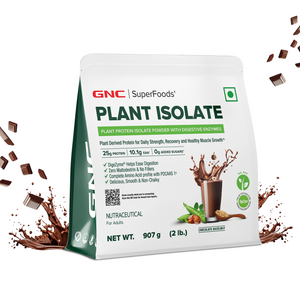
Plant powders behave differently again, because fibre and starch change how they disperse. Our plant protein mixability explainer covers that side.
A sour-smelling shaker is a drying problem
The smell comes from protein residue left damp in a closed bottle. Milk proteins and sugars stuck to your lid and base give bacteria something to feed on, and a sealed gym bag gives them the time.
The fix is timing, not scrubbing:
- Rinse your bottle as soon as you finish.
- Take the lid apart, including the spout and any mixing ball.
- Wash with warm water and a little dish soap.
- Dry it upside down with the lid off.
A bottle that dries open rarely smells.
A bottle that dries shut often does.
No shaker? A glass still works if you change the method
Make a paste first, then thin it. Stir a small splash of liquid into your powder with a fork until it's smooth, then add the rest slowly while you keep stirring, because working the powder by hand breaks the wet skin that a quick stir can't.
A jar with a tight lid works like a shaker. A blender mixes thoroughly but whips in the most air, so give the shake longer to rest.
How GNC shakers put the headroom rule into practice
A good bottle gets two things right: space for the liquid to travel, and a base you can clean properly.
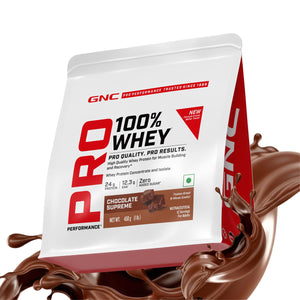
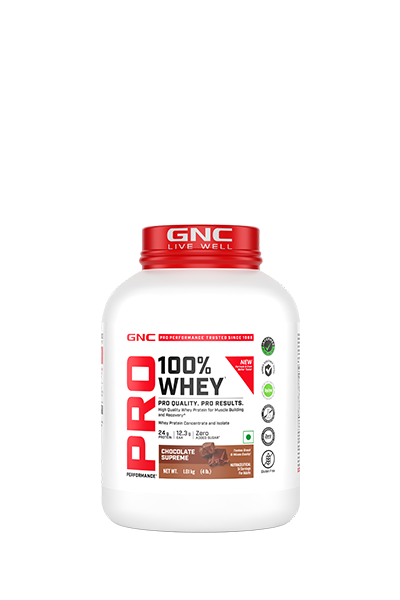
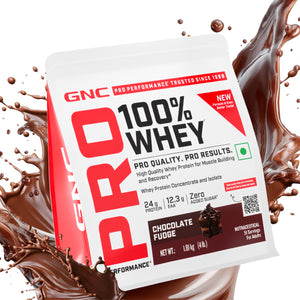
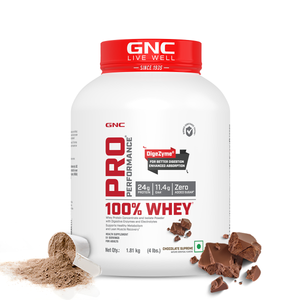
The GNC Pro Performance 100% Whey label pairs one scoop with 200-250 ml of water or milk. In either bottle below, that serving leaves more than half the space empty, which is habit 4 built into the design.
The steel bottle's opening base helps with the smell problem, because you can open up the bottom to dry it.
Tub-and-shaker packs sit on our protein shaker combos page. If you already own a roomy bottle, the tubs alone are in the whey protein range.
The Bottom Line
Lumps and foam usually aren't signs of a bad powder; they're signs of a mixing method working against the chemistry of a protein that wets slowly on first contact and holds on to air.
Whey wets badly on first contact, so give it liquid first and plenty of it. Whey holds air, so shake less and let it rest. Leave your bottle half empty so the liquid can travel, and dry it with the lid off so it never sours.
None of this needs new equipment.
It needs the right order. For more habits worth fixing, see our guide to the common mistakes people make with whey protein.
Frequently Asked Questions
What makes a shake taste gritty when there are no visible clumps?
Fine particles haven't finished dissolving. They're too small to see as clumps but still register as grit on your tongue. Add a little more liquid and let your shake rest for 30 to 60 seconds before drinking. Shaking longer mostly adds air once the powder is already wet.
Is a blender better than a shaker for whey protein?
A blender disperses powder more completely, so it suits shakes with fruit, oats or ice. It also usually whips in more air, which whey holds as foam. For a plain scoop in water or milk, a roomy shaker gives you a smooth result with less froth.
Can you mix whey protein into hot drinks like coffee?
Adding whey straight to very hot liquid tends to go wrong. Heat unfolds whey proteins, so the powder can turn stringy instead of blending. Let the drink cool a little first, or stir the powder into a small amount of cool liquid and add that to the warm drink.
What does "instantised" mean on a protein label?
Instantised usually means the powder was processed to wet and disperse quickly, often by agglomeration into porous granules, a lecithin coating, or both. A 2017 study on whey protein isolate found that combination wet fastest, so an instantised powder should need less shaking.
Is it fine to drink the froth?
Yes. The foam is the same protein and liquid with air trapped in it, so you lose nothing. It's a texture issue. If you'd rather drink less froth, shake for a shorter time and let the shake rest for a minute first.