





Quick Answer: Choose ZMA if you want zinc and vitamin B6 alongside magnesium, and magnesium glycinate if you want magnesium alone, bound to the amino acid glycine. Taking both doubles up on magnesium. In an eight-week trial of 42 trained men, a ZMA-containing blend did not change hormones, strength or body composition.
You've just finished a heavy leg day, and someone at the gym tells you to take ZMA at night. A friend swears by magnesium glycinate instead. Both tubs say magnesium on the front.
So is ZMA vs magnesium glycinate a choice between two versions of the same thing?
Not really.
One is a three-part blend that gym-goers have taken for years. The other is a single mineral in a single form.
Magnesium glycinate has its own following, especially among people who care as much about sleep and recovery as about training.
In the ZMA vs magnesium glycinate choice, the right pick depends on what you're after and on what is already in your routine. This guide covers what is inside each, what the research has and has not tested, who each one suits, and the most common mistake: taking both without adding up your magnesium.
What is ZMA, and how is magnesium glycinate different?
ZMA stands for zinc magnesium aspartate, a blend of zinc, magnesium and vitamin B6 in one dose. Magnesium glycinate is magnesium alone, attached to glycine, a small amino acid (one of the building blocks of protein).
| ZMA | Magnesium glycinate |
|---|---|
| What is inside | Zinc, magnesium, vitamin B6 |
| Magnesium form | Aspartate, in the classic formula |
| Sleep trial in this guide | None |
A 2004 trial in the Journal of the International Society of Sports Nutrition (Wilborn and colleagues) gave 42 men who already lifted weights either a ZMA-containing blend or a placebo, a dummy pill, for eight weeks.
Funded by the blend's maker, the trial found no change in hormones, strength or body composition (the share of weight that is muscle versus fat). Endurance did not change either.
People low in zinc or magnesium were not tested.
Which form of magnesium is inside each?
In the classic ZMA formula, the magnesium comes as magnesium aspartate. In glycinate, it is bound to glycine.
Magnesium can't sit in a tablet on its own. It is always paired with a partner molecule, and that pairing is called a magnesium salt. Our guide to how different magnesium salts work compares the common ones side by side.
Aspartate comes from aspartic acid, another amino acid your body uses to make energy.
And bisglycinate? Our product page uses both names, magnesium glycinate and magnesium bisglycinate, for one product: magnesium bound to glycine.
Classic ZMA pairs its magnesium with zinc and B6
The classic research formula, as the 2004 trial report describes it, supplies 30 mg of zinc, 450 mg of magnesium as magnesium aspartate and 10.5 mg of vitamin B6 a day.
That 450 mg is already above the 350 mg NIH upper limit for magnesium from supplements. Product labels differ, so check your ZMA label before adding anything.
Keep one label term in mind: elemental magnesium. It is the actual magnesium in a tablet, not the weight of the whole magnesium-plus-partner compound, and it is the figure that counts when you add products up.
Has either been studied for sleep?
No sleep trial of ZMA or of magnesium glycinate sits behind this guide.
The 2004 ZMA trial in trained men never measured sleep.
The one magnesium sleep study in this guide is a 2012 trial in the Journal of Research in Medical Sciences (Abbasi and colleagues). It was double-blind: neither side knew who got what.
The trial gave 46 older adults with insomnia (trouble sleeping) either 500 mg of elemental magnesium a day, as magnesium oxide, or a placebo for eight weeks.
Against placebo, the magnesium group improved on:
- Sleep questionnaire scores, rating insomnia severity
- Sleep efficiency, the share of time in bed spent asleep
- Time to fall asleep
Does the magnesium sleep trial apply to ZMA or glycinate?
The 2012 trial tested neither ZMA nor glycinate, and not in gym-goers:
- It wasn't glycinate. It was magnesium oxide.
- It wasn't ZMA. No zinc or vitamin B6.
- It wasn't gym-goers. Older adults with insomnia.
So magnesium is linked to better sleep scores in one group. That says nothing yet about ZMA or glycinate.
Taking both doubles up on magnesium
ZMA already contains magnesium, so a glycinate tablet on top is a second dose of the same mineral.
The NIH Office of Dietary Supplements sets the upper limit for magnesium from supplements at 350 mg a day for adults. An upper limit is the most you can take daily without raising the risk of side effects. It counts the magnesium from every supplement you take, while magnesium from your food does not count towards it.
Labels differ too: some show elemental magnesium, others the weight of the whole compound, so check which one each label gives.
Two products make it easy to go over, so add up first:
- Find the elemental magnesium per tablet on each label.
- Multiply it by the number of tablets you take.
- Add the two products together.
- Compare your total with the 350 mg NIH upper limit.
Zinc adds up across labels too
If your multivitamin carries zinc, a ZMA blend adds more, so read both labels first.
Which one suits your goal, ZMA or glycinate?
The ZMA vs magnesium glycinate choice comes down to the goal, not to which is better. Pick a ZMA-style blend for zinc, magnesium and vitamin B6 in one step, and magnesium glycinate for magnesium alone with control over the dose.
Check the plate first. India's National Institute of Nutrition, in its 2020 ICMR-NIN guidance, sets the recommended daily allowance (RDA), the intake covering nearly all healthy people, at 440 mg of magnesium and 17 mg of zinc for men, and 370 mg and 13 mg for women.
Dal, rajma, nuts, seeds and whole grains all add magnesium.
Each one fits a different reader
- Zinc and B6 wanted too: a ZMA-style blend fits.
- Magnesium only: glycinate fits.
- A multivitamin with zinc: check the zinc total first.
- Sleep as the reason: neither has a sleep trial here; start with a regular bedtime.
If the blend fits the goal, read about ZMA benefits on our ZMA page.
Anyone with a medical condition, pregnant or on medication should consult a doctor.
Non-buffered glycinate, explained with one example
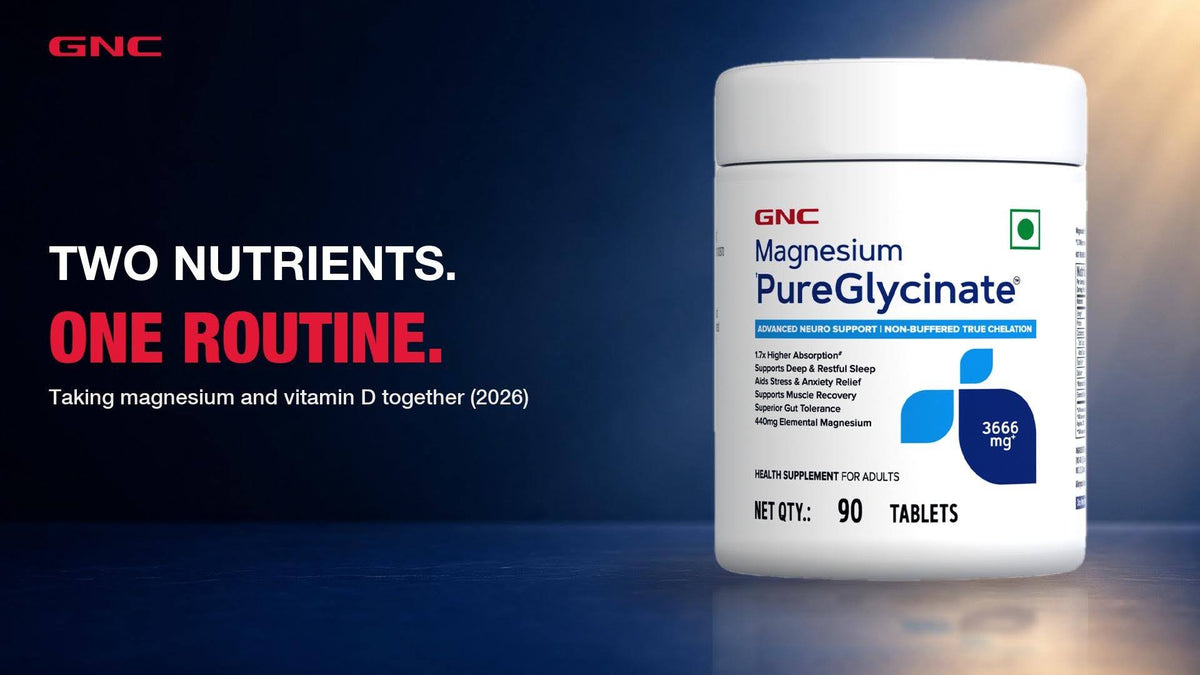
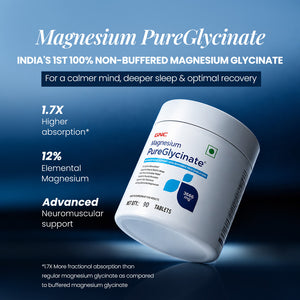
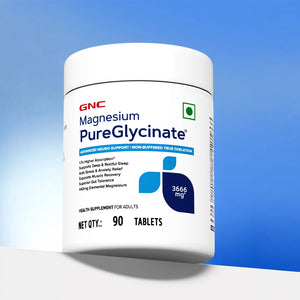
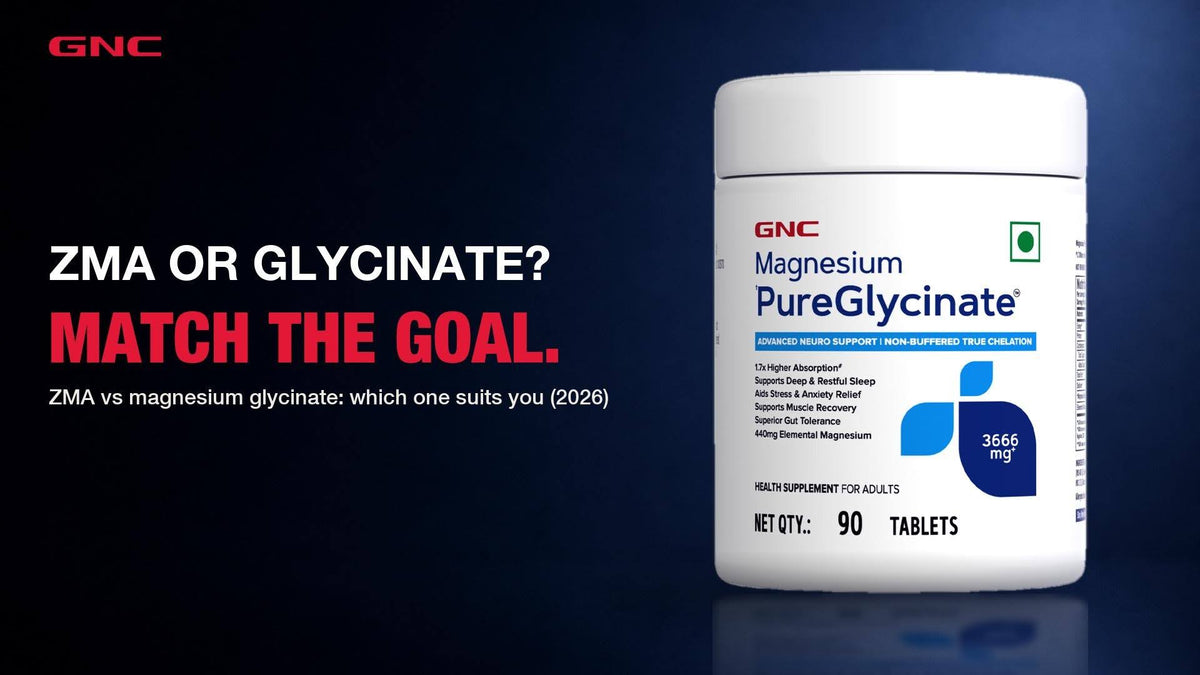
Non-buffered magnesium glycinate is magnesium glycinate alone, not mixed with other magnesium salts such as oxide, as our magnesium salts guide explains. GNC Magnesium PureGlycinate shows that single-mineral route on a real label, and it brings three ideas from this guide together.
The first is the form. The label describes it as "100% Non-buffered Magnesium Glycinate", with non-buffered Magnesium Bisglycinate as the ingredient.
A dose range you can set yourself
The second idea is the dose: the label gives 1-3 tablets daily, a range that lets you set your own magnesium dose. If ZMA is also part of your routine, check how each label states its magnesium and add the two products together before you settle on a number.
The third is timing. The page says to take it before bedtime or with a meal, and not to chew or crush the tablets. Pairing it with dinner is an easy way to make it a daily habit.
You'll find the full label on the Magnesium PureGlycinate product page.
The Bottom Line
ZMA vs magnesium glycinate gets framed as a contest one of them has to win. It isn't.
They share one mineral. ZMA suits people who want a single bedtime blend that combines zinc, magnesium and vitamin B6. Glycinate suits people who want magnesium alone, dosed up or down on its own terms.
The research is still thin for both. A trial of a ZMA-containing blend in trained men found no change in hormones, strength or body composition. The sleep research on magnesium comes from a different form, in older adults, a long way from a young lifter after leg day.
The choice hinges on what is already on the plate, what is already in the routine, and whether the magnesium and zinc still sit under their limits once everything is added together. Get that sum right, and either route can make sense.
Frequently Asked Questions
Can you take ZMA and magnesium glycinate together?
Yes, but you will be taking magnesium twice. Add the elemental magnesium from both labels and keep your total at or under 350 mg a day, the NIH upper limit for magnesium from supplements. Magnesium from food does not count towards that limit, so a dal-heavy dinner is not part of the sum you're doing.
Which is better for sleep?
No sleep trial of ZMA or of magnesium glycinate is among the studies in this guide; one trial of magnesium oxide in older adults reported better sleep scores. That trial used a different form in a different group, so its results can't be stretched to either product or to young lifters.
What does ZMA stand for?
ZMA stands for zinc magnesium aspartate. The classic formula combines zinc, magnesium in the aspartate form and vitamin B6 in one daily dose. Magnesium aspartate is magnesium attached to aspartic acid, an amino acid your body also uses to make energy. The name describes the recipe, not a result.
Is magnesium bisglycinate the same as magnesium glycinate?
Yes, both names describe magnesium bound to the amino acid glycine. Our product page uses the two names for one product, so whichever word you see on a label, you are looking at glycine-bound magnesium. One name is not a stronger version of the other.