












Quick Answer: Only if your doctor agrees: many people with diabetes can include whey protein, but kidney disease and insulin use change the answer. Choose a powder with no added sugar and read the carbohydrate line. In a 2023 review of 16 small trials, whey taken before a meal gave peak post-meal glucose readings about 1.4 mmol/L lower than a control drink.
You've just picked up an HbA1c report, the blood test that shows average blood sugar over the past few months, and the number came back higher than hoped.
On the kitchen counter sits a tub of whey that someone at home bought for the gym.
So the obvious question follows: can diabetics take whey protein, or is this one more food to give up?
It's a common question in India. The ICMR-INDIAB national study in The Lancet Diabetes & Endocrinology (Anjana et al., 2023) surveyed 113,043 adults across 31 states and union territories, and it found diabetes in 11.4% of them and prediabetes in 15.3%.
That's a lot of kitchen counters.
This isn't a yes-or-no verdict. It's a decision guide: where whey can fit, what the trials actually measured, and what to ask a doctor before the first scoop.
Is whey protein for diabetics a yes, a no, or a "check first"?
For many adults with diabetes, whey can fit, but it's a "check with your doctor first" decision, not an automatic yes. Your kidneys and your medicines decide it.
Why medicines? In the trials covered below, whey taken before a meal pushed insulin up. Insulin is the hormone that moves sugar out of the blood and into the cells, so extra insulin on top of a sugar-lowering medicine is something a doctor has to weigh.
Find your situation below and start there:
- Type 2 diabetes managed with food, activity or tablets: ask your doctor whether a daily shake fits your protein needs.
- Insulin, or a tablet that can push sugar too low: the diabetes team needs to know before whey is added.
- Type 1 diabetes: almost every trial here was in type 2, so the team's advice counts for more than this research.
Living with a medical condition means any new supplement starts as a conversation with your doctor.
Whey is a protein food, not a diabetes medicine.
Does whey protein raise your blood sugar?
The protein itself carries little sugar. What a scoop does to blood glucose depends mostly on the sugar, maltodextrin and carbohydrate added to the powder.
Maltodextrin is a fast-digesting starch used as a filler, and the body turns it into glucose quickly, which is the fast rise a diabetes plan tries to avoid.
Whey also brings some lactose, the natural sugar in milk, and concentrate keeps more of it than isolate does because isolate is filtered further.
So what does "no added sugar" on a tub actually promise?
Less than it sounds. Under the FSSAI (Advertising and Claims) Regulations, 2018, "sugar free" means no more than 0.5 g of sugars per 100 g. "No added sugar" is a different claim: the product can still hold milk's own sugar, and then the label has to say "contains naturally occurring sugars".
Neither phrase gives the carbohydrate per scoop; only the nutrition table does.
Timing matters too for whey protein and blood sugar, and timing is what the trials tested.
What do trials show about whey protein for type 2 diabetes?
In small, short trials, whey taken just before a meal gave lower post-meal glucose readings than water or a placebo. None of them tested months of daily use.
Whey raised insulin and slowed stomach emptying; some trials also saw more GLP-1, a gut hormone that prompts insulin release.
What did the trials actually measure?
| Study | Who | Whey dose and timing | What was measured | Limit |
|---|---|---|---|---|
| Jakubowicz 2014 | 15 adults, type 2 | 50 g before breakfast | Glucose 28% lower | One meal, open-label |
| King 2018 | 11 men, type 2 | 15 g before two meals | Breakfast glucose 13% lower | One day |
| Smedegaard 2021 | 16 adults, type 2 | 25 g isolate before a glucose drink | About 2 mmol/L lower on a home sensor | Four days, industry-funded |
| Smedegaard 2023 | 16 trials, 244 people | 4–55 g before meals | Peak glucose 1.4 mmol/L lower | Long-term effects still await trials |
mmol/L is the unit blood glucose is measured in.
Is whey protein good for diabetics over months?
Not well enough to say yet. The trials in this article ran for single meals or a few days, mostly in well-controlled type 2 diabetes, and the 2023 reviewers say long-term effects still await clinical trials.
The 2023 review in the American Journal of Clinical Nutrition found the effect stronger and longer-lasting in type 2 diabetes, and larger doses did more.
For scale, the 2014 trial at Wolfson Medical Center in Israel gave 50 g of whey before a single hospital breakfast.
A kitchen isn't a hospital ward.
Want whey for weight loss or muscle gain? Separate questions, and none of these trials measured either.
Food matters more than the tub: the ICMR-NIN Dietary Guidelines for Indians (2024) advise against using protein supplements to build muscle mass. So start with a diabetes diet chart built around Indian meals, and use whey as a convenience on days meals fall short, with a doctor's approval.
Can diabetics take protein powder, and how do you decide?
Many can, once a doctor agrees. First ask whether protein fits your kidney health and your medicines, then check three label lines: added sugar, carbohydrate per scoop and sweetener.
Before the first scoop
- Ask your doctor whether extra protein suits your kidney function.
- Ask about insulin or other medicines that can cause low sugar.
- Read "added sugar", and check the ingredients for maltodextrin.
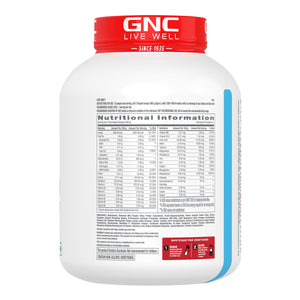
- Read the carbohydrate per scoop.
- Note the sweetener and its INS number, the code a food additive carries on the label.
- Look for a batch lab report from an independent lab.
The carbohydrate line says more than any front-of-pack word, because it counts lactose, fillers and flavour carriers together in one number.
Not sure where each line sits on a tub? This guide to reading a whey protein label walks through every one of them in order.
Six checks, all done at the kitchen counter or in the doctor's room before the seal on the tub is ever broken.
Is GNC whey protein good and safe to use alongside a diabetes plan?
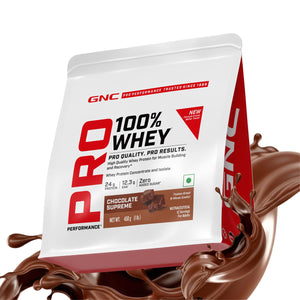
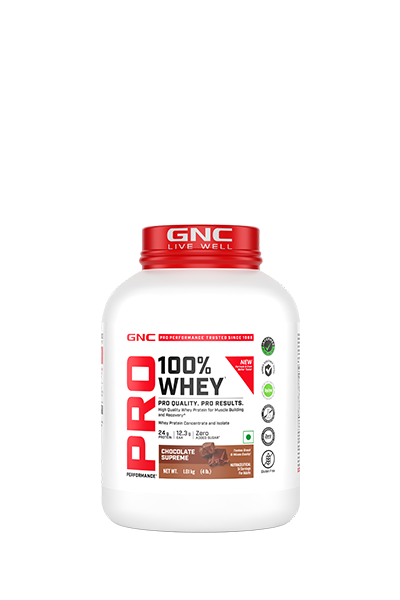
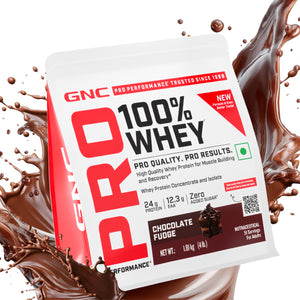
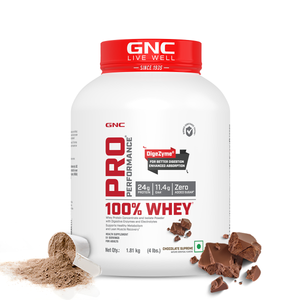
GNC whey protein can fit a plan your doctor has approved. GNC Pro Performance 100% Whey (New Formulation) lists zero added sugar and 4.51 g of carbohydrate per serving, and its product page states every batch is third-party lab tested and NABL accredited. It is a protein food, not a diabetes product.
If a doctor agrees whey fits, here's what this label shows against the checks above:
- Added sugar and fillers: zero added sugar, zero maltodextrin, no artificial colours or flavours.
- The whey itself: a blend of whey protein concentrate and whey protein isolate, so expect a little lactose.
- Sweetener: INS 955, a non-sugar sweetener.
The concentrate in the blend carries some lactose, and the label's carbohydrate figure already includes it.
None of that makes GNC Pro Performance 100% Whey (New Formulation) suitable for everyone with diabetes. It makes the label easy to check.
Take the label to your next appointment.
Other formats sit in the whey protein collection.
The Bottom Line
Whey and diabetes are not enemies, and they are not a free pass either.
The trials point one way: whey taken before a meal gave lower post-meal glucose readings in people with type 2 diabetes, in three trials and a review of 16. They are also small and short, mostly in people whose diabetes was already well controlled, so they cannot say what months of daily shakes would do.
So the decision runs in order: doctor first, on kidneys and medicines; label second, for added sugar, carbohydrate and sweetener; food third, because dal, curd, paneer and rajma still carry most of the day's protein.
None of that is a reason to fear a scoop of whey, and none of it is a reason to start one without asking first.
Whey fits after all three, as a convenience, not a fix.
Frequently Asked Questions
Q. Is whey protein safe for everyone with diabetes?
A. No single answer covers everyone, because kidney function, medicines and diabetes type all change it. Make it a question for your doctor first, then read the label. A shake that suits someone on tablets may not suit someone on insulin.
Q. What about type 1 diabetes and whey protein?
A. Almost all the trials above were in type 2 diabetes, so they say little about type 1. Ask your diabetes team how a shake fits your insulin plan before you start, because a protein shake is still a change to your meals.
Q. How do you know a protein powder isn't contaminated?
A. Look for an independent programme such as Informed Choice or NSF Certified for Sport, or published batch lab reports you can check. Those screen for banned substances and contaminants, not for blood-sugar effects. Here's what third-party batch reports show.
Q. Is whey isolate better than concentrate if you watch your sugar?
A. Isolate is filtered further, so it usually carries less lactose (milk sugar) and less carbohydrate per scoop. Still, the carbohydrate line on the label tells you more than the word "isolate" does. For the fuller picture, see whether the type of whey matters.