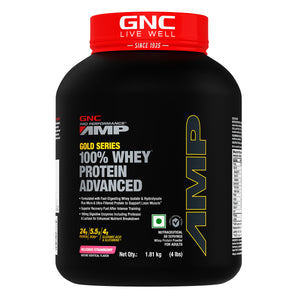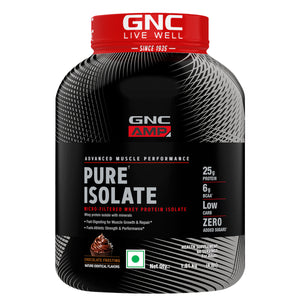


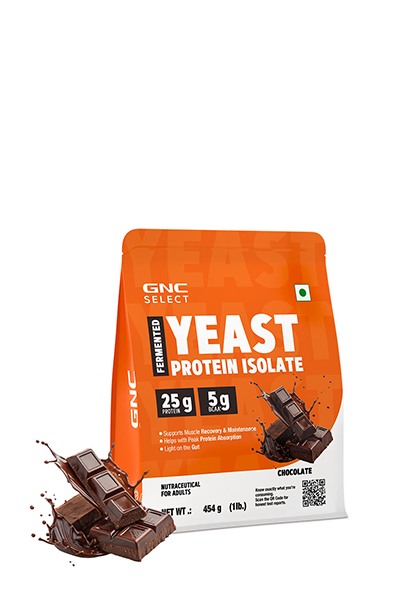
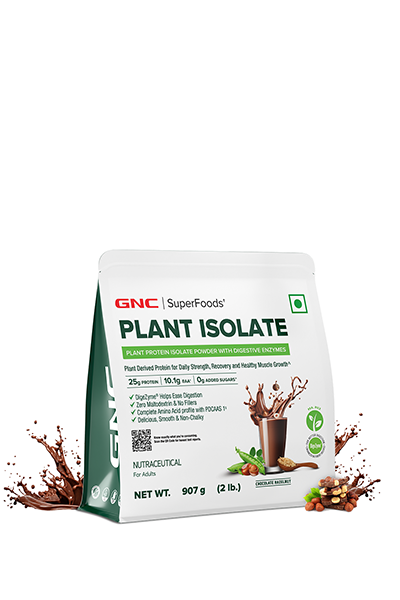










Quick Answer: Amino spiking is adding single amino acids like glycine or taurine to whey protein so a lab test reads more protein than is really there. Standard tests measure nitrogen and multiply it by 6.25, so any added nitrogen counts. A full amino acid profile, checked batch by batch, exposes it.
You're holding two tubs of whey. Both say 24 g of protein a scoop.
Then a reel pops up on your phone, someone shouting "amino spiking!" at the camera.
So what is amino spiking? And is your shake quietly short-changing you?
Here's the thing. The word sounds dramatic, but the idea behind it is simple, and it lives in the way labs measure protein rather than in some secret ingredient.
If you train hard and count every gram, the gap between the protein printed on a label and the protein actually in your scoop is exactly the kind of detail you would want someone to explain properly.
This guide covers three things:
- the test loophole, in plain words
- the signs on a label that should make you ask more questions
- what a batch lab report can prove, and what it can't
What is amino spiking, in plain words?
Amino spiking means adding single amino acids or other nitrogen-rich ingredients so the lab reading for "protein" goes up. The number on the label rises. The complete protein in your scoop doesn't.
Protein is built from amino acids, small units your body links into long chains. Whey arrives as those chains and naturally carries all nine essential amino acids (EAAs), the ones your body cannot make and must get from food.
A free-form amino acid is one sold on its own, not locked inside a protein.
Tip one into a powder, and a lab test can count it as protein. The label can then print a higher protein figure than the whey alone would support.
That's amino spiking. Other names for it: protein spiking, nitrogen spiking.
An older LiveWell guide on how proteins are built and measured makes the same point from the other side: nitrogen from added amino acids, betaine and creatine should come off the total before you call it real protein.
How do labs measure protein, and what is nitrogen spiking?
Most labs measure total nitrogen and multiply it by 6.25 to estimate protein. Nitrogen spiking exploits that: the test can't tell if the nitrogen came from whey or from an added amino acid.
Kjeldahl and Dumas are the two standard nitrogen methods: one digests a sample, the other burns it, and both then measure the nitrogen.
A 2008 review by Mariotti and colleagues called 6.25 the default factor, making "protein" simply nitrogen in another unit.
A 2010 review by US Pharmacopeial Convention scientists said nitrogen methods cannot single out protein, and the melamine cases, where melamine faked protein readings, showed why.
| Method | What it measures | Catches spiking? | Plain-English note |
|---|---|---|---|
| Kjeldahl or Dumas | Total nitrogen × 6.25 | No | All nitrogen counts |
| Amino acid profile | Each amino acid, by LC-MS | Yes | High glycine or taurine stands out |
| Third-party testing | What its scope covers | Only if in scope | Test marks explained |
Which amino acids are most often used for protein spiking?
Glycine and taurine are the amino acids researchers flag most often for protein spiking; lysine and glutamic acid also turn up in spiking studies. Glycine and taurine each carry nitrogen and are easy to add, but both have genuine uses, so one on a label isn't proof on its own.
The trouble starts when their nitrogen is counted as whey protein.
A crowd-funded 2025 lab study from Rajagiri Hospital in Kerala, the Citizens Protein Project 2 in Medicine, tested 34 whey powders sold in India. It used LC-MS, a lab instrument that measures each amino acid separately.
Taurine, a non-essential amino acid, turned up in 89% of the medical-pharmaceutical powders, the kind prescribed to patients. Among the nutraceutical powders, sold as everyday supplements, it was 12.5%.
Sounds damning, right?
Not quite. The taurine sat at milligram doses, not grams, and the authors judged real protein inflation unlikely at those amounts.
Their objection was disclosure. None of the taurine was declared on the label.
Is amino spiking bad for you, or just bad for your protein?
The main loss is less complete protein and leucine than the label suggests. The research cited here looks at labels, not symptoms; the harm it shows is in what your scoop fails to deliver.
So if you were worried about symptoms, that is the honest answer. Spiking shows up on paper, in the amino panel or a lab report.
Here's why that matters. You count those grams toward your daily protein, so a scoop padded with free amino acids gives you fewer EAAs than the scoop appears to promise.
Label accuracy is the bigger story in the same Kerala study. Nutraceutical powders averaged 75.6% protein by weight, in tight agreement with their labels.
In that study, medical-pharmaceutical powders averaged 29.1% protein by weight.
And 83% of them missed their label by more than 5%.
That gap came from mislabelling, not from proven spiking. Those are the powders prescribed to patients, so if you take one on a doctor's advice, check with them before changing it.
How do you identify amino spiking in a protein powder?
Look for six label signs, from free amino acids in the ingredients to a glycine-heavy amino panel or no batch report. No single sign proves spiking.
1. Is free-form glycine or taurine listed apart from the protein?
If either is, look closer. Both carry nitrogen, so a nitrogen test reads them as protein.
2. Is there an "amino blend" or "matrix" with no amounts?
If there is, you can't tell how much of the blend is whey and how much is added amino acids.
3. Are added nitrogen-rich ingredients folded into the protein figure?
Check whether creatine, betaine or similar extras sit inside the protein claim. Added openly for their own purpose, they're fine; the problem is only when their nitrogen is counted as protein.
4. Is an amino acid profile missing from the label and website?
If it is, you lose the one place an excess of glycine or taurine would show.
5. Are glycine or taurine readings high next to leucine?
In plain whey, they shouldn't be, because whey is naturally rich in leucine. The Kerala authors call an unusually high glycine or taurine reading the easiest red flag.
6. Can you match a batch-wise lab report to your tub?
If you can't, that's the sixth sign. A lab report tied to the batch number printed on your tub is the clearest way to check the protein the label promises against what a lab actually measured.
All six are reasons to look closer. Only a lab test settles it.
For protein density and ingredient order, our guide to reading a whey label covers the rest.
Is GNC whey protein third-party tested, and what does its label show?
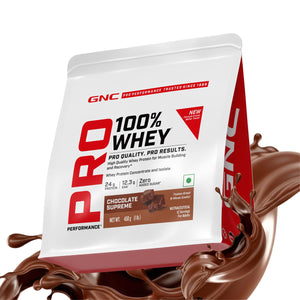
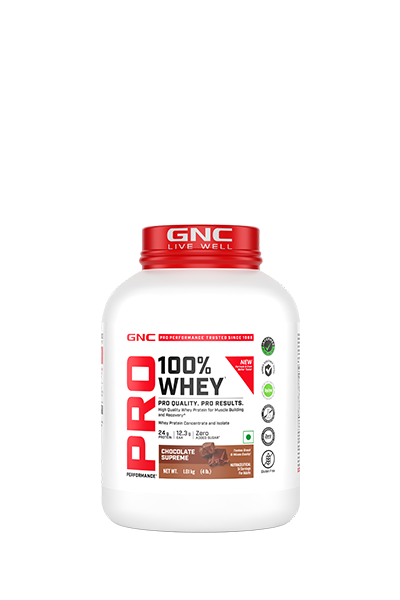
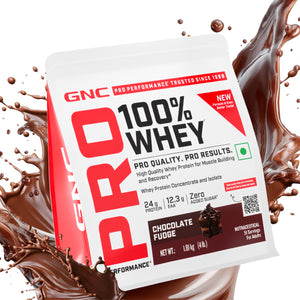
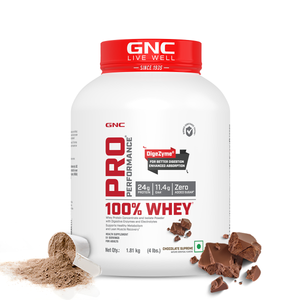
The product page lists GNC Pro Performance 100% Whey (New Formulation) as Informed Choice Certified and says every batch is tested by an NABL-accredited third-party lab. Its ingredient list shows a whey blend with no free amino acids.
Informed Choice certifies named products. What that covers is explained in our post on GNC whey testing and its reports.
How does this label measure up against the six signs?
Check it sign by sign:
- Signs 1 to 3: the ingredients read Whey Blend (Whey Protein Concentrate & Whey Protein Isolate), thickeners, sodium chloride, a stabiliser, DigeZyme and a sweetener. No free amino acid or amino blend is listed.
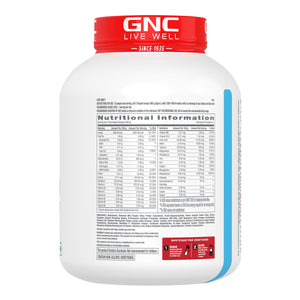
- Signs 4 and 5: the page lists 24 g protein, 12.3 g EAA and 5.7 g BCAA (branched-chain amino acids) per serving, but no full amino panel, so you can't read glycine or taurine from the page.
- Sign 6: the product page links to the latest batch report and a lab test report issued by Eurofins Analytical Services India. You can also match your tub's batch number on GNC's lab reports page.
One caveat: excipients may vary from flavour to flavour, so check your own tub's label.
The Bottom Line
Amino spiking is not a mystery ingredient. It is a gap in a test that counts nitrogen and calls it protein.
That gap is why the protein number on a tub cannot tell the whole story on its own.
A label is a claim. A lab panel is evidence.
Two checks close most of it: read the ingredient list for free amino acids and unexplained blends, then look for an amino panel and a batch report you can match to the batch number printed on your tub.
The Kerala study is a useful reminder of scale, too: undisclosed taurine turned up often, but at doses too small to inflate the protein figure much. So the lesson is about honesty on the label as much as about grams.
None of the six signs convicts a powder. Together, they tell you which questions to ask before you trust the grams. Browse the whey protein range with those questions in mind.
Frequently Asked Questions
Can a lab test catch amino spiking?
Yes. An amino acid profile measures each amino acid separately, so an outsized glycine or taurine reading stands out. A 2021 Boise State University study in Foods by Saxton and McDougal showed infrared spectroscopy could flag glycine, lysine or glutamic acid added at 25% or more.
Is creatine in a protein powder always a sign of spiking?
No. Some blends add creatine openly for its own purpose, and list it on the label. It becomes a problem only when creatine's nitrogen is counted in the protein number printed on the pack. If the label lists creatine, you know it's there; the real question is how the protein figure was worked out.
Does FSSAI set rules for protein claims on a label?
Yes. Under the FSSAI Advertising and Claims Regulations 2018, a solid food can say "source of protein" at 10% of the Recommended Dietary Allowance (RDA) per 100 g, and "high" or "rich" at 20%. A batch lab report is how you check the figure behind the claim.
Is "amino spiking kya hota hai" the same question?
Yes. People searching it in Hindi are asking the same thing: extra amino acids are added so a protein test reads higher than the real protein. The fix is the same too. Read the amino panel and look for a batch lab report.
Where can you find a whey protein's amino acid profile?
Start with the label, then the product page. If neither prints individual amino acids, ask the brand for the panel or look for a batch lab report that lists them. A full panel shows each amino acid by weight, so you can set glycine and taurine against leucine yourself.