












Quick Answer: Yes, levocarnitine is the same molecule as L-carnitine: both names mean the L-form of carnitine your body already makes. The difference between the two is the name and the rules around it, not the chemistry. "Levocarnitine" is the name on prescription drug labels for carnitine deficiency, while L-carnitine supplements in India are sold under FSSAI's health-supplement rules.
You've got two strips on the table.
One came from a pharmacy counter and says "Levocarnitine Tablets". The other came off a gym shelf and says "L-Carnitine".
Same word, hiding inside both.
Maybe a relative was prescribed the first one, and you already take the second after training.
So is levocarnitine the same as L-carnitine? And if one of them needs a prescription, is that one somehow stronger?
Here's the short version. The molecule is the same, but the rulebook around it is not, and that rulebook decides who sets the dose, what the label is allowed to say and which regulator keeps watch over the pack.
That is the whole story in one line.
The rest of this piece puts the two head-to-head, one round at a time: the name, the molecule, the rules, the forms you will meet on labels and what each one is actually for.
Levocarnitine vs L-carnitine: is there any real difference?
Chemically, no. Both names describe the L-form of carnitine, the one your body makes and uses. The difference is the label: a drug name on one pack, a supplement name on the other.
Levocarnitine is simply the name you will see on drug labels.
The American prescription label for levocarnitine tablets, published on the NIH's DailyMed library and updated in 2024, describes levocarnitine as a carrier that moves long-chain fatty acids into your mitochondria, the tiny engines inside your cells.
That's the same job L-carnitine does in your body every day.
Mayo Clinic's drug guide writes the name as "Levocarnitine (L-carnitine)". One substance, two name tags.
So why two names at all? Because the same molecule is sold in two very different worlds:
- As a medicine, it carries a drug name and a dose that a doctor sets.
- As a supplement, it carries its nutrient name and a dose that the label sets.
Nothing in the molecule changes between those two worlds. Only the paperwork does.
What is levocarnitine, and why does it have two names?
Levocarnitine is the L-form of carnitine. Carnitine exists in two mirror-image forms, L and D, and "levo" is how drug labels say "the L-form", the one your body uses.
Think of your hands. Same parts, same order, yet your left glove won't fit your right hand.
Chemists call a mirror-image pair like that enantiomers: identical pieces, built with opposite handedness. "Levo" means left, so levocarnitine is the left-handed form.
Your body builds this form itself. NIH's Office of Dietary Supplements says carnitine is made in your liver, kidneys and brain from two amino acids, lysine and methionine.
A 2016 review in Biochimica et Biophysica Acta (Longo et al.) explains the job it does. Carnitine ferries long-chain fatty acids into mitochondria to be burned, and your kidneys hold on to it with a transporter built for carnitine alone.
The mirror image is another story. Mayo Clinic warns that the mixed D,L-carnitine form can interfere with levocarnitine and leave you short of it.
If a label says D,L-carnitine, skip it.
Is levocarnitine a medicine or a supplement?
Both exist. In the United States, Mayo Clinic notes, certain levocarnitine products are FDA-approved prescription drugs for carnitine deficiency. In India, L-carnitine supplements fall under FSSAI's Health Supplements Regulations, 2016.
FSSAI, the Food Safety and Standards Authority of India, is the country's food regulator. Here's the head-to-head:
| Levocarnitine medicine | L-carnitine health supplement |
|---|---|
| L-carnitine | L-carnitine, often as L-carnitine L-tartrate |
| "Rx only" (American 330 mg tablets) | "HEALTH SUPPLEMENT" on every pack |
| FDA drug approval | FSSAI rules for health supplements |
| Primary or secondary carnitine deficiency | Nutrition for healthy adults, no disease claims |
| Your doctor | The label, e.g. one tablet a day |
| Tablets, oral solution, injection | Tablets, liquids, capsules |
The medicine column follows the American label. For how a levocarnitine medicine is handled in India, ask your pharmacist or doctor.
Acetyl-L-carnitine vs L-carnitine vs L-carnitine L-tartrate: which is which?
All three are carnitine, some with a partner attached. NIH names L-carnitine and acetyl-L-carnitine as the two main supplement forms, and L-carnitine L-tartrate is L-carnitine bound to tartaric acid.
A 2004 review in the Annals of the New York Academy of Sciences (Rebouche) found acetyl-L-carnitine is the body's most significant carnitine ester. Lab work suggests part of a swallowed dose is split back into plain L-carnitine in the gut wall, and part is absorbed intact.
The forms you'll meet on labels:
- L-carnitine: the plain form.
- L-carnitine hydrochloride: a salt form, on FSSAI's permitted list.
- L-carnitine L-tartrate: listed by FSSAI as carnitine tartrate.
- Acetyl-L-carnitine (ALCAR): L-carnitine with an acetyl group.
- Propionyl-L-carnitine: another carnitine compound NIH names.
- Levocarnitine tablets, oral solution or injection: medicines.
- D,L-carnitine: the mixed form to avoid.
Whatever the partner, every L-labelled form carries the same L-carnitine.
For how L-carnitine L-tartrate compares with plain L-carnitine, see the liquid vs tablets comparison.
Is a prescription levocarnitine dose different from a supplement dose?
Yes, because the purpose differs, not the molecule. A levocarnitine medicine is dosed by a doctor for a confirmed deficiency. A supplement is made for healthy adults and dosed by its label.
Healthy people make all the carnitine they need, says NIH, so there is no daily requirement.
India's rules draw the same line from the other side: under FSSAI's definition, a health supplement is not a drug under the Drugs and Cosmetics Act.
Supplemental L-carnitine is poorly absorbed. A 2003 review in Clinical Pharmacokinetics (Evans and Fornasini) found supplement doses are absorbed less efficiently than carnitine in food, and NIH puts supplement absorption at about 14% to 18%.
What about levocarnitine side effects? The American label lists nausea, vomiting, cramps and diarrhoea, plus a body odour that often eases at a lower dose.
For supplements, NIH ties similar problems to 3 g a day or more, and the guide on what to know before taking L-carnitine tablets covers interactions.
A supplement is never a stand-in for a prescribed medicine.
What dosage do GNC's L-carnitine tablets use, and how do you take them?
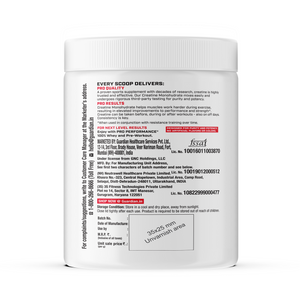
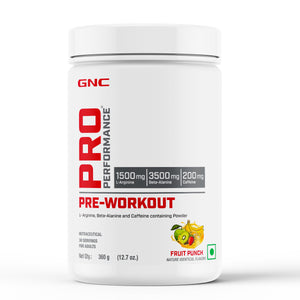
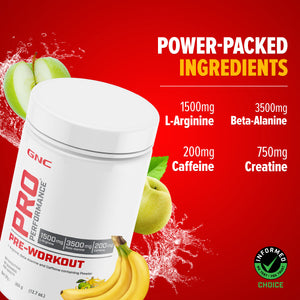
One 500 mg tablet with water, once a day, as the label sets it. GNC Pro Performance L-Carnitine Tablets 500mg is a health supplement, not a medicine, and it sits in the right-hand column of the table above.
Each tablet delivers 500 mg of L-Carnitine, and the ingredient list names L-Carnitine L-Tartrate as the source. That's the tartrate form from the list above.
Take it on an empty stomach, or before your workout. Our guide to when to take L-carnitine goes deeper on timing. Prefer a liquid? Follow the dose on its own label, not this tablet's.
Notice the one word the product page never uses: levocarnitine. Its timing directions open with "As a dietary supplement".
Some of you should hold off. If you are pregnant or breastfeeding, or have a medical condition and take medication for it, stay away from L-carnitine supplements unless your doctor has prescribed them.
The product page for the 500mg tablets has the full label, and the weight management range shows where it sits.
The Bottom Line
Levocarnitine and L-carnitine are one molecule wearing two name tags.
The name tells you which rulebook applies, and the rulebook tells you everything else. A levocarnitine medicine belongs to a doctor's plan for a deficiency, with a dose chosen for one patient. An L-carnitine supplement belongs to a healthy adult's routine, under a label that is not allowed to make disease claims, with a dose printed for everyone.
Neither name makes the molecule stronger. So the question in the title has a short answer and a longer one: same molecule, different rulebooks.
So read the form on the label before anything else, skip anything sold as D,L-carnitine, and never swap a medicine your doctor prescribed for a supplement off the shelf.
Frequently Asked Questions
Is levocarnitine safe to take without a prescription?
No, not as a medicine. A levocarnitine medicine should be taken only the way your doctor prescribes it, at the dose chosen for you. For L-carnitine sold as a supplement, NIH's Office of Dietary Supplements notes side effects such as nausea, stomach cramps and a fishy body odour mainly at 3 g a day or more.
Is levocarnitine used for weight loss?
Weight loss is not an approved use on the American prescription label, which lists carnitine deficiency as the reason it is prescribed. NIH's Office of Dietary Supplements describes the supplement studies on weight loss as mixed, with small differences at best, and says larger studies are needed.
Is carnitine an amino acid or a vitamin?
Neither, strictly. NIH describes carnitine as a compound derived from an amino acid, made in your liver, kidneys and brain from lysine and methionine. It is not classed as an essential nutrient, so there is no set daily requirement for healthy people.
Can you take levocarnitine in pregnancy?
Levocarnitine in pregnancy is a decision for your doctor, not for a label or a shop shelf. Stay away from L-carnitine supplements during pregnancy or breastfeeding unless your doctor has prescribed them. If you already take an L-carnitine supplement and find out you're pregnant, check with your doctor before you continue.