







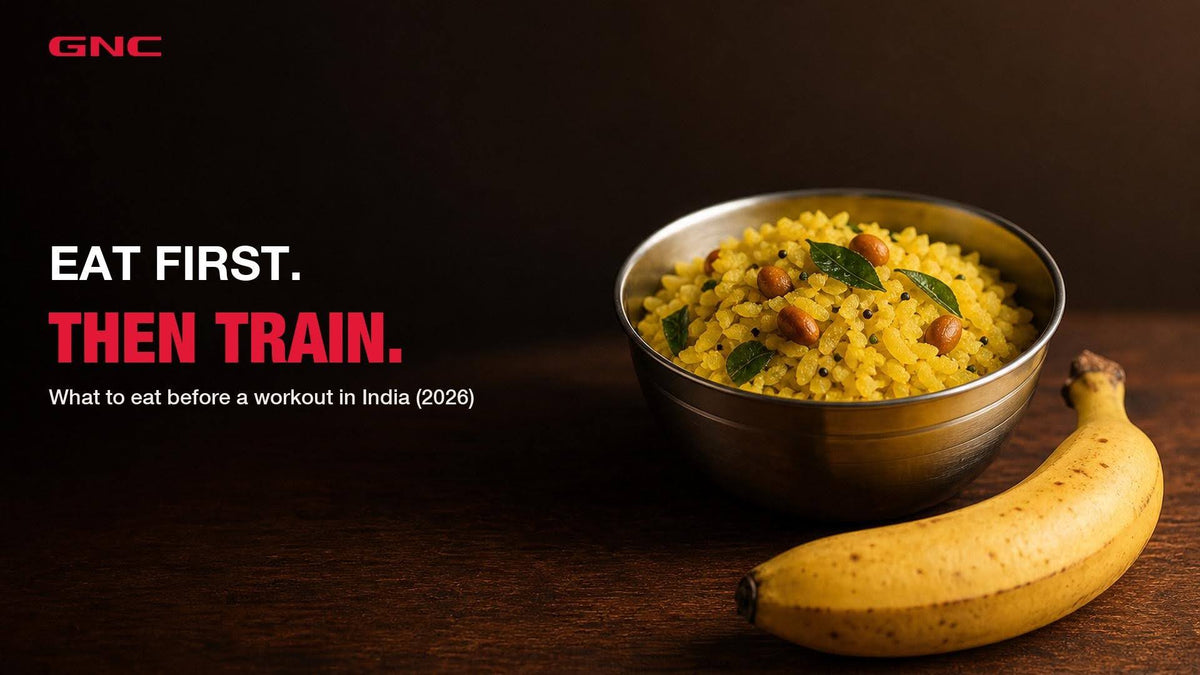
Quick Answer: A pre-workout meal is mostly carbohydrate, with a little protein and very little fat, eaten early enough to settle. For long, hard sessions over 90 minutes, sports-nutrition guidance is 1 to 4 g of carbohydrate per kilogram of bodyweight, in meals or snacks over the several hours before. For an hour in the gym, a smaller meal is usually enough.
It's 6 am. The alarm has gone, your gym bag is by the door, and your stomach is asking a question you haven't answered yet.
Eat something, or head out on empty?
Most people guess. Some eat a full breakfast and feel it sloshing around by the second set. Others skip food and wonder why the last few sets feel so heavy.
There's a simpler way to decide, and it doesn't need a special menu. An ordinary Indian kitchen already has the right food: poha, idli, roti, chana. What changes is how much of it you eat, and how close to the session you eat it.
Here's how to plan it, hour by hour.
A pre-workout meal is carbs first, a little protein, light on fat
Carbohydrate is the part that fuels the session, so it should fill most of the plate. A little protein rounds it out, and fat is best kept low, because many people find an oily, heavy meal sits in the stomach during training.
Think of it as a ratio, not a menu:
- Carbohydrate: most of the plate (rice, poha, roti, idli)
- Protein: a small share (milk, curd, dal, chana)
- Fat: as little as is practical (go easy on oil, ghee and anything fried)
Why carbs first? It comes down to one word.
Glycogen is the fuel you're topping up
Your body stores carbohydrate as glycogen. It keeps that store in two places. Your muscles burn it during hard effort, and your liver draws on it to keep blood sugar steady.
A carb-based meal in the hours before training tops up both.
The International Society of Sports Nutrition (ISSN) set this out in its 2017 position stand on nutrient timing, published in the Journal of the International Society of Sports Nutrition. It says carbohydrate eaten before exercise raises stored glycogen and helps keep blood sugar steady.
The ISSN stand gives a number. Meals or snacks high in carbohydrate, at 1 to 4 g per kilogram of bodyweight, are commonly recommended over the several hours before hard exercise lasting more than 90 minutes.
How many grams of carbohydrate is that for a 60 kg body?
For a 60 kg person the range runs from 60 g of carbohydrate to 240 g, because "per kilogram" means multiplying by your own weight:
- At 1 g per kilogram, 60 × 1 comes to 60 g of carbohydrate
- At 4 g per kilogram, 60 × 4 comes to 240 g of carbohydrate
How much food is 60 g? The Indian Food Composition Tables 2017 from the ICMR-National Institute of Nutrition list dry rice flakes (poha) at 76.75 g of carbohydrate per 100 g, so about 80 g of dry poha gives that person roughly 61 g, the bottom of the range.
Now the catch.
A 2020 review in Nutrients by researchers at Auckland University of Technology found that carbohydrate before exercise improved performance in longer sessions, but not in shorter ones. For a one-hour gym session, the low end of that range, or even less, is usually plenty.
How does a morning session change the plate?
The closer to your session you eat, the smaller and simpler the food should be. A full plate needs time to settle. A small snack doesn't.
That's the real answer to what to eat before a workout in the morning: let the clock decide the portion.
The three windows below are practical starting points to try, not times set by any study. Test them on an ordinary training day, never before an event that matters.
About 90 minutes before: a small, proper meal
An hour and a half gives you time for a real breakfast, as long as it's a modest one.
A plate of poha, two idlis with sambar, or a roti with a light sabzi all work here. Keep the oil low and leave the fried extras for later in the day.
About 60 minutes before: a lighter plate
An hour out, cut the portion roughly in half.
One roti with curd, a small bowl of poha or a single idli fills the gap without weighing you down. A glass of milk alongside adds a little protein.
About 30 minutes before, or less: a small snack
Half an hour is snack territory, so pick something easy on the stomach and mostly carbohydrate, such as a piece of fruit or a small glass of milk.
A banana is the classic grab-and-go choice, and our banana before workout comparison covers it in full.
What should an evening snack look like after a workday?
For an evening session, the food that counts is the late-afternoon snack, not lunch. By the time you finish work, lunch is often hours behind you, and many people find the session feels flat when that gap goes unfilled.
Tired before you've even changed into your gym clothes?
That may be the gap talking.
So plan a snack for an hour or two before you leave for the gym. A roti roll with sabzi, a small bowl of chana chaat or a plate of poha from the office canteen all fit the carbs-first shape. None of them should leave you too full to move once the warm-up starts.
Watch two things. Don't turn the snack into the day's biggest meal, because dinner comes after training. And skip the fried office snack: many people find a samosa or a plate of pakoras sits heavy through the warm-up.
Which Indian plates work as a pre-workout meal?
Poha, idli, roti-sabzi, curd rice and chana all fit a pre-workout meal, because each one is built on a carbohydrate base. They differ in how much protein they bring and how long they take to settle.
Looking for food before a workout for energy? These five are the plates to start with.
What the IFCT 2017 tables show
Rice-based plates carry the most carbohydrate; chana and black gram dal carry the most protein. Figures are per 100 g of dry, uncooked ingredient, from the ICMR-NIN tables linked above.
| Plate (ICMR-NIN IFCT 2017 ingredient) | Carbohydrate per 100 g | Protein per 100 g | Where it fits |
|---|---|---|---|
| Poha (rice flakes) | 76.75 g | 7.44 g | 60 to 90 minutes before |
| Idli, rice part (raw milled rice) | 78.24 g | 7.94 g | 60 to 90 minutes before |
| Idli, dal part (black gram dal) | 51.00 g | 23.06 g | same plate |
| Roti-sabzi (wheat flour, atta) | 64.17 g | 10.57 g | 90 minutes before, or evening snack |
| Curd rice (repeats the idli rice figures; curd has no entry) | 78.24 g | 7.94 g | 60 to 90 minutes before |
| Chana (Bengal gram, whole) | 39.56 g | 18.77 g | 90 minutes or more before |
How to read these numbers
The IFCT figures describe the dry ingredient, not the cooked dish. Cooking adds water, so 100 g of cooked poha carries less carbohydrate than 100 g of dry flakes, which is why the table is for comparing foods rather than counting grams on your plate.
Because idli pairs rice with protein-rich black gram dal, it makes a handy all-rounder.
Chana also carries plenty of fibre: the ICMR-NIN tables list 25.22 g of total fibre per 100 g of whole Bengal gram. Fibre is filling, and many people find a high-fibre snack slow to settle, so give chana the longest gap.
Can you train on an empty stomach?
Training on an empty stomach is fine for a short session if you feel well doing it, but eating first helps when the session is long.
That's the pattern in a 2018 meta-analysis in the Scandinavian Journal of Medicine & Science in Sports. A meta-analysis pools the results of many studies into one answer, and this one, by researchers at the University of Limerick, drew on 46 of them. Eating before exercise improved performance in prolonged aerobic exercise, but not in shorter aerobic sessions.
In aerobic exercise, your breathing stays up through steady, continuous effort, such as running, cycling or a long spell on the cross-trainer.
When is training on an empty stomach a safe choice?
For a short session, when you feel well doing it and food makes you queasy that early. Heading out for a long run or a long ride? Eat something first.
Listen to your body as well. Feeling light-headed, shaky or unusually weak is a sign to eat something small next time.
Anyone with a medical condition such as diabetes, or on medicine that affects blood sugar, should check with a doctor before training fasted.
Where does a pre-workout supplement sit next to food?
A pre-workout supplement sits beside your meal, never in place of it. Food supplies the carbohydrate your muscles run on, while a pre-workout drink is a separate tool, usually built around stimulants, the ingredients that make you feel more awake and alert.
Read any pre-workout label for which stimulant it contains and how much is in one serving.
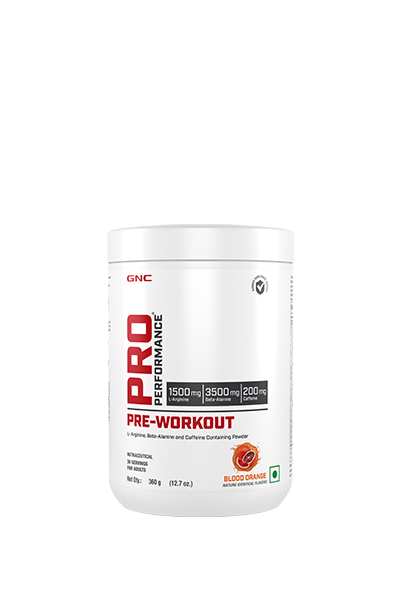
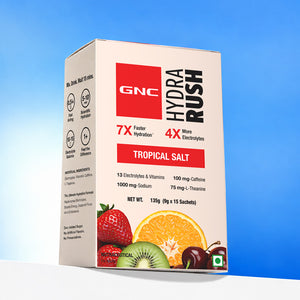
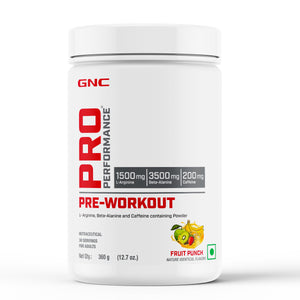
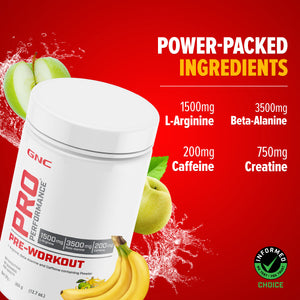
Take GNC Pro Performance Pre-Workout as the worked example. One serving is 12 g, shaken into 250-300 ml of water, and the product page says to take it 30-45 minutes before your workout, on training days only.
So the meal comes first: eat 60 to 90 minutes out, then mix the drink.
The product page also says to avoid late evenings, since it contains stimulants. If you train late, food alone may be the better call.
For dosing detail, read our pre-workout timing and dosage guide, or browse the full pre-workout range.
The Bottom Line
A pre-workout meal isn't a special food. It's an ordinary Indian plate, sized to the time you have.
Carbs first. A little protein. Go easy on oil.
A long run or a hard session past the 90-minute mark needs the fuel most, while a one-hour gym session needs less than most people eat.
Mornings are about portion size. Evenings are about the late-afternoon snack. And the meal after training, with its share of protein, finishes the job the pre-workout meal started.
Change one thing at a time, note how the session felt, and keep what works.
Frequently Asked Questions
How long before a workout should you eat?
For a full meal, allow about 90 minutes. For a light snack, 30 to 60 minutes is usually enough. These are practical starting points rather than fixed rules, so adjust them to how your stomach feels once you're training.
What should you eat before an early-morning workout?
Eat something small and mostly carbohydrate, such as a piece of fruit or a small glass of milk about 30 minutes before you start, or a little poha or one idli if you have an hour. If the session is short and food feels heavy that early, training on empty is also an option.
Can you work out before breakfast?
Yes, for a short session, as long as you feel well doing it. For long, steady sessions such as a long run or ride, research links eating first with better performance, so have a small carb-based snack before heading out.
Should the meal change for muscle gain?
Only slightly. Keep the carbohydrate base and add a protein food such as milk, curd or chana. Your total protein across the whole day matters more than any single meal before training.