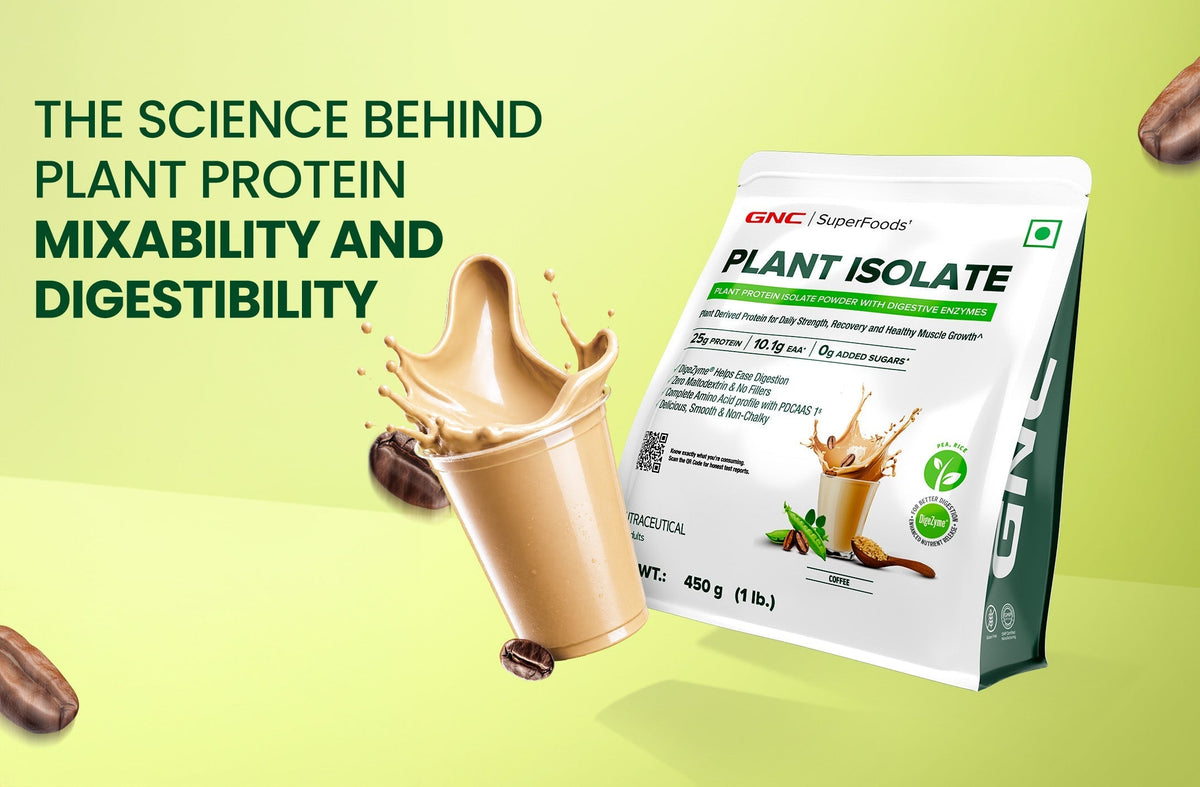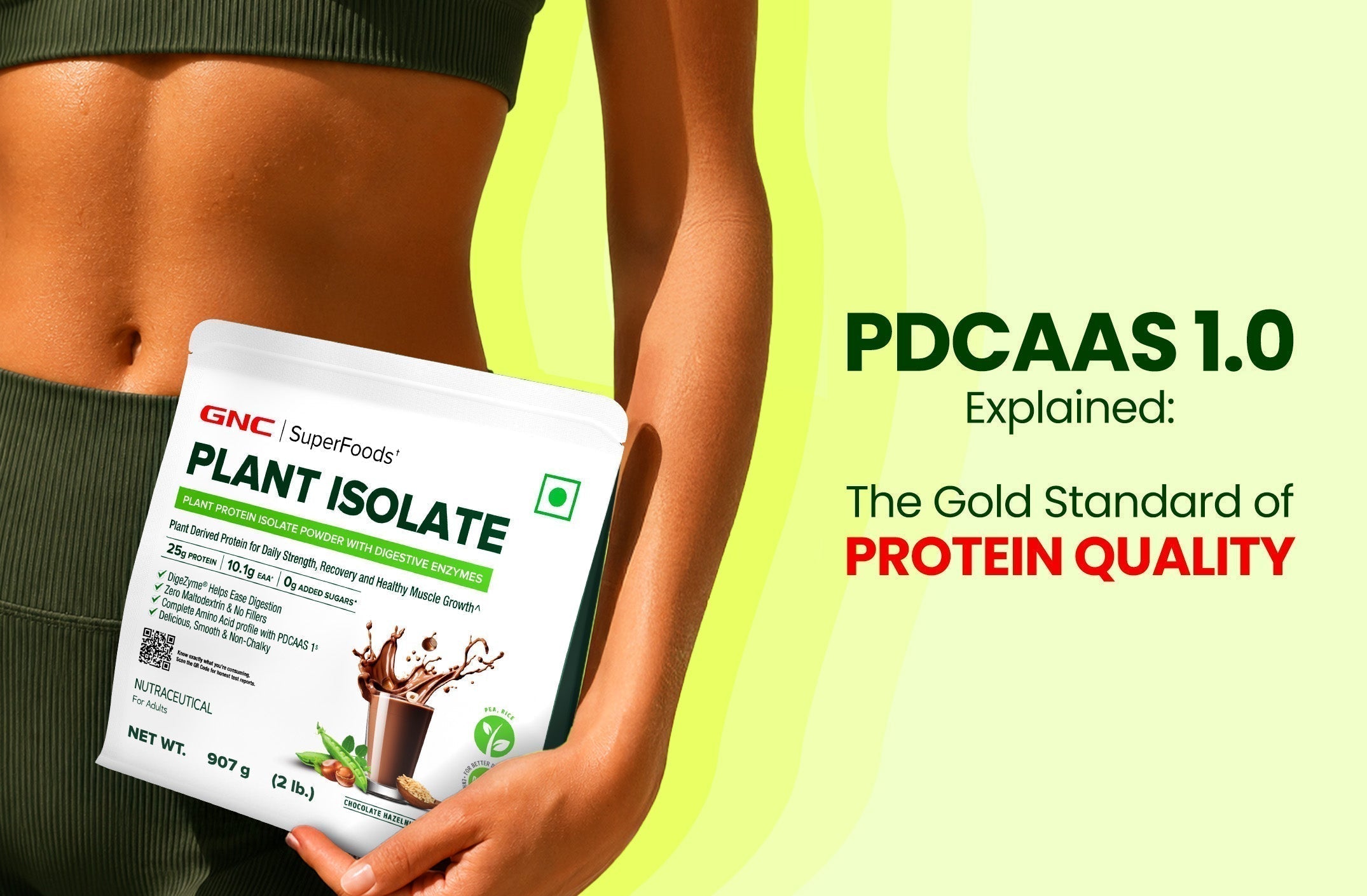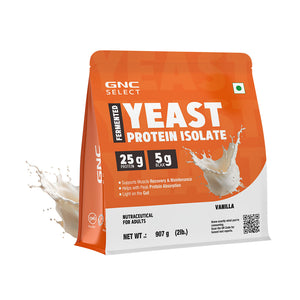












If you've ever wondered whether plant protein can truly compete, in taste, in nutrition, in real-world results, this blog is your answer. The world of plant-based protein has changed dramatically, and the isolates available today are a far cry from what the category once offered.
Here, we'll walk you through why plant protein isolates have become a go-to for athletes and health-conscious individuals alike, how smart formulation has solved the flavor problem for good, and what makes a high-quality isolate like GNC Plant Isolate worth adding to your daily routine.
From Afterthought to Front Runner: How Plant Protein Rewrote Its Own Story
Plant protein didn't earn its bad reputation overnight, and it didn't shake it overnight either. There were real, valid reasons people gave up on it. Here are the three biggest ones.
-
The "Incomplete Protein" Myth
For years, the loudest knock against plant protein was simple: it couldn't build muscle because it was nutritionally incomplete. Single-source proteins like pea or rice on their own do have gaps; they're typically lower in one or more essential amino acids (EAAs), the building blocks your body can't make on its own.
But that belief, while grounded in some early science, never told the full story. Research now shows that blending complementary plant sources, like pea and rice, creates an EAA profile that closely mirrors animal-based proteins. A 2024 study published in Current Developments in Nutrition (McMaster University) found that when a plant-based blend protein enriched with leucine was matched to whey protein isolate levels, it stimulated muscle protein synthesis at levels comparable to whey. The takeaway: it's not about the source, it's about the formulation.
-
The Digestive Discomfort Nobody Talked About
Many people quietly abandoned plant protein, not because of taste, but because of what happened 30 minutes after the shake. The bloating. The gas. The general feeling was that their gut was staging a protest.
Older plant protein formulas were high in anti-nutritional factors (ANFs), compounds like phytates, lectins, and trypsin inhibitors that interfere with digestion and reduce nutrient absorption. A comprehensive 2025 review in Applied Sciences confirmed that these ANFs directly hinder protein digestibility and can cause gastrointestinal distress when not properly addressed through processing.
Modern isolation technology changes that entirely. The isolation process, using methods such as enzymatic hydrolysis, fermentation, and cold processing, removes most of these problematic compounds. What you're left with is a cleaner, more digestible protein that your gut actually welcomes.
-
The "Only for Vegans" Stigma
For most of the 2010s, plant protein was treated like a backup plan, something you turned to when dairy wasn't an option, not something you'd actively seek out for performance. The assumption was simple: if you're serious about building muscle or fueling hard training, you use animal protein. Plant protein was for everyone else.
But that assumption was never really about the protein; it was about the lack of research behind it. As studies began comparing plant and animal proteins head to head, the performance gap that everyone assumed existed started looking a lot smaller than expected. Today, nutritionists, sports dietitians, and strength athletes are recommending plant protein isolates not as a compromise, but as a genuinely smart nutritional choice in their own right.
What Makes an Isolate Different (And Better)
Not all plant proteins are created equal, and the difference between a concentrate and an isolate is where a lot of the magic happens.
A plant protein concentrate typically contains 60-70% protein by weight, with the remainder made up of carbohydrates, fats, and residual anti-nutrients. It's less processed, which sounds appealing in theory, but in practice, it can mean more digestive discomfort and a less clean nutritional profile.
A plant protein isolate goes through additional refinement to strip away most of those non-protein components, leaving you with 85-90%+ protein content, fewer carbohydrates, and significantly reduced levels of the compounds that cause bitterness and bloating.
The result? A smoother texture, a cleaner taste, and better absorption. Your body gets more of what it actually needs and less of the stuff that gets in the way.
The Science Behind Great Taste, Without the Junk
So why did plant protein taste so bad in the first place? It comes down to chemistry. Compounds like polyphenols, tannins, and certain alkaloids naturally present in legumes and seeds create bitterness and astringency. Incomplete hydration and large insoluble protein particles also create a rough, friction-like mouthfeel that signals to your brain: this is not enjoyable.
Modern formulation science tackles this head-on. Techniques like enzymatic treatment break down bitter-tasting compounds at the molecular level. Fermentation and cold-processing preserve the nutritional integrity of the protein while improving its solubility and texture. The end result is a powder that blends smoothly, carries flavor well, and doesn't fight your palate.
On the ingredient side, clean-label formulas skip the artificial sweeteners and synthetic flavors that are used to mask bad taste. Natural flavor systems, using real cocoa, vanilla, and fruit-derived compounds, work with the protein's base, not against it.
When you're reading a label, look for: short ingredient lists, natural sweeteners like stevia or coconut sugar, no artificial colors or fillers, and a clear declaration of protein source. Those are the signals of a formula built with taste in mind from the start, not as an afterthought.
Nutrition Doesn't Have to Take a Back Seat
A great-tasting protein that doesn't deliver nutritionally is just an expensive flavored drink. So let's talk about what a genuinely high-quality plant isolate should bring to the table.
First: protein content and digestibility. Look for a DIAAS (Digestible Indispensable Amino Acid Score) as close to 1.0 as possible. This tells you not just how much protein is in the scoop, but how much your body can actually use. Multi-source blends consistently outperform single-source proteins on this metric.
Second: leucine. This amino acid is the primary trigger for muscle protein synthesis, the process that repairs and builds muscle after training. Plant proteins naturally contain less leucine than whey, but the 2024 McMaster University study found that when leucine levels in a plant blend were matched to whey protein isolate, the muscle-building response was statistically equivalent. This is why leucine content or leucine fortification matters when choosing a plant protein.
Third: the multi-source advantage. Pea and rice protein is the gold standard blend for a reason. Pea is rich in lysine but lower in methionine. Rice fills that gap beautifully. Together, they cover all nine essential amino acids in ratios that support muscle recovery, immune function, and overall protein metabolism. A 2024 systematic review and meta-analysis published in Nutrition Reviews found that soy isolate and concentrate performed on par with milk protein for muscle mass maintenance, even in older adults.
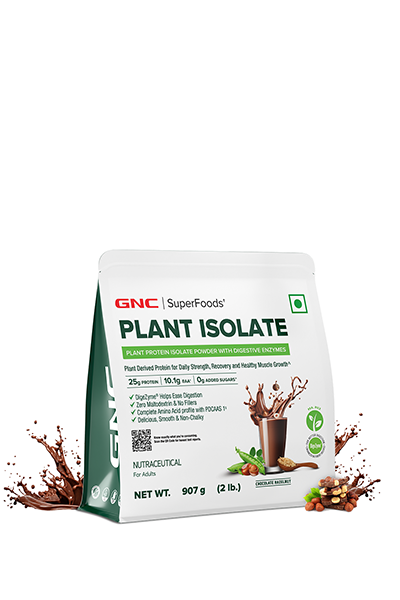
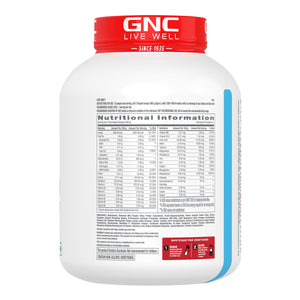
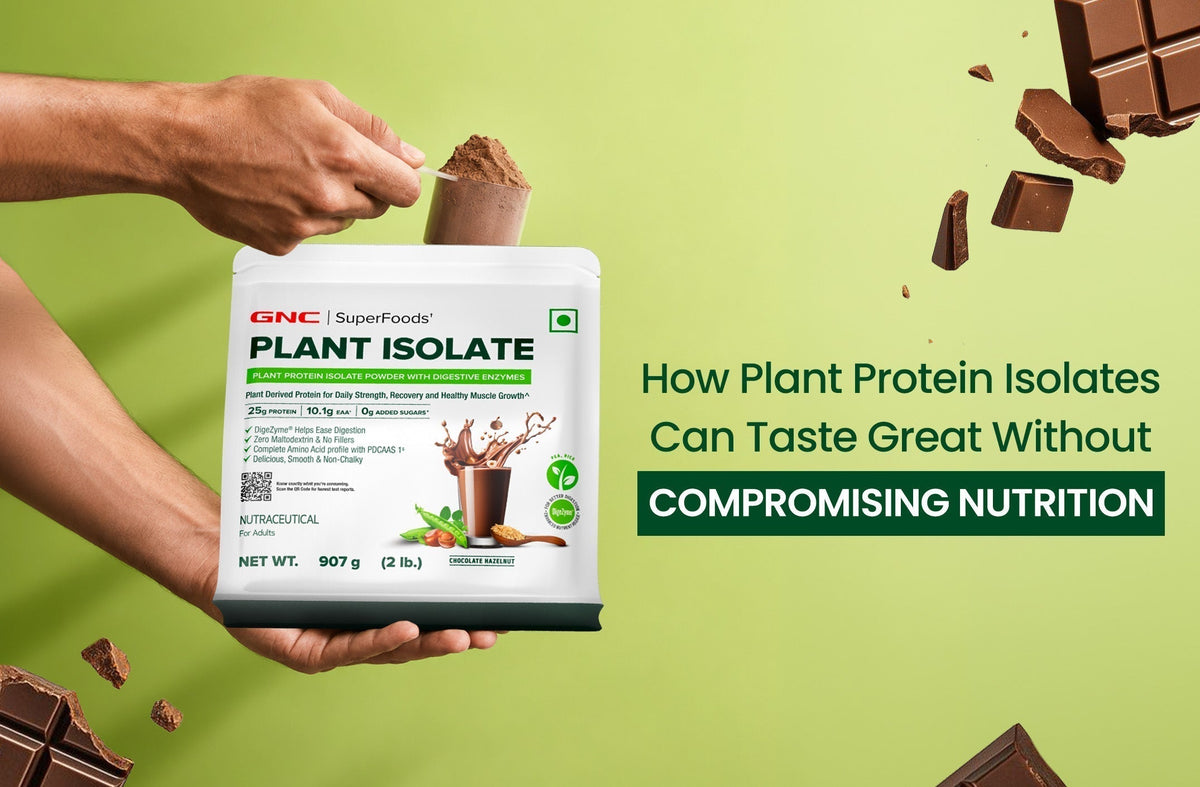
Why GNC Plant Isolate Get It Right?
GNC has always stood for quality you can trust, and GNC Plant Isolate is a natural extension of that commitment into the plant-based space.
Formulated with a multi-source plant protein blend, GNC Plant Isolate is designed to deliver a complete amino acid profile without compromise. It uses high-quality isolates processed to maximize digestibility and minimize the anti-nutrients that cause discomfort and off-flavors. The result is a smooth, mixable powder that holds up in shakes, smoothies, and even baking without that chalky aftertaste.
Whether you're post-workout and reaching for something fast, or blending up breakfast before a busy morning, GNC Plant Isolate fits naturally into how real people eat and train. It's not a niche product for a specific diet; it's a performance protein for anyone who wants clean fuel and a shake they'll actually finish.
The Bottom Line
The idea that plant protein means sacrificing taste or nutrition is officially outdated. Modern plant protein isolates, backed by real science, built with smart formulation, and refined through processing technology that actually works, have closed the gap in every meaningful way.
You can have the clean ingredients. You can have the full amino acid profile. You can have easy digestion. And yes, you can have the shake you actually enjoy drinking.
GNC Plant Isolate was built for exactly that moment, when you want protein that performs and tastes as it should. Give your plant protein journey another shot. This time, it'll be worth it.